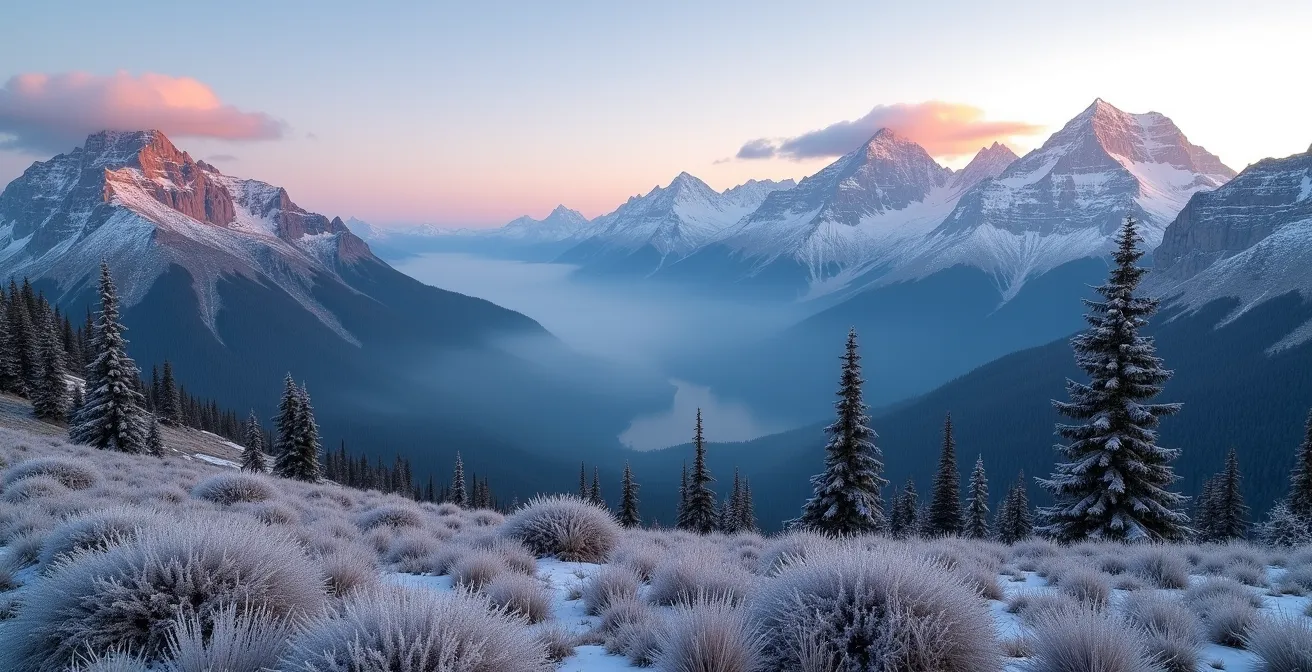
The perfect Rockies trip isn’t about finding a magical, empty month with perfect weather; it’s about understanding the real-world operational trade-offs and choosing the sacrifices you’re willing to make.
- Peak summer (July/August) offers the best weather and access but comes with crushing crowds and hotel prices soaring to over $450 a night.
- Winter provides solitude but demands careful planning around sub-zero temperatures, icy roads, and days that end at 4 PM.
Recommendation: Aim for the shoulder seasons (June or September), but go in with a clear understanding of specific road closures and a readiness for unpredictable weather, including snow even in summer on the glaciers.
You’ve seen the photos: a lone canoe gliding across a turquoise Lake Louise, the perfect reflection of mountains in Moraine Lake. It’s breathtaking. But as a local guide living in Canmore, let me tell you the reality behind those shots. That “lone canoe” likely waited in line, and that perfect reflection often comes with a parking lot that was full by 5 AM and crowds that feel more like a city festival than a nature retreat. On the other hand, the idea of visiting in winter brings its own anxieties—namely, the bone-chilling cold and the horror stories of treacherous mountain roads.
The internet is full of generic advice that pits summer crowds against winter cold. Most guides will tell you July and August have the best weather, or that September offers a “perfect balance.” But this advice misses the crucial details that make or break a trip. It doesn’t tell you that “a perfect balance” in late September can mean your dream hike to Moraine Lake is impossible because the road has already closed for the season. It doesn’t explain the specific kind of cold that can drop 20 degrees Celsius the moment you step onto a glacier in the middle of July.
So, let’s discard the fantasy of a perfect, problem-free season. The real key to an incredible Rockies vacation is mastering the Operational Trade-Off. It’s about understanding that every time of year forces a choice. You might trade longer daylight hours for lower hotel prices, or guaranteed road access for the profound quiet of a snow-covered valley. This guide is your honest, local ledger of those trade-offs. We’ll go beyond the surface to look at what’s actually open, what a -11°C day feels like for hiking, and how to build a smart itinerary when the sun sets at 4 PM.
This article will walk you through the real-world implications of your travel dates. From the financial premium of a summer visit to the practical safety measures for winter driving, you’ll gain the insider knowledge needed to choose the right compromises for your ideal trip.
Summary: When to Visit the Rockies: Avoiding the -30°C Freeze and Tourist Peaks?
- Why Visiting Banff in November Might Disappoint Hiking Enthusiasts?
- How to Drive the Icefields Parkway safely When Roads Are Icy?
- The Premium You Pay for Hotels in Jasper During July and August
- Which Animals Will You Actually See in the Rockies During Winter Months?
- Maximizing Your Itinerary: Dealing with 4 PM Sunsets in the Mountains
- Discovery Pass vs. Day Pass: Which Is Cheaper for a 4-Day Rockies Trip?
- Why You Need a Winter Jacket on the Glacier Even in July?
- Driving the Icefields Parkway: Safety Tips for Mountain Roads in Shoulder Season
Why Visiting Banff in November Might Disappoint Hiking Enthusiasts?
November in the Rockies is a classic “shoulder season” trap for unprepared visitors. You get the attractive off-season pricing, but you also get what locals call the “shoulder.” It’s a period of transition where the landscape is caught between its autumn beauty and its winter coat, and often delivers the worst of both. For hikers, this is a particularly challenging month. Many higher-elevation trails are already snow-covered and icy, making them unsafe without proper winter gear like microspikes and poles. The iconic turquoise lakes have often frozen over but aren’t yet thick enough for skating, leaving them a muted, slate-grey colour.
Let’s be blunt about the conditions. The romantic idea of a crisp autumn hike quickly evaporates when you face the reality. In Banff, weather data reveals that November temperatures average a high of -3.8°C (25.2°F) and can plummet to a nighttime low of -11°C (12.2°F). This isn’t just chilly; it’s cold that requires serious layers and makes any extended time outdoors a significant undertaking. Furthermore, with only about two hours of sunshine on an average day, your window for activities is short and often gloomy.
However, the operational trade-off for this lack of hiking is a major win for those seeking quiet and different experiences. If you pivot your expectations, November can be fantastic. Instead of trails, think spas, festivals, and cozy indoor activities without the crowds. This is the month to indulge in the luxury that’s unaffordable in July. You can enjoy the famous Banff Hot Springs with only a handful of other people or explore the town’s museums and galleries at a leisurely pace.
For those who still want a taste of mountain culture, you can lean into the indoor events that define Banff in November:
- Book luxury spa hotels at off-season rates, which are often 40-60% lower than in the summer.
- Attend the world-renowned Banff Mountain Film Festival at the start of the month.
- Explore adventure literature at the Banff Mountain Book Festival.
- For the brave, join the unique Banff Winterstart 5-Miler Night Run, a local fundraiser held mid-month.
So, if your dream is to hike endless trails under a warm sun, November is not your month. But if you’re looking for a quiet, cozy, and more affordable getaway, it offers a unique charm all its own.
How to Drive the Icefields Parkway safely When Roads Are Icy?
Driving the Icefields Parkway (Highway 93) in the winter is not a casual undertaking; it’s an expedition that demands respect and preparation. This 230-kilometre stretch between Lake Louise and Jasper is one of the most beautiful drives on Earth, but when it’s icy, it becomes one of the most treacherous. There is no cell service for almost the entire route, and from early October to May, there are absolutely no services—no gas, no food, no tow trucks readily available. You are entirely on your own. Driving this route safely in icy conditions is less about skill and more about rigorous preparation and a willingness to turn back.
The first non-negotiable is your vehicle. An all-wheel-drive (AWD) vehicle is highly recommended, but the most critical component is your tires. From October 1st to April 30th, it is mandatory to have winter tires marked with the mountain/snowflake symbol to drive in British Columbia’s mountain parks, which border the Parkway. All-season tires are simply not sufficient. They harden in the cold and lose their grip, turning your car into a sled on “black ice”—a transparent layer of ice that forms on the asphalt, especially on bridges and in shaded corners, and is nearly impossible to see.
Beyond the vehicle itself, your survival may depend on what you have inside it. The journey that takes 3 hours in summer can easily stretch to 5 or 6 hours in winter, and an unexpected road closure could leave you stranded for much longer. An emergency kit isn’t a suggestion; it’s a necessity. This means packing thermal blankets, hand warmers, non-perishable food, and a thermos filled with a hot beverage. Before you even get in the car, check the road conditions on both 511 Alberta and DriveBC. If conditions are poor or the forecast is bad, do not go. The Parkway will be there another day.
Your Pre-Departure Checklist for an Icy Parkway Drive
- Fuel Up: Fill your gas tank completely in Banff, Lake Louise, or Jasper before you start. There are no gas stations open on the 230km stretch in winter.
- Pack for Survival: Assemble an emergency car kit with thermal blankets, hand warmers, high-energy food (like nuts or protein bars), and a thermos of hot water or tea.
- Check Conditions: Immediately before departing, check the official 511 Alberta and DriveBC websites for real-time road closures and conditions. Do not rely on a forecast from the day before.
- Verify Tires: Ensure your vehicle is equipped with proper winter tires bearing the mountain/snowflake symbol. This is a legal requirement and a critical safety feature.
- Plan for a Crawl: Budget 5-6 hours for the journey, double the summer driving time. Drive slowly, especially on bridges and shaded corners where black ice is common.
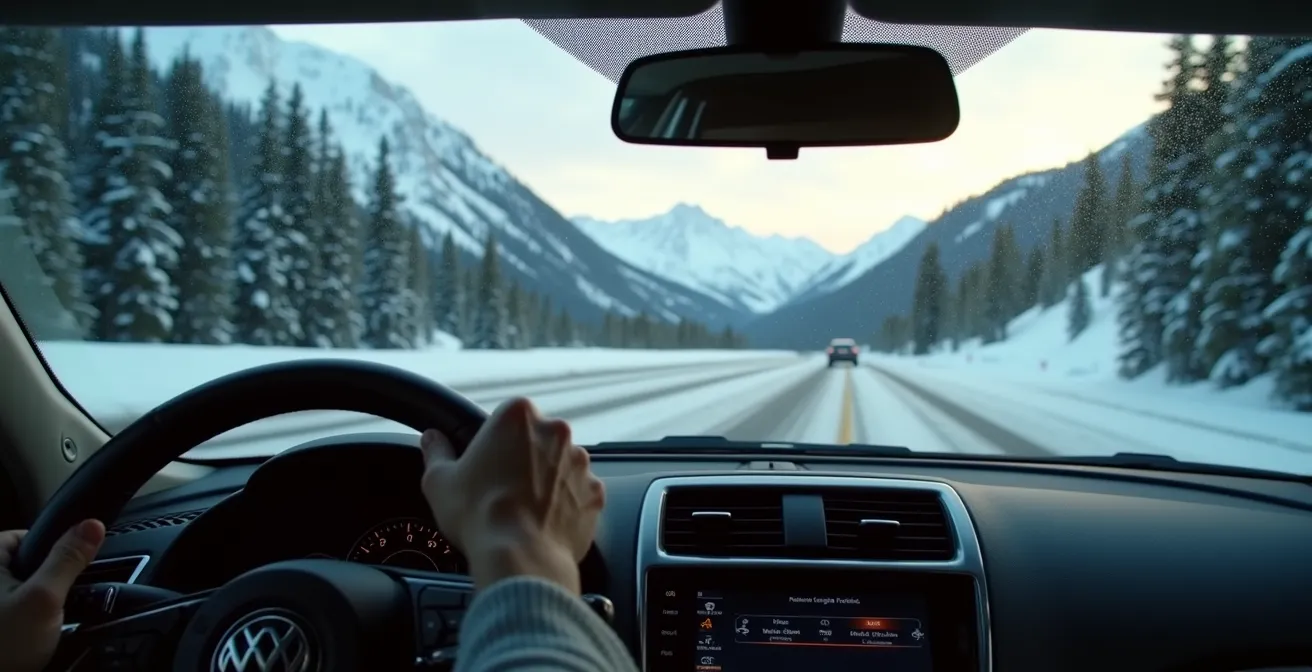
Driving slowly is the final piece of the puzzle. Speed limits are a maximum, not a target. On icy patches, you’ll need to be going slow enough to maintain control if you start to slide. The raw, isolated beauty of the Parkway in winter is a massive reward, but it must be earned through meticulous planning. Rushing is the fastest way to find yourself in a ditch, waiting hours for help that may not be on its way.
Ultimately, the decision to drive the Parkway in winter is a calculated risk. If you are prepared, cautious, and respectful of the mountain’s power, you will be rewarded with an unforgettable experience of solitude and grandeur.
The Premium You Pay for Hotels in Jasper During July and August
If you’re planning a trip to the Rockies in July or August, you’re choosing to pay a significant “comfort premium.” This is the peak of peak season, when the weather is most reliable, all roads and attractions are open, and the daylight hours stretch late into the evening. But this comfort comes at a steep financial cost, especially in Jasper, where accommodation is more limited than in Banff. The price surge isn’t just a minor increase; it’s a dramatic leap that can fundamentally alter your trip budget.
To put it in concrete terms, a standard hotel room that might cost $150-200 CAD in the fall can easily skyrocket during the summer. According to hotel pricing data, rooms often cost between $450-600 CAD per night in July and August. This isn’t for a luxury suite; this is often for a basic, mid-range room. The primary reason for this is simple supply and demand. Jasper is a smaller townsite than Banff, with fewer hotels, and it’s surrounded by a national park, which strictly limits new development. When millions of visitors descend over an eight-week period, the limited supply of rooms becomes incredibly valuable.
This pricing pressure means that booking well in advance is not just a good idea—it’s essential. For a summer trip, it’s not uncommon for people to book their Jasper accommodation 9 to 12 months ahead. Waiting until spring to book a July trip will likely leave you with either the most expensive luxury suites or no options at all. This financial barrier is a major operational trade-off: you get the best weather, but you sacrifice a huge portion of your budget just for a place to sleep.
The table below from a Canadian Rockies travel blog breaks down the stark reality of seasonal accommodation costs in Jasper, highlighting just how extreme the summer peak is compared to other times of the year.
| Season | Average Nightly Rate | Booking Window | Availability |
|---|---|---|---|
| Peak Summer (Jul-Aug) | $300-600 CAD | 9-12 months ahead | Very Limited |
| Spring (Mar-Apr) | $175 CAD | 2-3 months ahead | Good |
| Fall (Oct-Nov) | $150-200 CAD | 1-2 months ahead | Excellent |
| Winter Holidays | $250-400 CAD | 6 months ahead | Limited |
For travellers horrified by those prices, the solution is to target the shoulder seasons. A visit in June or September can offer similar long days and good weather but with hotel rates that are significantly more reasonable. It’s the single biggest lever you can pull to make a Rockies trip more affordable.
Which Animals Will You Actually See in the Rockies During Winter Months?
A common misconception about the Rockies in winter is that all the wildlife has disappeared, hibernating until spring. While it’s true that bears are denned up for the season, winter can actually be one of the best times for wildlife spotting. The bare trees and a blanket of white snow make animals stand out, and many species are forced down into the valley bottoms in search of food, often congregating near the roads. You just have to know where and when to look.
The undisputed king of winter wildlife is the elk. Huge herds gather in the Bow Valley near the Banff townsite and along the Bow Valley Parkway. You’ll often see them strolling right through town, much to the delight of visitors. Bighorn sheep are also very active. They are frequently seen along the road to Lake Minnewanka or at the “Goat Lick” viewpoint on the Icefields Parkway, where they come to lick minerals from the exposed rock. Their thick, woolly coats make them perfectly adapted to the cold.
Winter is also the prime time to spot predators. With less foliage to hide in, wolf packs are more visible against the snow. While seeing a wolf is always a rare and special event, your chances are higher in the winter months. Coyotes and foxes are also commonly seen hunting for rodents in the snowy meadows. The key is to look for tracks in fresh snow along valley trails, which can tell you what animals have been active in the area. Remember to always maintain a safe distance—at least 30 metres from elk and sheep, and 100 metres from any predator like wolves, coyotes, or cougars.
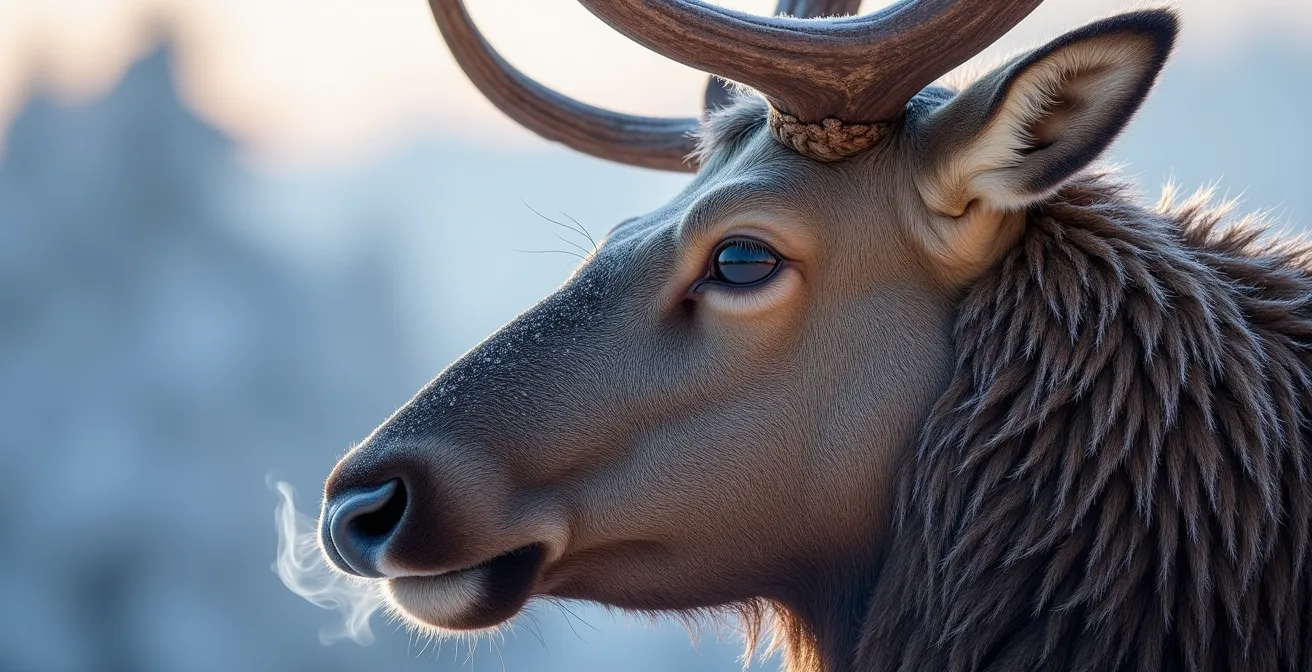
For the best chances of spotting these animals, focus your efforts on the “golden hours” of dawn and dusk, when wildlife is most active. Here are a few reliable spots for winter wildlife viewing:
- Elk Herds: Near the Banff townsite, along the Bow Valley Parkway, and on the grounds of the Banff Springs Golf Course.
- Bighorn Sheep: At the ‘Goat Lick’ viewpoint on the Icefields Parkway (check road conditions first) and along the road to Lake Minnewanka.
- Wolves: Sightings are most common in the northern parts of Banff National Park and throughout Jasper, but they are elusive. Look for tracks and be patient.
- Snowshoe Hares & Foxes: Keep an eye out in snowy fields and along the edges of forests on valley-bottom trails.
So while you won’t see a grizzly bear, a winter visit offers a unique and often more rewarding wildlife experience. The quiet of the season and the stark contrast of the animals against the snow create magical, unforgettable encounters.
Maximizing Your Itinerary: Dealing with 4 PM Sunsets in the Mountains
One of the biggest operational trade-offs of a winter trip to the Rockies is the limited daylight. In December and January, the sun might not rise until 8:30 AM and can dip behind the tall mountain peaks as early as 3:30 or 4:00 PM. This short window of light requires a complete shift in how you plan your day. You can’t fit in three major outdoor activities like you can in July. Instead, you need to practice what I call “Daylight Budgeting”—treating sunlight as a precious, finite resource and allocating it to your highest-priority activities.
A successful winter day starts early. Being out at sunrise (around 8:30 AM) rewards you with “alpenglow,” when the morning sun hits the high peaks, bathing them in a stunning pink and orange light. This is the best time for photography. Your most physically demanding activities, like snowshoeing, cross-country skiing, or ice canyon walks, should be scheduled for the core of the day, roughly between 9 AM and 2 PM, when the light is best and temperatures are at their “warmest.”
By 3 PM, you should be wrapping up your mountain adventures and transitioning to other plans. This is the perfect time to explore indoor attractions like the Whyte Museum of the Canadian Rockies in Banff, visit a local brewery, or simply relax by a fire at your hotel. However, the end of daylight doesn’t have to mean the end of your day. The early darkness opens up a whole new world of evening activities. You can go skating on a lit rink in Banff or Jasper, or take part in one of the best activities the Rockies has to offer in winter: stargazing.
Jasper National Park, in particular, is a phenomenal place for this. It is the world’s second-largest Dark Sky Preserve, spanning over 11,000 square kilometers. The lack of light pollution combined with the crisp, cold air creates exceptionally clear views of the Milky Way and constellations. Here’s a sample strategy for a well-budgeted winter day:
- 8:30 AM – 10:00 AM: Sunrise photography and scenic drives during the morning “golden hour.”
- 10:00 AM – 2:00 PM: Main outdoor activity (e.g., snowshoeing at Johnston Canyon, skiing at Marmot Basin).
- 2:30 PM – 4:00 PM: A final, shorter scenic drive or walk during the afternoon golden hour.
- After 3:30 PM: Transition to indoor attractions, shopping, or relaxing.
- Evening: Post-dinner activities like ice skating on a lit rink or a dedicated stargazing trip.
Instead of seeing the short days as a limitation, view them as an opportunity to experience a different side of the mountains—the cozy interiors, the illuminated rinks, and the vast, starry skies.
Discovery Pass vs. Day Pass: Which Is Cheaper for a 4-Day Rockies Trip?
One of the first things you’ll encounter when entering a Canadian National Park is the gate where you must pay an entry fee. This often leads to a common point of confusion for visitors: should you buy a pass for each day, or invest in an annual Parks Canada Discovery Pass? For a short trip like the 4-day visit your question specifies, the answer seems obvious at first, but the “cheaper” option isn’t always the “better” one.
Let’s break down the direct costs. A Daily Pass for a single vehicle is priced per day and covers all occupants. The annual Discovery Pass is a one-time purchase that grants unlimited access to all of Canada’s National Parks for 12 months. The breakeven point, where the Discovery Pass becomes cheaper than buying daily passes, is seven days. Therefore, for a 4-day trip, paying the daily rate is, in purely mathematical terms, the cheaper option. A 4-day trip would cost $88 in daily passes ($22/day x 4), while the Discovery Pass is $151.25.
However, the analysis shouldn’t stop at pure cost. The Discovery Pass offers a significant advantage in convenience, which is a major part of the “Operational Trade-Off.” With a Discovery Pass hanging from your rearview mirror, you can use the through-lanes at park gates, bypassing the often-long lines of people paying the daily fee. This is especially valuable in the peak summer months at the busy Banff East Gate. It also allows for spontaneous re-entry. Say you’re staying in Canmore (outside the park) and drive into Banff for the day, then decide to go back in for dinner—the Discovery Pass makes this seamless.
Case Study: The Multi-Park Trip Value Calculation
Consider a typical Banff-Jasper itinerary that involves driving the Icefields Parkway. This trip takes you through two national parks (Banff and Jasper). A Discovery Pass eliminates any need to stop or worry about fees as you transition between them. For a 4-day trip, the extra $63.25 spent on the annual pass ($151.25 vs $88) buys you 12 months of unlimited access to every national park in the country, from Pacific Rim in British Columbia to Gros Morne in Newfoundland. If there’s any chance you might visit another Canadian National Park within the year, the value proposition changes dramatically.
The following table provides a clear cost comparison based on 2024 pricing, illustrating the breakeven point for both vehicle and individual passes.
| Pass Type | Cost (CAD) | Valid For | Break-even Point |
|---|---|---|---|
| Daily Vehicle Pass | $22/day | Single day, all occupants | N/A |
| Discovery Pass (Vehicle) | $151.25 | 12 months, all parks | 7 days |
| Daily Individual Pass | $11/adult | Single day, one person | N/A |
| Discovery Pass (Individual) | $75.25 | 12 months, all parks | 7 days |
If your budget is extremely tight and you are 100% certain your trip will be 6 days or fewer, the daily pass is your answer. For everyone else, especially those who value convenience and might return to a Canadian park within the year, the Discovery Pass is often the smarter investment.
Why You Need a Winter Jacket on the Glacier Even in July?
It’s a bright, 25°C (77°F) day in the Sunwapta Valley. You’re in a t-shirt at the Athabasca Glacier parking lot, and you can see people walking on the ice in the distance. The idea of needing a winter jacket seems absurd. This is one of the most common and dangerous misconceptions for summer visitors to the Rockies. The moment you step from the rocky moraine onto the glacier itself, the environment changes dramatically. You are entering a world governed by different rules of weather, and being unprepared can be, at best, deeply uncomfortable.
The reason for this drastic change is twofold. First, the vast expanse of ice and snow acts as a giant reflector, bouncing the sun’s rays away instead of absorbing them as heat. Second, and more importantly, glaciers generate their own localized weather system. Cold, dense air sitting on top of the ice is heavier than the surrounding warmer air. This causes it to flow downhill, creating a constant, chilly wind known as a katabatic wind. This wind is relentless and can make it feel significantly colder than the actual air temperature.
It’s not an exaggeration to say the temperature can plummet the moment you’re on the ice. In fact, on a typical summer day, visitors often experience a temperature drop from 25°C (77°F) in the parking lot to as low as 5°C (41°F) on the surface of the glacier. That’s a 20-degree drop. When you factor in the constant katabatic wind, it can feel even colder, close to freezing. Without proper layers, your fun, educational tour can quickly become a shivering ordeal.
This is why local guides are adamant about the “Canadian Three-Layer System,” even in the height of summer. It’s a versatile approach that allows you to adapt to the rapidly changing conditions you’ll encounter in the mountains, especially on a glacier.
- Base Layer: A moisture-wicking shirt (synthetic or merino wool) that pulls sweat away from your skin to keep you dry.
- Mid Layer: An insulating layer like a fleece jacket or a light puffy down jacket. This is what traps your body heat.
- Outer Shell: A wind and waterproof jacket. This is the most crucial piece on a glacier, as it blocks the katabatic wind from stealing your warmth.
Don’t forget accessories. A toque (that’s Canadian for a beanie), insulated gloves, and sunglasses are essential. The sun’s reflection off the ice is incredibly intense, so high SPF sunscreen is also non-negotiable.
So, when you pack for your glacier tour, ignore the sunny forecast in the valley. Pack the winter jacket, the toque, and the gloves. You might feel silly carrying them from the car, but you’ll be profoundly grateful for them once that first gust of glacial wind hits you.
Key Takeaways
- The “perfect” time to visit is a myth; every season involves a significant trade-off between cost, crowds, access, and weather.
- Shoulder seasons like November or May offer low prices but often come with closed roads, icy trails, and unpredictable “in-between” weather.
- Driving the Icefields Parkway in winter is a serious undertaking requiring mandatory winter tires, an emergency kit, and checking road conditions immediately before departure, as there are no services.
Driving the Icefields Parkway: Safety Tips for Mountain Roads in Shoulder Season
While winter driving on the Icefields Parkway gets a lot of attention for its icy hazards, the shoulder seasons—late September through October and May through June—present their own unique and often underestimated set of challenges. This is the time of “operational trade-offs,” where the road is officially open, but many of the services and side roads you see on the map are not. Assuming a summer-like experience during these months is a common mistake.
The most significant issue is the staggered closure of key access roads and facilities. For instance, the immensely popular road to Moraine Lake typically closes for the season just after Canadian Thanksgiving (the second Monday in October). The road to the stunning Edith Cavell area near Jasper often closes even earlier, by October 1st. Critically, the Saskatchewan River Crossing, the only gas station and rest stop along the entire 230km Parkway, usually shuts its doors on September 30th. Driving the Parkway on October 5th is a fundamentally different experience than driving it on September 25th, as you have no fuel or food stop available.
Seasonal Road Closure Timeline
A prime example of a shoulder season surprise is the closure timeline. Many visitors plan an early October trip to see the golden larches and drive the Parkway, only to find key attractions inaccessible. Moraine Lake Road typically closes between October 10-15. Edith Cavell Road near Jasper shuts down by October 1st. Most importantly, as per a report from a leading Banff travel guide, the Saskatchewan Crossing resort closes on September 30th, removing the only fuel and food stop on the entire 230km route. This requires you to start with a full tank and all necessary supplies from either Banff or Jasper, a detail many first-time visitors miss.
Another major shoulder season hazard is wildlife. September and October are the peak of the elk rutting season. Bull elk become extremely aggressive, territorial, and unpredictable. They often stand in the middle of the road and are not easily intimidated by cars. In the spring (May-June), you have the opposite problem: bears, elk, and sheep are often with their young offspring and are highly protective. It’s crucial to give them an extremely wide berth and never get between a mother and her baby. Driving at dawn and dusk, when wildlife is most active, requires extra vigilance and reduced speeds.
Your Shoulder Season Parkway Drive Audit
- Check Your Dates vs. Closures: Pinpoint your exact travel dates and cross-reference them with the typical closure dates for Moraine Lake Road, Edith Cavell Road, and the Saskatchewan River Crossing.
- Fuel and Supply Plan: Confirm that you can make the entire 230km+ journey on a single tank of gas. Pack enough water, food, and snacks for the entire drive, as no services will be open.
- Wildlife Hazard Awareness: Identify if your trip falls during the fall elk rut (Sept-Oct) or spring birthing season (May-June). Plan to drive slower, especially at dawn and dusk.
- Tire and Weather Check: Although it’s not deep winter, snow can fall at any time. Check the forecast for high-elevation passes and ensure your tires are at least all-season and in good condition.
- Contingency Plan: Have a backup plan in case the Parkway is unexpectedly closed due to a sudden snowstorm. What is your alternate route or activity?
Planning a shoulder season drive on the Parkway requires more than just checking the main highway’s status; it means digging deeper to understand which parts of the experience will be accessible. By doing this homework, you can still have a magnificent and much quieter journey than in the summer peak.