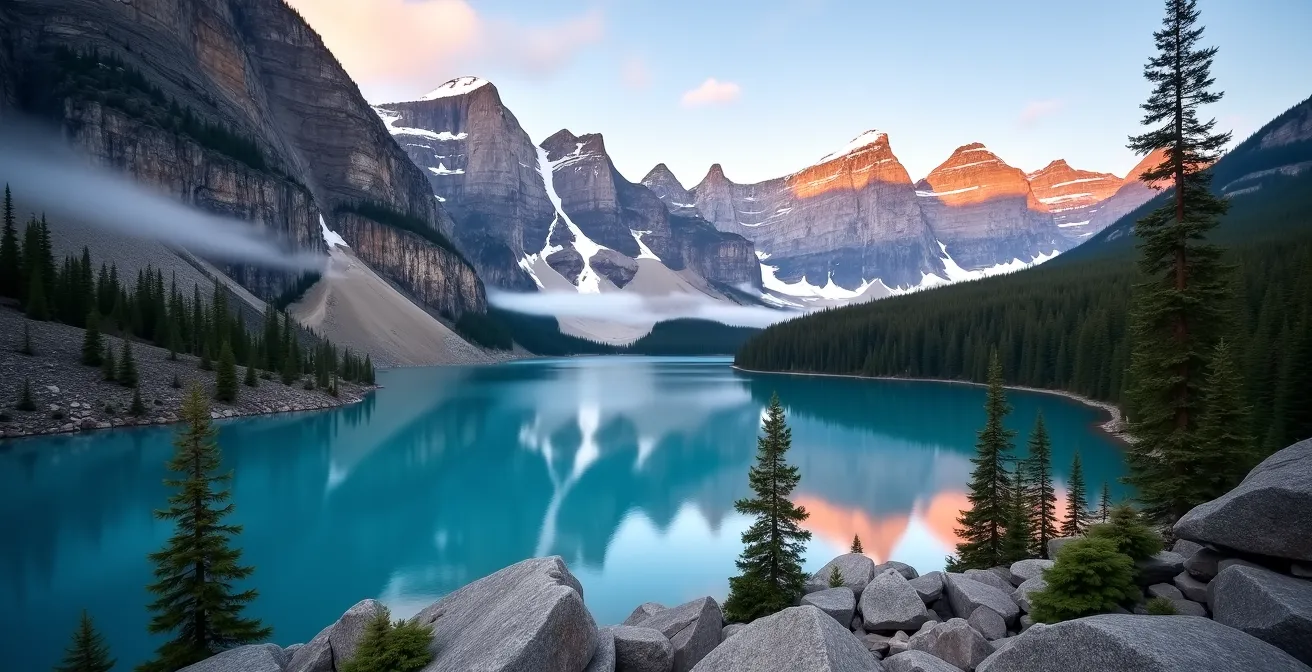
You can no longer drive your personal or rental car to Moraine Lake road; access is now managed exclusively through shuttles, buses, or cycling.
- The official Parks Canada shuttle is affordable but sells out almost instantly due to a high-demand, lottery-like booking system.
- Commercial buses offer guaranteed access and greater flexibility, including sunrise tours, but at a significantly higher cost.
- Access is strictly seasonal (typically June to mid-October) due to severe avalanche risk on the access road.
Recommendation: Do not show up expecting to drive to the lake. Your best strategy is to book a commercial bus for guaranteed access or have a multi-tiered plan ready for the moment Parks Canada tickets are released.
If you’re planning a trip to the Canadian Rockies, you’ve undoubtedly seen the iconic, turquoise waters of Moraine Lake on your screen. You might be picturing a scenic drive in your rental car, pulling up to the shore for that perfect photo. It’s time for a reality check from a local perspective: that is no longer possible. Parks Canada has permanently closed Moraine Lake Road to personal vehicles to manage overwhelming traffic and improve the visitor experience. This decision has turned what was once a simple drive into a significant logistical challenge.
Many guides will simply tell you to “book the shuttle,” but this advice dangerously underestimates the situation. Securing a spot on the official Parks Canada shuttle feels more like winning a lottery than making a simple reservation. The frustration for unprepared visitors is real and can derail a long-awaited vacation. This isn’t just about finding a ride; it’s about understanding an entire transport ecosystem with its own rules, timelines, and high-stakes competition.
But what if you could approach this not as a barrier, but as a solvable puzzle? This guide is designed to give you that strategic advantage. We will move beyond the basic fact of the ban to dissect the operational reality of getting to Moraine Lake. We’ll explore the statistical probability of snagging shuttle tickets, conduct a cost-benefit analysis of commercial operators, and outline the non-negotiable safety protocols that dictate the lake’s seasonal access. By understanding the ‘why’ behind the system, you can build a predictable, frustration-free plan.
This article will walk you through the official shuttle system, the value proposition of private buses, the feasibility of cycling, and the critical reasons for the seasonal closures. We will then broaden our lens to compare strategic alternatives and apply this logistical mindset to other high-demand attractions in the Rockies, ensuring your entire trip is a success.
To help you navigate this new reality, this guide breaks down every option and consideration. Below, you’ll find a complete overview of how to plan your visit, from securing shuttle tickets to exploring incredible alternatives if your first choice doesn’t work out.
Summary: Navigating the Moraine Lake Access Maze
- Parks Canada Shuttles: When Are the Tickets Released and How to Snag One?
- Is the Commercial Bus to Moraine Lake Worth the Extra $40 CAD?
- Cycling to Moraine Lake: Is the Uphill Ride Feasible for Casual Bikers?
- Why You Can’t Visit Moraine Lake Before June or After mid-October?
- Lake Minnewanka or Peyto Lake: Which Is the Best Alternative to Moraine?
- Spirit Island: Is the Maligne Lake Cruise Worth the Cost for Photographers?
- Which Canadian Attractions Require Reservations 6 Months in Advance?
- Golden Hour in the Rockies: Why Sunrise Beats Sunset for Lake Photography?
Parks Canada Shuttles: When Are the Tickets Released and How to Snag One?
The Parks Canada shuttle is the official and most affordable way to reach Moraine Lake, but securing tickets is notoriously difficult. This is not a system where you can casually book a week in advance. You are competing with thousands of other hopefuls for a limited number of seats. The key to success is understanding the two-tiered release system. According to Parks Canada’s official reservation system, only 40% of the entire season’s tickets are released in a single block in April, with the remaining 60% released in a rolling window just 48 hours before each departure day.
The April launch is your best, albeit most competitive, chance. Visitors have reported virtual queue numbers soaring past 17,000 within minutes of the 8:00 am MDT launch. During the 2025 launch, the most desirable time slots—early morning departures in July—were completely sold out by 8:30 am. If you miss this window, your only other official option is the 48-hour rolling release, which requires you to be online and ready to book at exactly 8:00 am MDT two days before your desired visit. This can be stressful and is not a reliable strategy if your vacation schedule is tight.
Given the low reservation probability, treating the Parks Canada shuttle as your only option is a recipe for disappointment. A successful visit requires a backup plan. You need to approach this with a clear, tiered strategy to maximize your chances and guarantee you won’t miss out on seeing the lake.
Your Action Plan: Securing a Ride to Moraine Lake
- Tier 1 (Primary Goal): Be logged into the Parks Canada Reservation Service before 8:00 am MDT on the April launch day. Have your dates, times, and payment information ready to go. This is your shot at the main inventory.
- Tier 2 (Rolling Release): If you miss the April launch, set a calendar alert for 8:00 am MDT exactly two days before your planned visit. Attempt to book from the 60% of tickets released at this time, but be prepared for them to vanish in seconds.
- Tier 3 (Guaranteed Backup): Before your trip, pre-book a refundable ticket with a licensed commercial operator like the Moraine Lake Bus Company or a smaller shuttle service. This acts as your insurance policy.
- Contingency Check: The day before your visit, if you failed to get Parks Canada tickets, confirm your commercial booking. If you succeeded, cancel the commercial booking if it’s within the refund window.
- Final Logistics: Double-check your departure point. The Parks Canada shuttle leaves from the Lake Louise Park & Ride, while commercial operators use different locations like Samson Mall or offer hotel pickups.
Is the Commercial Bus to Moraine Lake Worth the Extra $40 CAD?
When you see the price difference between the $8 Parks Canada shuttle and a $49+ commercial bus ticket, the sticker shock is understandable. However, framing this as a simple cost comparison misses the point. You are not just paying for a ride; you are paying for certainty and flexibility. For many visitors, especially those on a tight schedule or planning a once-in-a-lifetime trip, that guarantee is worth every penny. Commercial operators eliminate the stress and uncertainty of the Parks Canada lottery system.
Furthermore, these licensed operators provide services that Parks Canada doesn’t. Many, like the Moraine Lake Bus Company, offer coveted sunrise tours that get you to the lake shore in time for the best light—something nearly impossible with the standard shuttle schedule. They often allow you to choose your return time, giving you the freedom to hike the Larch Valley or rent a canoe without constantly watching the clock. Some smaller operators even provide hotel pickups, blankets, and a more personalized small-group experience. These companies have significant operational costs; Parks Canada charges commercial operators over $300 for each bus trip into the sensitive area, a cost that is naturally passed on to the consumer.
The question isn’t whether the bus is “worth it” in a vacuum, but whether it’s worth it *for you*. If your primary goal is to see Moraine Lake without stress, to capture sunrise photos, or to have a flexible itinerary, then the answer is an unequivocal yes. The extra cost is an investment in a seamless and more enjoyable experience.
To make the best decision for your travel style and budget, it helps to see the options side-by-side. The following table breaks down the key differences between the main shuttle providers.
| Operator | Price (CAD) | Departure Points | Flexibility | Special Features |
|---|---|---|---|---|
| Parks Canada | $8-15 | Lake Louise Park & Ride | Fixed schedule | Lake Connector included |
| Moraine Lake Bus Co. | $49+ | Lake Louise/Samson Mall | Choose return time | Sunrise tours, no waiting |
| Roam Transit Super Pass | $30 | Banff/Canmore | All-day pass | Multiple route access |
| Via Via | $60-80 | Hotel pickup | Extended stays | Small groups, blankets |
Cycling to Moraine Lake: Is the Uphill Ride Feasible for Casual Bikers?
For the adventurous traveler, cycling to Moraine Lake presents a tempting, reservation-free alternative. The image of pedaling along a quiet mountain road is certainly romantic, but it’s crucial to understand the physical demands before committing. The ride involves an 11-14 kilometer uphill journey from the road closure point near Lake Louise, with a significant and sustained elevation gain. For a casual cyclist or a family with children, this is a very challenging ride. However, the rise of e-bikes has made this option accessible to a much wider audience, turning a strenuous effort into a manageable and rewarding adventure.
The absolute best time to cycle is during a brief, magical window in mid-to-late May. During this period, Parks Canada has typically plowed the road free of snow, but it has not yet opened to shuttle buses. This means you can have the entire road—and potentially the lake itself—almost entirely to yourself. It’s a truly unique experience that bypasses the summer crowds entirely. Outside of this window, you will be sharing the narrow road with large buses, which requires constant awareness.
Safety is paramount. Attempting this ride during the winter (November to May) is extremely dangerous due to avalanche risk and should only be undertaken by those with proper avalanche safety training and equipment like touring skis or fat bikes. For a summer ride, ensure your bike is in good condition, and be prepared for changing weather conditions. Even on a clear day, the mountain air can be cool, and rain can move in quickly. The reward, however, is immense: earning that iconic view through your own effort is an unforgettable experience.
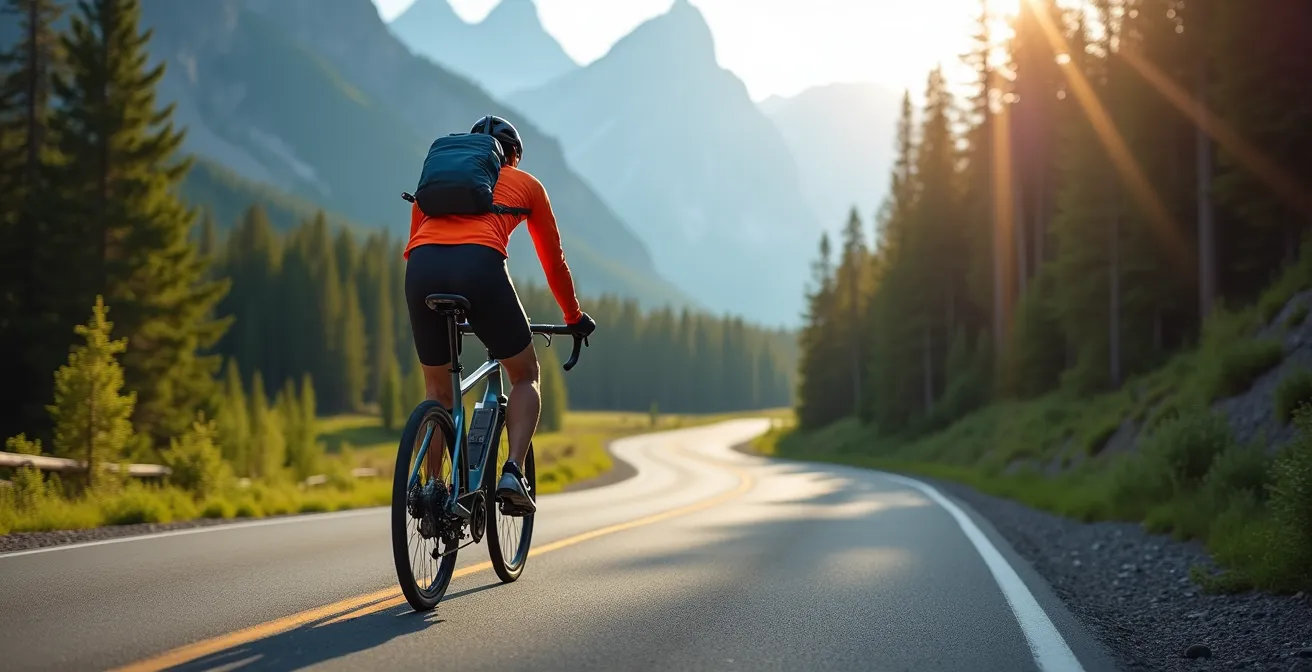
As the image shows, the journey is as spectacular as the destination. The winding road offers stunning views of the surrounding peaks, building anticipation until you finally round that last corner and see the brilliant blue of the lake. For those with a moderate fitness level and a spirit of adventure, especially with an e-bike, cycling is arguably the most memorable way to reach Moraine Lake.
Why You Can’t Visit Moraine Lake Before June or After mid-October?
One of the most common points of confusion for visitors is the strict seasonal access to Moraine Lake. You might see photos of the lake dusted with snow and wonder why you can’t visit in May or late October. The reason is simple and non-negotiable: severe avalanche risk. The Moraine Lake Road is not just a scenic drive; it is a route that crosses multiple, high-risk avalanche paths. To ensure public safety, Parks Canada completely closes the road to all vehicle traffic during the winter months.
The operating season is remarkably short. Typically, Moraine Lake Road operates only from June 1st to the Tuesday after Canadian Thanksgiving (around mid-October). These dates are firm and dictated by snowpack and avalanche conditions, not tourism demand. As The Banff Blog expertly clarifies, this closure is a serious safety measure. The road becomes impassable and extremely hazardous.
From November to May, the road is snow-covered and requires snowshoes, touring skis, a fat bike, or cross-country skis to access. The road also crosses through extreme avalanche terrain, so Parks Canada closes the road in the winter.
– The Banff Blog, How to Get to Moraine Lake in 2026
Parks Canada’s comprehensive avalanche control program is one of the most sophisticated in the world, but even it cannot make this corridor safe for public vehicle access in winter. Only individuals with professional avalanche rescue equipment and training should ever consider venturing into this area during the off-season. This “seasonal gatekeeping” is a fundamental reality of visiting the high-altitude regions of the Canadian Rockies. Understanding this isn’t just about logistics; it’s about respecting the immense power of the mountain environment.
Lake Minnewanka or Peyto Lake: Which Is the Best Alternative to Moraine?
What if, despite your best efforts, you can’t secure a ride to Moraine Lake? It’s a frustrating possibility, but it doesn’t have to ruin your trip. The Canadian Rockies are blessed with an abundance of stunning lakes, many of which are just as beautiful and far more accessible. The key is to shift your mindset from a “second-best” consolation prize to a strategic alternative that might better suit your interests.
Two of the most popular alternatives are Peyto Lake and Lake Minnewanka, and they could not be more different. Peyto Lake, located along the iconic Icefields Parkway, is a photographer’s dream. A short 10-minute walk from the parking lot leads to an elevated viewpoint that reveals the lake’s incredible wolf-like shape and milky turquoise color, caused by the same glacial rock flour as Moraine. It offers a similar “wow” factor with significantly less logistical hassle.
On the other hand, Lake Minnewanka, just a short drive from the town of Banff, is all about activity. As the only lake in Banff National Park that allows powerboats, it’s a hub for boat tours, fishing, and kayaking. Its vast 21-kilometer length and ample parking make it a great choice for a full day of recreation. Beyond these two, gems like the vibrant Emerald Lake in Yoho National Park or the glacier-fed Bow Lake offer spectacular scenery with fewer crowds. For those seeking even quieter spots, Herbert Lake offers a diving board for brave swimmers, while Johnson Lake provides some of the warmest waters in the area, perfect for a swim.
The right alternative depends entirely on what you’re looking for. The following comparison can help you choose a lake that aligns with your goals for the day.
| Lake | Access | Parking | Best For | Special Features |
|---|---|---|---|---|
| Peyto Lake | Icefields Parkway pulloff | Limited lot | Photography | Wolf-shaped lake, 10-min walk to viewpoint |
| Lake Minnewanka | 10 min from Banff | Large lot | Water sports | Only powerboat lake, 21km long |
| Emerald Lake | Yoho National Park | Available | Canoeing | Vibrant green waters, less crowded |
| Bow Lake | Icefields Parkway | Roadside | Picnics | Glacier views, largest in park |
Spirit Island: Is the Maligne Lake Cruise Worth the Cost for Photographers?
Once you’ve mastered the logistical thinking required for Moraine Lake, you can apply it to other high-demand attractions in the Rockies, like the famous Spirit Island in Jasper National Park. This tiny, picturesque island, located deep within Maligne Lake, is one of the most photographed spots in Canada. However, access is tightly controlled; you can’t simply drive to it. The primary way to see it is via the Maligne Lake Cruise, a commercial boat tour that comes with a significant price tag.
For the average tourist, the cruise is a fantastic, scenic experience. But for a serious photographer, it can be frustrating. The boat stops at the viewpoint for only 15-20 minutes, often in harsh midday light, surrounded by dozens of other people. You have very little creative control. So, is it worth the cost for photographers? If your goal is a simple snapshot, yes. If your goal is a unique, beautifully lit photograph, probably not. The real value lies in understanding the alternatives, much like with Moraine Lake.
The most dedicated photographers pursue a more adventurous route. As travel photographer Renee Roaming notes, the ultimate shot often requires bypassing the tour entirely:
Popular things to do at Maligne Lake are canoeing/kayaking, boat tours, biking, fishing, and hiking. We opted to take a midnight paddle out to Spirit Island to capture sunrise, and what an incredible experience that was!
– Renee Roaming, Top 6 Must-See Canadian Rockies Lakes
This “midnight paddle” involves a multi-hour canoe or kayak journey across the vast, cold waters of Maligne Lake and requires a backcountry camping permit to stay overnight near the island. It’s a serious undertaking, but it grants photographers what the cruise cannot: access during the golden hours of sunrise and sunset. For those less inclined to paddle for hours, shoreline photography near the main dock can still yield beautiful reflection shots in the early morning, offering a free alternative to the expensive cruise ticket.
Which Canadian Attractions Require Reservations 6 Months in Advance?
The intense planning required for Moraine Lake is not an isolated case; it’s the new normal for many of Canada’s most sought-after natural attractions. The days of spontaneous visits to iconic locations are fading. A successful trip to the Canadian Rockies, or any popular national park, is now a game of strategic, long-range planning. Whether it’s shuttle buses, coveted campsites, or unique experiences like the Lake O’Hara bus in Yoho National Park, reservations often open months in advance and are snapped up in minutes.
For example, Parks Canada releases its summer campsite reservations for popular parks like Banff and Jasper in January and February. The most desirable sites are often gone within the first hour of the system opening. Similarly, the lottery for the Lake O’Hara bus—another jewel of the Rockies with restricted access—requires applications months ahead of time. The key takeaway is that you must treat your vacation planning like a project with firm deadlines.
Your calendar should be marked with key dates, such as the day Parks Canada releases Moraine Lake shuttle reservations on April 16, 2025, at 8 am MDT. This level of organization is essential. Waiting until a month before your trip to plan the details will likely lead to disappointment, as all the premier experiences will be fully booked. The logistical ecosystem extends far beyond a single lake.

Think of your trip planning as a series of crucial appointments on your calendar. Researching reservation launch dates for every key attraction you want to visit should be one of the very first steps in your process. This proactive approach separates a smooth, incredible vacation from one filled with frustration and missed opportunities.
Key takeaways
- Guaranteed access to Moraine Lake now requires booking a commercial bus, as Parks Canada shuttles are extremely competitive.
- The Moraine Lake access road is closed from mid-October to the end of May due to severe, non-negotiable avalanche risk.
- Mastering the logistics for Moraine Lake provides a blueprint for planning visits to other high-demand Canadian attractions that also require advance reservations.
Golden Hour in the Rockies: Why Sunrise Beats Sunset for Lake Photography?
After navigating the complex logistics, securing your pre-dawn shuttle, and arriving at the lake shore in the cool, dark air, you are finally rewarded. For photographers, the ultimate prize is capturing the “golden hour,” but in the Canadian Rockies, not all golden hours are created equal. While sunset is beautiful, sunrise offers a uniquely spectacular phenomenon that makes the early start worthwhile: the alpenglow.
The key lies in the geography of the region. As explained by experts, the north-south orientation of the primary mountain ranges creates a perfect canvas for the morning sun. In a guide to the best lakes in the area, Travel Outlandish notes that the orientation of the Canadian Rockies’ main ranges creates superior sunrise light. As the sun rises in the east, it first illuminates the highest, east-facing peaks—like the Valley of the Ten Peaks behind Moraine Lake—with a vibrant pink and orange light long before the sun itself is visible. This alpenglow, reflected in the perfectly still morning water, creates a moment of unparalleled beauty that simply doesn’t happen at sunset, when the light is coming from behind the peaks.
To capture this, timing is everything. You must be at your chosen spot at least an hour before the official sunrise time to photograph the pre-dawn colors and the first kiss of alpenglow. This is why sunrise-focused commercial shuttles, which can depart as early as 4:00 am, are so valuable. For example, a 4:00 am shuttle from the Moraine Lake Bus Company gets you to the lake by 4:30 am, giving you ample time to set up. Even the Parks Canada Alpine Start shuttle, departing at 4:00 or 5:00 am, is designed specifically for this purpose. The effort is significant, but the photographic reward is a shot that most tourists, arriving later in the day, will never get.
Ultimately, accessing Moraine Lake in this new era is a testament to planning. By embracing the logistical challenges, preparing for the reservation systems, and understanding the ‘why’ behind the rules, you transform a potential source of frustration into a seamless and deeply rewarding part of your Canadian Rockies adventure. The view from the top of the Rockpile, earned through strategy and effort, is all the sweeter.