Successfully heli-skiing in British Columbia is not about ignoring risk, but about systematically managing it through a professional assessment framework.
- Operator safety is verifiable through specific certifications (ACMG/IFMGA) and trade associations like HeliCat Canada.
- Your personal gear, fitness, and insurance are critical layers of your personal risk mitigation system that cannot be overlooked.
Recommendation: Before booking your trip, conduct a thorough due diligence on your operator’s safety record and perform an honest audit of your own physical preparedness and insurance coverage.
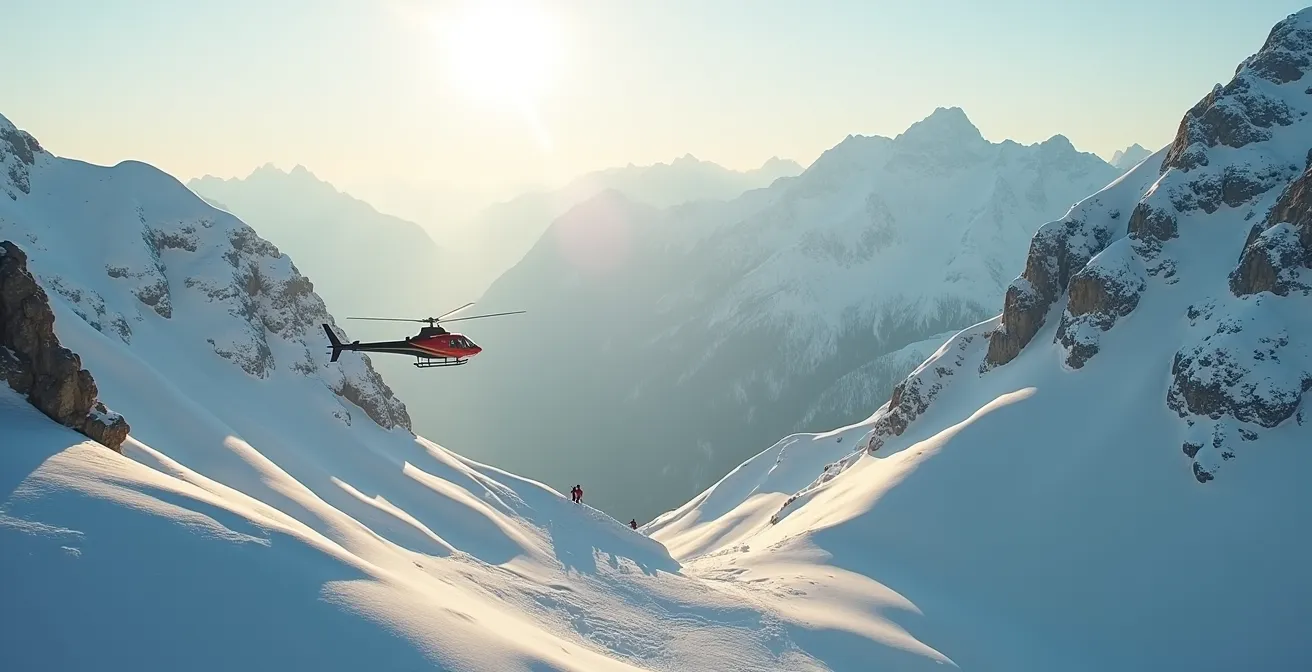
The image is iconic: a helicopter banking away from a pristine, untracked peak in British Columbia, leaving a small group of skiers in a world of silent, deep powder. For any serious skier, it’s the ultimate dream. But for the discerning skier from Europe or the US, that dream is shadowed by a persistent, rational question: what about the risk? The word “avalanche” looms large, and news headlines, though rare, can be sobering. The standard advice—”hire a good guide,” “be fit”—feels inadequate when you’re committing thousands of dollars and placing your safety in the hands of others in a remote wilderness.
This is where a fundamental shift in perspective is required. The key to a safe and successful heli-skiing trip is not to blindly trust or to fear the unknown, but to adopt the mindset of a professional. True safety in the backcountry is not a matter of chance; it is the result of a systematic risk mitigation framework. It involves a layered approach where you, the client, play an active role in the due diligence process. This is not about second-guessing your guide on the mountain; it’s about making informed choices long before you even buckle your boots.
This guide moves beyond the marketing brochures to provide that framework. We will deconstruct the essential components of risk management for a BC heli-skiing trip, from verifying your operator’s credentials and understanding the crucial nuances of insurance to assessing your own physical readiness and gear. By the end, you will be equipped to transform your apprehension into a structured, data-driven decision-making process, allowing you to pursue the ultimate powder experience with confidence.
This article breaks down the core pillars of heli-skiing risk management, providing a clear roadmap for your due diligence. The following sections will guide you through each critical assessment, from your insurance policy to your personal safety equipment.
Summary: A Systematic Approach to Heli-Skiing Safety in British Columbia
- Why Standard Travel Insurance Won’t Cover Your Heli-Skiing Accident?
- Leg Burn: How Fit Do You Actually Need to Be for a Week of Heli-Skiing?
- Certified Guides: How to Verify the Safety Record of Your Heli-Ski Operator?
- Fat Skis vs. Regular: Why Your Resort Gear Will Fail in Deep Powder?
- Cat-Skiing vs. Heli-Skiing: Which Offers Better Value for Intermediate Skiers?
- How to Navigate the Canadian Healthcare System as a Non-Resident Tourist
- Cotton Kills: Why Synthetic or Wool Layers Are Critical Even in Summer?
- Bear Safety 101: Why Bear Spray Is Mandatory for Your Backcountry Expedition
Why Standard Travel Insurance Won’t Cover Your Heli-Skiing Accident?
The first critical failure point in many international skiers’ safety plans occurs before they even leave home: assuming their standard travel insurance is adequate. This is a dangerous misconception. From an underwriting perspective, heli-skiing is not a vacation activity; it’s an extreme sport with a distinct risk profile. As a result, most regular travel insurance plans exclude heli-skiing explicitly in their policy wording, often buried in clauses related to “hazardous sports” or “extreme activities.” Relying on such a policy is equivalent to skiing without any financial protection at all.
Should an accident occur, the costs can be astronomical. A simple leg fracture in a remote BC range will likely require a helicopter evacuation to the nearest appropriate medical facility, a service that can cost tens of thousands of dollars on its own before any medical treatment begins. Without specialized coverage, you are personally liable for these costs, which can be financially devastating.
Before purchasing any policy, you must act as your own risk auditor. Scrutinize the policy document for specific terms. Look for the following red flags:
- ‘Hazardous sports’ or ‘extreme sports’ exclusion clauses
- Specific exclusions for ‘backcountry skiing,’ ‘off-piste skiing,’ or ‘heliskiing’
- Limitations on ‘search-and-rescue’ coverage
- Exclusions for ‘helicopter transport for recreational purposes’
Only a specialized policy designed for adventure sports will provide the necessary coverage, including high-cost medical evacuation, emergency medical treatment, and trip cancellation. This is a non-negotiable component of your risk mitigation framework.
Leg Burn: How Fit Do You Actually Need to Be for a Week of Heli-Skiing?
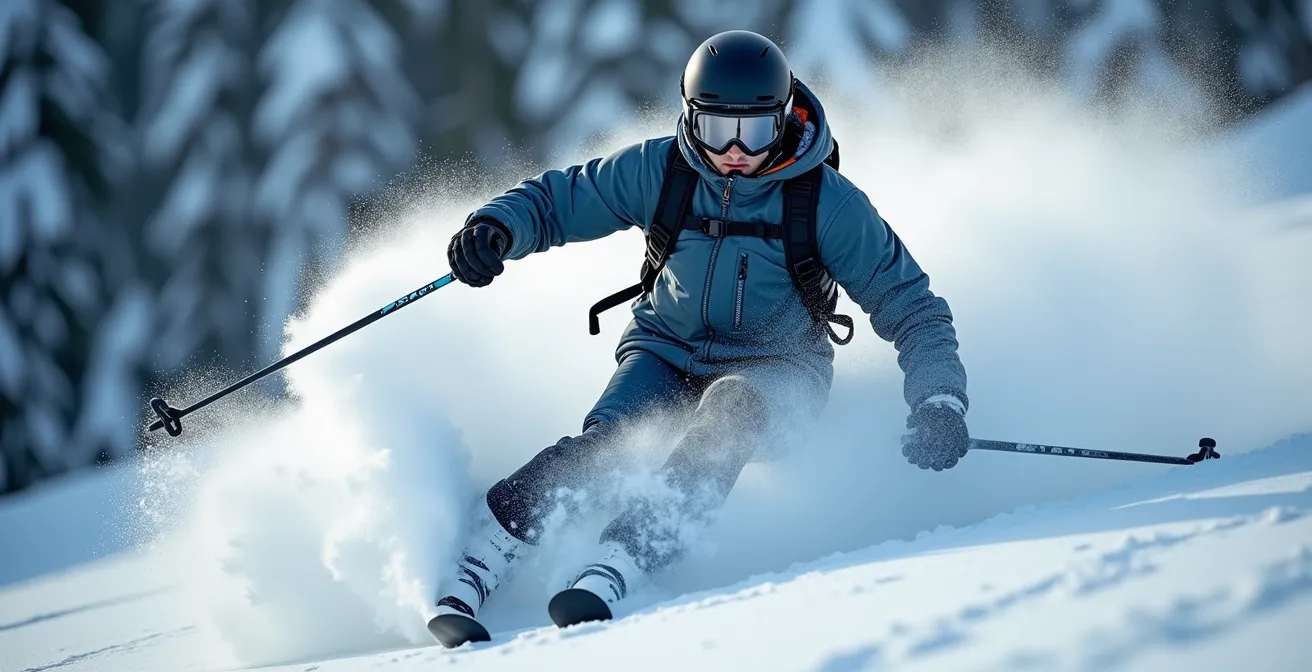
While avalanches are the most feared risk, the most common cause of a ruined heli-skiing trip is far more mundane: inadequate physical conditioning. The physiological demands of skiing deep, untracked powder for multiple consecutive days are immense and fundamentally different from resort skiing. A week-long trip can involve skiing up to 100,000 vertical feet, with some experienced groups reporting they can achieve over 200,000 vertical feet in seven days. This is an incredible workload that requires both cardiovascular endurance and, most critically, eccentric muscle strength.
The “leg burn” from a single long powder run is an order of magnitude greater than anything you’ll experience on a groomed run. Your quadriceps, glutes, and core are constantly under tension, working to absorb terrain variations and control your skis in a three-dimensional medium. Fatigue is not just a comfort issue; it is a major safety risk. Fatigue leads to poor technique, slow reaction times, and a significantly higher probability of late-day injuries. A simple fall in deep snow when you’re exhausted can result in a tweaked knee or a more serious injury.
Your training regimen in the months leading up to your trip should focus on endurance and strength. This includes:
- Cardiovascular training: Activities like running, cycling, or rowing for at least 30-45 minutes, 3-4 times a week.
- Strength training: Focus on compound leg exercises like squats, lunges, and deadlifts. Wall-sits are excellent for building the specific isometric strength needed.
- Core stability: Planks, Russian twists, and leg raises are crucial for maintaining balance and power transfer in deep snow.
- Flexibility: Regular stretching, especially for the hips and hamstrings, is essential for injury prevention.
Being “in shape” for resort skiing is not the same as being prepared for the relentless physical demands of a heli-skiing week. An honest self-assessment of your fitness is a critical layer of personal risk management.
Certified Guides: How to Verify the Safety Record of Your Heli-Ski Operator?
Your guide is your single most important risk manager on the mountain. Their training, experience, and judgment are what stand between you and a potential accident. However, simply trusting that an operator has “good guides” is not sufficient due to diligence. You must verify their credentials and the operator’s overarching safety culture. In Canada, the gold standard for mountain guiding is certification from the Association of Canadian Mountain Guides (ACMG) or, for international guides, the International Federation of Mountain Guides Associations (IFMGA). These are not weekend courses; they are grueling, multi-year qualification processes covering avalanche safety, crevasse rescue, emergency medicine, and complex decision-making.
Beyond individual guide certification, you should investigate the operator’s institutional commitment to safety. Is the company a member of HeliCat Canada? This trade association sets rigorous operating standards for the industry, covering everything from aircraft maintenance to guide training protocols. A reputable operator will be transparent about their affiliations and their safety procedures. Leading operators pride themselves on the depth of their team’s experience; for instance, a major player like CMH notes that their 150+ guides collectively represent over 1,500 years of combined experience in the mountains.
Do not hesitate to ask direct questions before booking. Inquire about their daily safety meetings, their snowpack assessment procedures, and their guide-to-client ratios. An industry-standard ratio is typically one guide to four or five clients (4:1 or 5:1). A higher ratio could be a red flag. A professional, safety-conscious operator will welcome these questions as a sign of a responsible client.
Action Plan: Verifying Operator and Guide Safety
- Verify that lead guides are certified by the Association of Canadian Mountain Guides (ACMG) or the International Federation of Mountain Guides Associations (IFMGA).
- Check if the operator is an active member of the HeliCat Canada trade association, which enforces industry safety standards.
- Ask about the operator’s daily avalanche assessment protocols and how they communicate snowpack conditions to clients.
- Inquire about the guide-to-client ratio for your group; a ratio of 4:1 or smaller is a strong indicator of a focus on safety.
- Request information on the operator’s emergency response plan and their history of safety incidents.
Fat Skis vs. Regular: Why Your Resort Gear Will Fail in Deep Powder?
Arriving for a heli-ski trip with your favourite all-mountain resort skis is a common mistake that can compromise both your enjoyment and your safety. The physics of deep powder are entirely different from packed snow, and your gear must be considered a critical component of your safety system. Resort skis, typically 80-95mm underfoot, are designed for edge hold and carving on firm surfaces. In deep, unconsolidated snow, they lack the surface area to provide flotation. They will tend to “submarine” or dive under the snow, requiring immense physical effort to bring to the surface. This not only leads to rapid fatigue but also dramatically increases the risk of falls and potential injuries, particularly to the knees.
Powder skis, or “fat skis,” are purpose-built tools. With a width of 110-125mm underfoot and often featuring significant rocker (upward curve) in the tip and tail, they are designed to float on top of the snow. This flotation makes turning feel effortless and intuitive, conserving massive amounts of energy throughout the day. Less fatigue means better decision-making and a lower chance of a late-day accident. The difference in performance and safety is not subtle; it is fundamental.
This table from Northern Escape Heli-Skiing, a BC-based operator, clearly outlines the critical differences. According to their analysis of ski performance, the right equipment is directly linked to safety.
| Feature | Resort Skis | Powder Skis |
|---|---|---|
| Width | 80-95mm underfoot | 110-125mm underfoot |
| Float in Deep Snow | Sinks/submarines | Stays on surface |
| Energy Required | High – constant fighting | Low – natural flotation |
| Fatigue Factor | Exhausting in powder | Energy-conserving |
| Safety Impact | Higher injury risk | Reduced late-day accidents |
Fortunately, virtually all reputable heli-ski operators in BC understand this and provide a fleet of high-performance powder skis as part of their package. As the team at Northern Escape Heli-Skiing states in their equipment policy:
We have plenty for everyone and they are already included (at no extra cost) in your heli-ski package.
– Northern Escape Heli-Skiing, Equipment Policy
Trust their expertise and use the equipment they provide. It has been specifically selected for the conditions you will encounter and is a key part of the operator’s own risk management strategy.
Cat-Skiing vs. Heli-Skiing: Which Offers Better Value for Intermediate Skiers?
For many advanced-intermediate skiers, the allure of heli-skiing is powerful, but the price tag and perceived intensity can be intimidating. This is where cat-skiing enters the risk-reward calculation, not just as a cheaper alternative, but as a distinct experience with its own set of advantages. Cat-skiing uses a snowcat—a large, tracked vehicle—to transport skiers up the mountain, accessing the same type of untracked terrain as a helicopter but in a more confined tenure.
The primary advantage of cat-skiing is its reliability. Helicopters are highly susceptible to weather; fog, high winds, or heavy snowfall will ground the entire operation, resulting in a “down day.” Most operators offer a refund for down days, but that doesn’t replace the lost opportunity. Snowcats, however, can operate in almost any weather condition short of a full-blown blizzard. This makes cat-skiing an excellent value proposition, as you are virtually guaranteed to ski every day of your trip. Some heli-ski operators even maintain a backup cat-skiing operation to mitigate this risk, ensuring their clients can ride even on storm days.

For the advanced-intermediate skier, cat-skiing can also offer a more manageable pace. The runs may be slightly shorter than some heli-skiing descents, and the group dynamic is often more relaxed. This provides a fantastic environment to build confidence in deep powder without the pressure of a fast-paced heli group. While it lacks the dramatic thrill of a helicopter ride, it consistently delivers high-quality, untracked powder skiing. In terms of “value,” if defined as maximum vertical feet of powder skied for dollars spent, a week of cat-skiing with no down days often comes out ahead of a heli-skiing trip that loses one or two days to weather.
How to Navigate the Canadian Healthcare System as a Non-Resident Tourist
Understanding what happens *after* an accident is a crucial, if unsettling, part of risk management. As a non-resident tourist in Canada, you are not covered by the country’s provincial health plans. This means you are personally responsible for 100% of any medical costs incurred. While the quality of care in British Columbia is excellent, it comes at a significant price for visitors. Upon admission to a hospital, you will likely be required to provide a credit card or a substantial cash deposit before treatment can even begin.
This is precisely where your specialized heli-skiing insurance policy becomes your most critical asset. These policies are designed to handle this exact scenario. For example, some specialized plans offer up to $200,000 CAD in coverage with a $0 deductible for visitors. More importantly, they provide a 24/7 emergency assistance hotline. This service is your lifeline. They will communicate directly with the hospital to arrange for direct billing, removing the immediate financial burden from you and ensuring there are no delays in your care.
If you require medical attention as a non-resident in BC, you must follow a clear protocol:
- Contact your insurance provider’s 24/7 emergency assistance line immediately. This should be your first call, even before contacting family back home.
- Provide them with your policy number and a description of the situation.
- Follow their instructions precisely. They will guide you to the nearest appropriate facility and coordinate with the hospital administration.
- Keep all receipts, medical reports, and documentation meticulously. You will need these for any reimbursement claims.
Navigating a foreign healthcare system during a medical emergency is incredibly stressful. Having a robust insurance policy and understanding how to use it is an essential part of a comprehensive safety plan, providing peace of mind and ensuring you get the care you need without catastrophic financial consequences.
Cotton Kills: Why Synthetic or Wool Layers Are Critical Even in Summer?
The phrase “Cotton Kills” is a well-worn mantra in the backcountry community, and for good reason. While the title’s mention of “summer” might seem out of place for a heli-skiing article, it highlights a year-round principle of mountain safety that becomes critically important in a winter environment: moisture management. Your choice of base and mid-layers is not a matter of comfort or fashion; it is a core component of your personal survival system, particularly in an avalanche scenario.
The fundamental problem with cotton is its relationship with water. Cotton is hydrophilic, meaning it absorbs and retains moisture. When you exert yourself while skiing, you sweat. A cotton t-shirt will absorb that sweat like a sponge. Once wet, cotton loses all of its insulating properties. Instead of trapping warm air, it actively pulls heat away from your body through conduction and evaporation, a process that can dramatically accelerate the onset of hypothermia. This is dangerous during a normal ski day, but it can be a death sentence if you are caught in an avalanche.
As the official HeliCat Canada Safety Guidelines state, the material you wear has direct safety implications:
Cotton retains moisture and loses all insulation value when wet, dramatically increasing hypothermia risk in avalanche burial scenarios.
– HeliCat Canada Safety Guidelines, Backcountry Clothing Requirements
The correct approach is a layering system made entirely of synthetic materials (like polyester or polypropylene) or merino wool. These materials are hydrophobic; they do not absorb moisture. Instead, they wick sweat away from your skin to the outer layers, where it can evaporate. This process keeps you dry, and a dry body is a warm body. Your layering system should consist of a snug-fitting base layer, one or two insulating mid-layers, and a waterproof/breathable outer shell. Absolutely no cotton should be worn, not even in your socks or underwear. This is an uncompromising rule of backcountry safety.
Key Takeaways
- Risk in heli-skiing is manageable through systematic due diligence, not luck.
- Verifying guide certification (ACMG/IFMGA) and operator affiliation (HeliCat Canada) is a non-negotiable step.
- Your personal systems—fitness, specialized insurance, and proper non-cotton layering—are as critical as your guide’s expertise.
Bear Safety 101: Why Bear Spray Is Mandatory for Your Backcountry Expedition
While your primary focus during a winter heli-skiing trip will be on avalanche conditions, a complete risk management framework for the BC backcountry must include wildlife awareness. Depending on the time of year (especially during spring tours) and the elevation, encounters with bears emerging from hibernation are a possibility. For this reason, understanding and carrying bear spray is not just a suggestion; it is a mandatory safety protocol for any responsible backcountry user in British Columbia. Your guide will carry it, and you should be familiar with its purpose and use.
Bear spray is a powerful deterrent, a non-lethal aerosol containing capsaicin (the active component of chili peppers). When sprayed in a bear’s face, it causes temporary but intense irritation to the eyes and respiratory system, typically causing the bear to break off its charge and retreat. Its effectiveness has been proven in numerous studies and field reports, making it the single most effective tool for preventing an aggressive encounter from turning violent. It is far more effective than a firearm in most defensive situations.
The key to safety is prevention. In the BC backcountry, you may encounter both grizzly bears and black bears. The primary rule is to make noise as you travel—talking, calling out—to avoid surprising a bear. A surprised bear is a defensive bear. However, in the event of a close encounter, your guide will take the lead. You should remain calm, stand your ground, and prepare the bear spray. Never run from a bear, as this can trigger a predatory response. The goal is to show the bear you are not a threat, but you are also not prey.
Your guide will provide a safety briefing that includes how to use bear spray: remove the safety clip, aim down towards the charging bear, and deploy a short burst when it is within 10-15 meters. This is a last resort, but having it and knowing how to use it is an essential layer in the comprehensive safety system that protects you in the wild and unpredictable beauty of the Canadian wilderness.
By adopting this structured, professional approach to risk management, you can confidently make the decision that is right for you. The ultimate goal is to transform the question from “Is it worth the risk?” to “Have I done the necessary work to manage the risk effectively?” If the answer is yes, then the reward of skiing the legendary powder of British Columbia awaits.