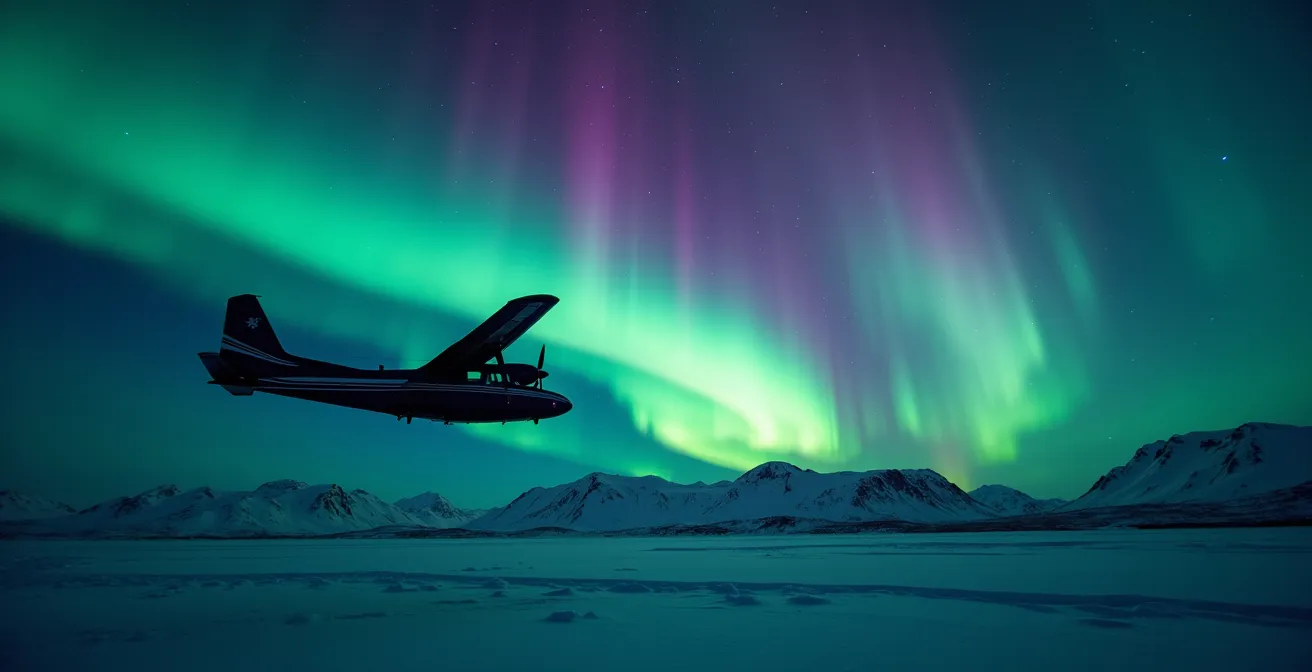
The high price of a Yukon flight isn’t arbitrary; it’s a direct reflection of the ‘Northern Premium’—the stacked costs of fuel, specialized labour, and resilient infrastructure required for remote operations.
- Costs are driven by limited airline competition and the economic gravity of serving small populations over vast distances.
- Ground logistics, from road maintenance on the Dempster Highway to grocery supply chains, follow the same expensive model of “cost stacking.”
Recommendation: View your travel budget not as a simple ticket purchase, but as an investment in navigating a complex and demanding logistical ecosystem.
Seeing an $800 CAD price tag for a flight from Vancouver to Whitehorse can be a shock, especially when a ticket to Europe can often be found for less. The immediate conclusion is that you’re being overcharged. Common explanations point to a remote location or a lack of airline competition, but these are merely symptoms, not the root cause. This shallow understanding misses the intricate economic and logistical reality of Canada’s North.
The truth is, that flight price is an honest reflection of what it costs to maintain a reliable transportation link in one of the world’s most challenging environments. It’s not just a seat on a plane; it’s a share in the cost of a vast logistical backbone. This “Northern Premium” isn’t an arbitrary markup but a transparent accumulation of expenses, from specialized aircraft maintenance to the higher wages required to staff remote airports. The same economic forces that inflate your airfare also explain why a jug of orange juice can cost $20 in a northern community.
Instead of viewing the cost as a barrier, we will deconstruct it. This analysis will go beyond the flight itself to explore the on-the-ground realities of northern travel. By understanding the ‘why’ behind the costs of transportation, supplies, and even staying warm, you can plan a trip that is not only budget-conscious but also deeply appreciative of the resilience and ingenuity that make life in the Yukon possible. We will explore how to prepare for the unique challenges, from aurora viewing logistics to respectful engagement with First Nations communities, all through the lens of this northern economic reality.
This guide breaks down the essential logistical and practical considerations for any northern journey, revealing how the ‘Northern Premium’ impacts every aspect of your travel, from the roads you drive to the food you eat.
Summary: The Realities of a Northern Canadian Journey
- Aurora Borealis: Why February Is Better Than December for Viewing?
- Tire Shredder: How to Prepare Your Vehicle for the Road to the Arctic Ocean?
- What Does “-40°C” Actually Feel Like and How Do You Dress for It?
- First Nations Heritage: How to Visit Northern Communities Respectfully?
- The $20 Orange Juice: Why Grocery Prices in the North Shock Visitors?
- Prepaid SIM Cards: Finding the Best Data Coverage for Rural Canada
- Why You Should Consider Flying Between Ontario and Alberta to Save 3 Days?
- What Does “-40°C” Actually Feel Like and How Do You Dress for It?
Aurora Borealis: Why February Is Better Than December for Viewing?
Many travellers assume the darkest, longest nights of December are ideal for aurora viewing, but northern logistics tell a different story. While the Yukon and Northwest Territories offer a staggering 240 nights of active Northern Lights per year, visibility is the key variable. The success of your viewing is less about the date and more about a crucial meteorological factor: cloud cover. This is where the logistical advantage shifts away from the early winter solstice period.
In December, the weather patterns over the North are often unstable and prone to cloud systems, which can completely obscure the sky. By February, however, the climate tends to settle. This period is frequently dominated by stable, high-pressure Arctic systems. These systems are characterized by extremely cold, dry air, which results in a much higher probability of crystal-clear, cloud-free nights. While it may be colder on the ground, your chances of an unobstructed celestial show are significantly improved.
Therefore, choosing February is a strategic decision rooted in atmospheric science, not just daylight hours. The peak viewing season runs from mid-November to early April, with the best activity typically occurring between 11 p.m. and 3 a.m. local time. Planning for a February trip aligns your travel with the highest probability of favourable atmospheric conditions, maximizing the return on your significant travel investment. It’s a prime example of how understanding the northern environment leads to better logistical planning.
Tire Shredder: How to Prepare Your Vehicle for the Road to the Arctic Ocean?
The journey to the Arctic Ocean via the Dempster Highway is not a typical road trip; it’s a calculated engagement with a notoriously harsh piece of infrastructure. The road surface is primarily composed of crushed shale, which is sharp enough to earn it the “Tire Shredder” moniker. Vehicle preparation isn’t just recommended; it’s a fundamental part of your risk management and budget. A single flat tire can derail your schedule and incur significant costs in a region with limited services.

Real-world experience underscores this reality. A group of travellers in July 2024 documented their journey and, while they had zero flats, they observed five other vehicles with flat tires, mostly north of Eagle Plains where the shale is sharpest. Their RV also sustained minor damage from the constant vibrations. Standard passenger cars are ill-suited for this environment. A high-clearance vehicle equipped with at least two full-size spare tires on rims is the minimum requirement. The tires should be durable, all-terrain models, and you must know how to change them yourself.
This logistical challenge extends to fuel. The “Northern Premium” is starkly visible at the pump, with prices escalating dramatically the further you travel from a supply hub like Dawson City. Planning your fuel stops is as critical as carrying spare tires.
| Location | Price per Litre (CAD) | USD per Gallon Equivalent |
|---|---|---|
| Dawson City | $1.96 | $5.42 |
| Eagle Plains | $2.39 | $6.61 |
| Inuvik | $2.90 | $8.03 |
The financial and mechanical costs of the Dempster are a microcosm of northern travel. Success depends on proactive investment in the right equipment and a clear understanding that the infrastructure itself is a defining challenge of the journey.
What Does “-40°C” Actually Feel Like and How Do You Dress for It?
For most people, -40°C is an abstract concept. As noted by one local operator, Northern Tales Travel Services, “Depending on the time of year you chose to come for your visit to the Yukon the temperatures can be as cold as -40 degrees.” At this temperature, the air is so cold it feels sharp in your lungs. Exposed skin is at risk of frostbite in minutes. The moisture in your breath freezes instantly on your eyelashes and facial hair, and metal objects, like a camera tripod, will burn your bare hands.
Dressing for this environment is not about fashion; it’s a technical layering system designed for survival. The principle is to trap air between layers to create insulation while allowing moisture from your body to escape. The system consists of three core components. First, a base layer of merino wool or a high-quality synthetic material wicks sweat away from your skin; cotton is forbidden as it holds moisture and freezes. Second, a mid-layer, such as a fleece or down jacket, provides the primary thermal insulation.
Finally, the outer shell is a windproof and waterproof parka rated for extreme cold. This layer protects you from the elements, particularly the wind, which can make -40°C feel significantly colder. Your extremities are the most vulnerable. Insulated boots rated to -40°C, high-quality wool socks, insulated gloves or mittens, a balaclava to protect your face, and a thermal hat are all non-negotiable. This gear represents a significant financial investment, another component of the ‘Northern Premium’ that extends beyond the flight ticket.
First Nations Heritage: How to Visit Northern Communities Respectfully?
The Yukon is not an empty wilderness; it is the homeland of vibrant and self-governing First Nations. A staggering 25% of Yukon’s population are Indigenous Peoples, representing 14 distinct First Nations and eight language groups. Engaging with this rich heritage is one of the most rewarding aspects of a northern journey, but it requires a respectful and informed approach that acknowledges their deep-rooted history and contemporary governance.
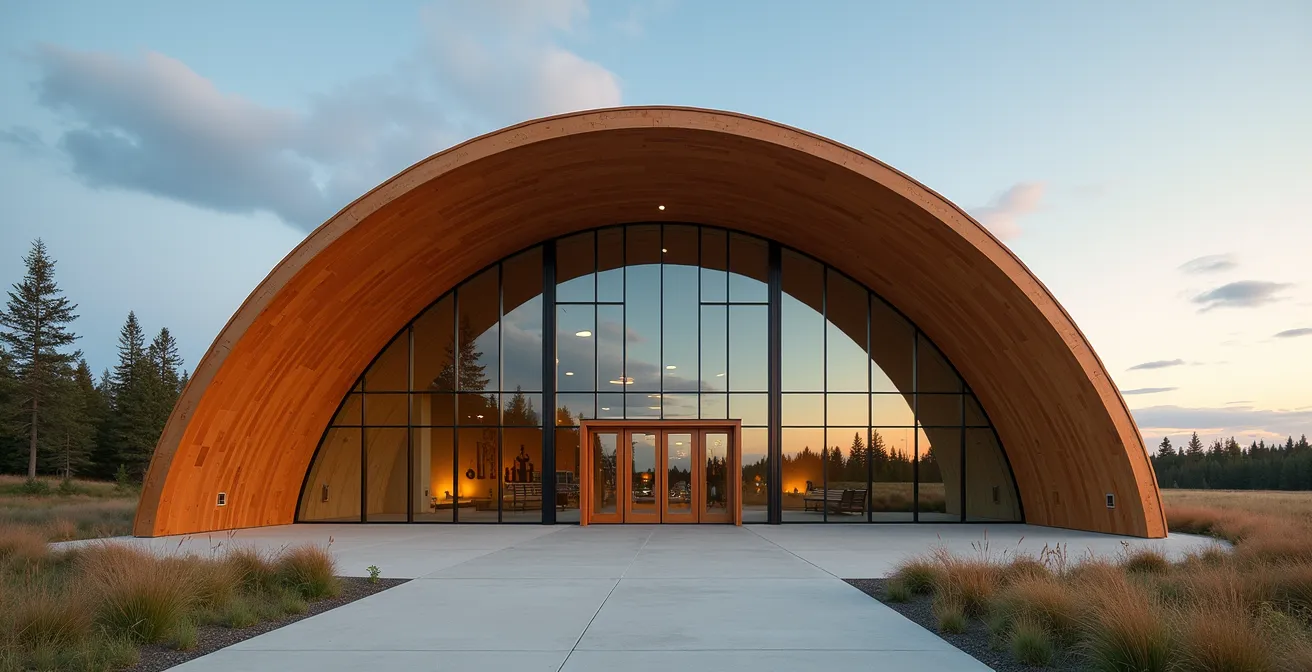
Respectful tourism begins with education and deference. Before venturing into specific communities or onto traditional lands, the first step should always be to visit cultural centres like the Kwanlin Dün Cultural Centre in Whitehorse. These centres are not just museums; they are living hubs that provide crucial context about local history, protocols, and the modern-day significance of agreements like the Umbrella Final Agreement, which established the framework for self-governance.
The most direct way to support communities is by patronizing Indigenous-owned businesses. This includes booking cultural tours, fishing expeditions, or wilderness adventures with Indigenous guides who share generational knowledge passed down through centuries. Attending public events like the Adäka Cultural Festival offers an incredible opportunity to experience art, music, and storytelling firsthand. Always remember that you are a guest. If you plan to visit areas outside of major centres, it is courteous to contact the local First Nation office beforehand to inquire about any specific protocols or permissions required. This act of respect is a small but vital investment in a meaningful cultural exchange.
The $20 Orange Juice: Why Grocery Prices in the North Shock Visitors?
The sticker shock experienced at a northern grocery store is a tangible lesson in logistical economics. Seeing a common item like orange juice priced at $20 is not a sign of price gouging; it’s a transparent display of “cost stacking” along a very long and arduous supply chain. Every kilometre an item travels north, its price absorbs additional costs for fuel, specialized transport (like refrigerated trucks operating in extreme cold), and the higher wages paid to workers in remote communities.
This phenomenon is well-documented. Statistics Canada actively monitors northern food costs, with data from Whitehorse and Yellowknife consistently showing significant price disparities compared to southern Canada. The logistical journey is the primary driver. A head of lettuce might be flown from California to a distribution centre in Vancouver, trucked to Whitehorse, then loaded onto another truck for the long drive to Dawson City or even further up the Dempster to Inuvik. Each stage adds a layer of expense.
For the savvy traveller, understanding this economic reality translates into a practical strategy. Experienced northern travellers know that the most effective way to manage food costs is to stock up on non-perishables and staples at the major supermarkets in a hub city like Whitehorse before heading into smaller, more remote communities. While you should absolutely support local stores for fresh items and unique regional products, planning ahead for the bulk of your needs mitigates the full impact of the ‘Northern Premium’. This strategic approach to provisioning is as crucial to your budget as finding a good deal on a flight.
Prepaid SIM Cards: Finding the Best Data Coverage for Rural Canada
In the vast landscapes of Canada, and especially in the Yukon, connectivity is not a given; it’s a piece of critical infrastructure that is sparse and expensive to maintain. For travellers, assuming your phone will work as it does in a city is a significant logistical error. While major carriers like Bell and Telus have roaming agreements, all cellular service in the Yukon and NWT relies on the physical infrastructure of Northwestel. This means that coverage is largely identical regardless of your provider and is concentrated in and around settlements.
Once you leave a community, service disappears quickly. Long stretches of the Alaska Highway and Klondike Highway are complete dead zones. The Dempster Highway, in particular, has virtually no cell coverage between the Dempster Corner and Inuvik, a distance of over 700 kilometres. This lack of connectivity is not an oversight but a function of economic gravity; the enormous cost of building and maintaining a cell tower cannot be justified for the small number of people who would use it in these remote areas.
Therefore, a reliable communication strategy is a safety imperative. A prepaid SIM card from a Canadian carrier will work in towns, but it is not a solution for remote travel. The standard and non-negotiable backup is a satellite communication device. Units like the Garmin inReach or Zoleo can be rented from outdoor equipment outfitters in Whitehorse. These devices allow you to send and receive text messages and, most importantly, trigger an SOS signal in an emergency, connecting you to search and rescue services from anywhere on the planet. Factoring the rental cost of such a device into your budget is an essential part of the ‘Northern Premium’ for safety.
Why You Should Consider Flying Between Ontario and Alberta to Save 3 Days?
The vastness of Canada dictates its travel logistics. The decision to fly between provinces like Ontario and Alberta, saving three or more days of driving, is a simple calculation of time versus cost. This same principle, though on a smaller scale, is a crucial strategic consideration for travel within the Yukon itself. The distances are immense, and road conditions can be unpredictable, making air travel a powerful tool for maximizing your time on the ground.
Consider the journey between Whitehorse, the capital, and Dawson City, the historic heart of the Klondike Gold Rush. The drive is approximately 525 kilometres and takes five to six hours under ideal conditions. However, a regional carrier like Air North offers a flight that takes just 1 hour and 10 minutes. When you factor in that the Dawson City airport is only a 15-minute drive from downtown, the time savings are immense. For a traveller with a limited one-week vacation, saving nearly a full day of transit can be the difference between a rushed trip and a fulfilling one.
The decision requires a cost-benefit analysis that is central to northern logistics. You must weigh the price of the flight against the cost of a long drive: fuel (at northern prices), potential wear and tear on a vehicle, and the value of your own time. For many tour operators and independent travellers, booking these short-haul flights is a standard procedure. It allows them to use their precious time for activities at the destination rather than spending it in transit, proving that sometimes the most budget-conscious decision is to invest in the fastest mode of transport.
Key Takeaways
- The “Northern Premium” is a real, stacked cost affecting everything from flights to groceries, driven by fuel, labor, and infrastructure expenses.
- Strategic planning is crucial: travel in February for clearer aurora viewing, carry two spare tires for the Dempster, and stock up on supplies in hub cities.
- Safety and respect are paramount: invest in proper -40°C gear, rent a satellite device for remote areas, and engage with First Nations heritage through cultural centres and Indigenous-owned businesses.
What Does “-40°C” Actually Feel Like and How Do You Dress for It?
Beyond the initial shock, operating safely in -40°C requires a deep respect for its unseen dangers and adherence to strict protocols. At this temperature, materials change their properties: plastic becomes brittle and can shatter, and vehicle engines require specialized support to function. The cold is not just an inconvenience; it’s an active environmental hazard that impacts every piece of equipment you rely on.
Your personal safety depends on a zero-compromise approach to gear. A simple mistake, like choosing cotton socks, can lead to frostbite. The goal is to build a personal ecosystem that retains heat and manages moisture effectively. This requires a systematic checklist approach rather than just throwing on a warm coat. Each item has a specific function, and the failure of one component can compromise the entire system.
Furthermore, technology is extremely vulnerable. Battery life plummets in the extreme cold. A phone or camera battery that lasts for hours at room temperature might die in minutes at -40°C. The professional solution is to keep all spare batteries and electronic devices inside your jacket, close to your body heat, and only take them out for brief moments when needed. This meticulous management of resources—from body heat to battery power—is a hallmark of successful and safe northern travel.
Your Essential -40°C Survival Checklist
- Base Layer: Verify you have merino wool or synthetic thermal underwear (never wear cotton).
- Mid Layer: Pack an insulated fleece or a lightweight down jacket for core warmth retention.
- Outer Shell: Confirm your parka is both windproof and waterproof, with an explicit rating for extreme cold.
- Extremities: Inventory your gear—insulated boots (rated to -40°C), multiple pairs of wool socks, insulated gloves/mittens, a balaclava, and a thermal hat.
- Emergency Power: Ensure extra batteries for all essential electronics (GPS, satellite device, headlamp) are packed and designated to be kept warm in an inside pocket.
Frequently Asked Questions About Yukon Travel Logistics
Which carrier has the best coverage in Yukon?
All major Canadian carriers (like Bell and Telus) roam on Northwestel’s infrastructure in the Yukon and NWT. Coverage is similar regardless of your home provider, so your choice should be based on your provider’s specific roaming rates and packages for northern Canada.
Are there areas without any cell service?
Yes, vast areas have no service at all. Long stretches of the Alaska and Klondike Highways are cellular dead zones. The Dempster Highway is the most notable example, with virtually no coverage between its starting point and major settlements like Inuvik.
What’s the backup communication option?
A satellite device is the essential backup for any travel outside of community limits. You can rent units like a Garmin inReach or a Canadian Zoleo from various outfitters in Whitehorse. These devices provide a lifeline for emergency communication in remote areas.