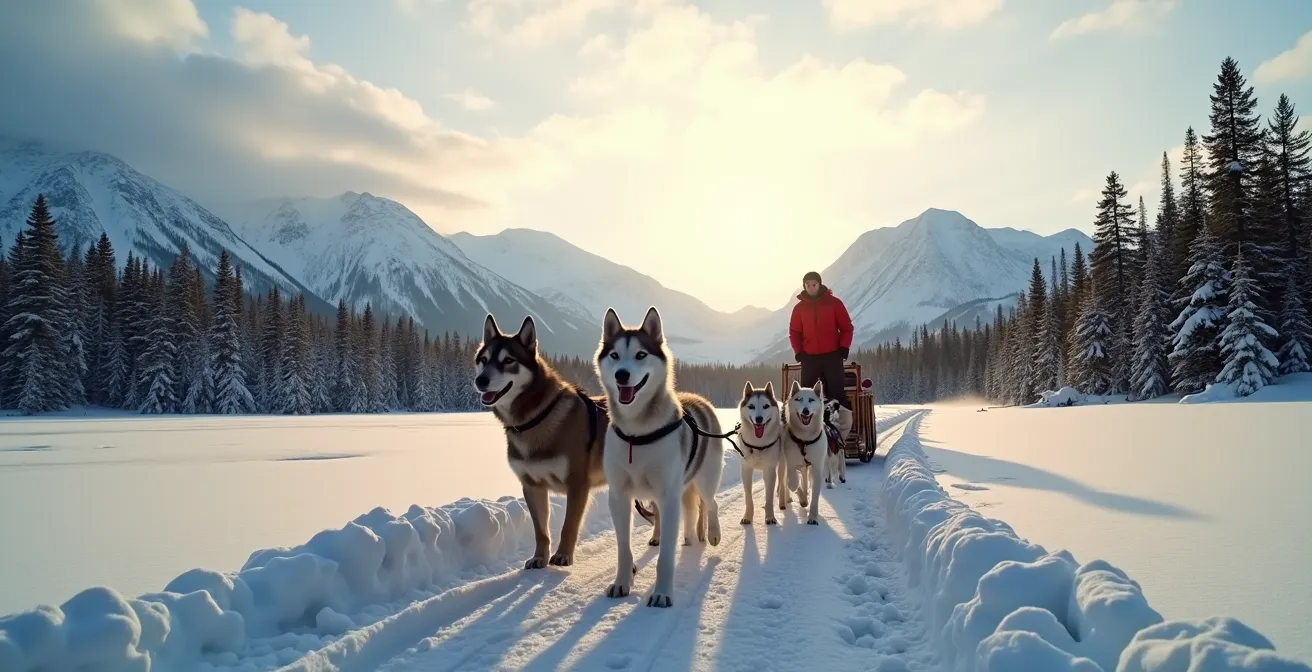
The high price of a Yukon dog sledding tour is often the clearest initial sign of ethical, humane animal care.
- High costs reflect year-round, high-calorie nutrition, veterinary supplies, and complex logistics in Canada’s North.
- Ethical operators are transparent, encouraging interaction with their dogs and able to explain the specific role of each animal on the team.
Recommendation: Evaluate operators on their demonstrated investment in dog welfare and team health, not just the thrill of the ride.
The image of a dog sled team gliding through a pristine Yukon landscape is iconic, a powerful symbol of Canadian wilderness adventure. Yet for any animal lover, this dream is shadowed by a significant fear: am I supporting an operation that mistreats its animals? The tourism industry is filled with stories of “puppy mill” style outfits where dogs are treated as disposable equipment. You’ve likely been told to “look for happy dogs” or “check reviews,” but these platitudes are profoundly unhelpful. As a veterinarian and former musher, I can tell you that a dog’s enthusiasm for running is not, by itself, a reliable indicator of its overall welfare.
The true signs of an ethical operation are not just emotional; they are operational, biological, and economic. They are visible in the structure of the team, the quality of the gear, the tone of a musher’s voice, and even in the price of the tour itself. This guide moves beyond the surface to give you the tools to see a kennel through a veterinarian’s eyes. We won’t just look at the dogs; we will analyze the entire system of care that surrounds them. Understanding this system is the only way to differentiate a truly humane operator from one that merely puts on a good show for tourists.
This article will deconstruct the eight critical areas where ethics and animal welfare become tangible and observable. From the strategic roles within the team to the economic realities of operating in the North, you’ll learn to spot the green flags of responsible mushing. This knowledge will empower you to make an informed choice and ensure your unforgettable Yukon experience supports the incredible canine athletes who make it possible.
Summary: A Guide to Humane Dog Sledding in the Yukon
- Lead Dog vs. Wheel Dog: What Is the Strategic Role of Each Position?
- Gee and Haw: How to Actually Steer a Sled Without Reins?
- The Windchill Factor: Why You Need Goggles When Moving at 20km/h in -30°C?
- Why Does a 4-Hour Dog Sledding Tour Cost Over $300 CAD?
- Harnessing Up: Can Tourists Help Prepare the Team Before the Run?
- Feeding Stations: Why Lodges That Bait Animals Are Not Eco-Friendly?
- The Ethical Distance: How to Photograph Bears Without Endangering Yourself?
- Flying North: Why Flights to the Yukon Can Cost More Than a Ticket to Europe?
Lead Dog vs. Wheel Dog: What Is the Strategic Role of Each Position?
A sled dog team is far more than a pack of dogs pulling in the same direction; it’s a highly specialized system where each position demands a unique skill set. An ethical musher understands and respects these roles, selecting and training dogs based on intelligence and temperament, not just raw power. The most visible evidence of this is in the distinction between the lead dogs at the front and the wheel dogs directly in front of the sled. Your first clue to an operator’s expertise is how they talk about these positions.
Lead dogs are the quarterbacks of the team. As one analysis on their selection notes, they aren’t chosen just for speed but because they possess initiative and common sense. An ethical operator will praise their lead dogs for their intelligence, highlighting their ability to find a trail in blinding snow and respond to complex voice commands. This role is built on trust, not dominance. Conversely, wheel dogs are the team’s foundation. They are often powerful and agile, needing to navigate corners and absorb the initial shock of the sled’s weight. Observing these dogs provides key welfare indicators: they should be well-muscled but not exhausted, with harnesses that fit snugly without causing sores.
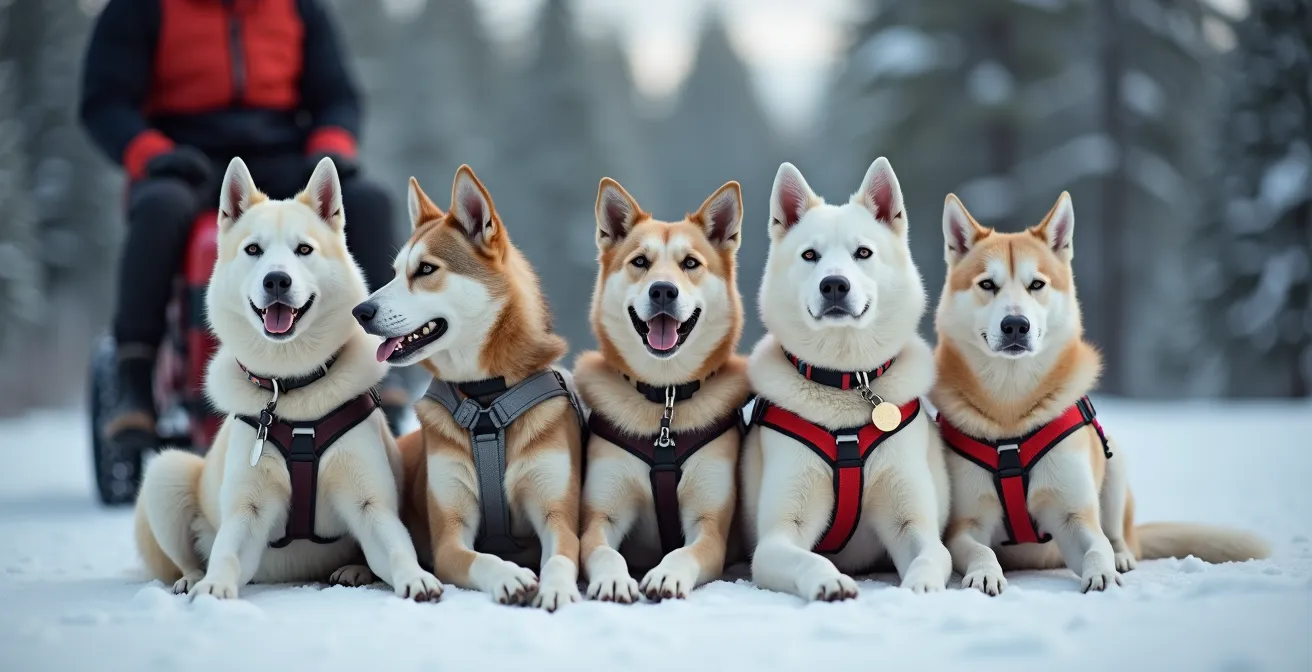
When you visit a kennel, ask the musher to identify the different positions. A passionate, humane operator will eagerly explain why a particular dog is a great leader or a reliable wheel dog, revealing a deep understanding of their animals as individuals. This appreciation for strategic roles over simple brute force is a hallmark of a well-managed and ethical team.
Gee and Haw: How to Actually Steer a Sled Without Reins?
One of the most surprising aspects for newcomers is the absence of reins. A dog sled is not steered like a horse-drawn carriage; it’s guided entirely by voice, a testament to the deep bond and communication between the musher and the lead dogs. The primary commands are “Gee” (turn right) and “Haw” (turn left). However, the technique goes far beyond simply shouting directions. The tone, timing, and consistency of these commands are a direct window into the musher’s relationship with their team.
An ethical musher’s communication is calm, clear, and encouraging. It’s a partnership, not a dictatorship. As veteran Yukon musher Michelle Phillips of Tutshi Sled Dog Tours explains, the tone of voice is critical. You use a cheerful, encouraging tone to start and a calm, soothing tone to stop. This approach fosters trust and enthusiasm. An operator who is constantly yelling, using harsh tones, or physically correcting the dogs (like yanking on lines) is displaying major red flags. The dogs’ reaction is just as telling: they should respond eagerly and confidently, not with fear, hesitation, or cowering.
You want to be a good partner to your dog team. Communication is key, so make sure to tell them ‘okay’ when you are ready to go and ‘whoa’ when you are stopping. Use a cheerful tone when you say ‘okay’ and a calming tone when you say ‘whoa’. Once you are going, you don’t need to talk to them all the time.
– Michelle Phillips, Tutshi Sled Dog Tours/Tagish Lake Kennel
During a tour, pay close attention to this interaction. A humane operation is characterized by a quiet confidence between human and animal. The dogs listen because they trust their leader, not because they fear punishment. This mutual respect is the invisible engine that powers the sled, and it’s impossible to fake.
The Windchill Factor: Why You Need Goggles When Moving at 20km/h in -30°C?
The Yukon winter is breathtakingly cold, and this environment places extreme physical demands on both humans and canines. An operator’s commitment to animal welfare is starkly revealed by how they prepare their dogs for these conditions. While tourists are bundled in layers of high-tech gear, the dogs rely entirely on the musher’s foresight and investment in their protection. The presence and quality of this protective gear are non-negotiable indicators of an ethical operation.
At a speed of 20 km/h in -30°C, the windchill can plummet to dangerously low levels, posing a risk of frostbite to any exposed skin. For the dogs, their paws are the most vulnerable point of contact with the abrasive snow and ice. You should look for dogs wearing colourful booties. These are not fashion accessories; they are essential equipment, typically made of durable fleece or canvas, that prevent cuts and abrasion. An ethical kennel will have a large supply of these and will ensure they are fitted correctly.
But protection goes beyond booties. For dogs with thinner coats, you should see the use of breathable jackets. In the most extreme cold, some dogs may even wear belly protectors. Furthermore, these dogs are high-performance athletes whose metabolic needs are staggering. To sustain their effort in the cold, the average Iditarod sled dog burns up to 12,000 calories per day, a caloric need met only through specialized, high-fat diets. Asking a musher about their dogs’ diet and protective gear isn’t being nosy; it’s a crucial welfare check. A responsible operator will be proud to show you the extensive measures they take to keep their team safe, warm, and well-fed.
Why Does a 4-Hour Dog Sledding Tour Cost Over $300 CAD?
Sticker shock is common when first looking at dog sledding tours in the Yukon. A price tag of over $300 CAD for a half-day experience can seem steep, leading some to seek out cheaper alternatives. This is often a mistake. In the remote north, a high price is frequently the most direct indicator of a high-welfare operation. The cost isn’t about profit-gouging; it’s a direct reflection of the immense year-round expense of ethically caring for a team of canine athletes.
Sled dogs don’t just work in the winter. They require food, housing, and extensive veterinary care 365 days a year. Operators in the Yukon face what is known as the “Northern Premium.” Everything from specialized high-calorie dog food to medical supplies and equipment must be trucked or flown into hubs like Whitehorse at a significant markup. A cheap tour operator is almost certainly cutting corners, and those corners are invariably animal care, nutrition, and vet services. As experienced operators like Aaron from Elevation Sled Dogs know, running a kennel in the North is a massive logistical and financial commitment.

When you pay a premium price, you are investing in this “supply chain of compassion.” You are funding clean, insulated dog houses, high-quality food, regular veterinary check-ups, and a comfortable retirement for dogs who are too old to run. An ethical operator should be able to transparently explain this. Ask them about their off-season care program or their relationship with their veterinarian. Their answer will tell you whether your money is funding an unforgettable adventure or subsidizing a life of neglect.
Harnessing Up: Can Tourists Help Prepare the Team Before the Run?
The moments before a run, when the kennel erupts in a cacophony of excited barks and howls, offer a powerful glimpse into the heart of an operation. A key question is whether tourists are invited to participate in this process. An ethical operator who is confident in their practices and the temperament of their dogs will often encourage guests to help harness the team. This transparency is a significant green flag.
Allowing you to handle the dogs and the equipment demonstrates that they have nothing to hide. It’s an opportunity for you to see firsthand the condition of the animals and the quality of their gear. The harness is a critical piece of equipment, and from a veterinary perspective, its fit and condition are paramount. A poorly-fitted harness can cause painful chafing, sores, and long-term injuries. As a responsible tourist, you can and should use this opportunity to perform a quick visual inspection. Look for modern designs like X-back or H-back harnesses, which are engineered to distribute weight evenly across the dog’s body, minimizing pressure on any single point.
Operators who keep guests at a distance, or have the team fully prepared and out of sight before you arrive, may be doing so for efficiency, but it can also be a way to hide poor conditions, ill-fitting gear, or dogs that are not well-socialized. A willingness to let you “behind the curtain” shows trust in their dogs and pride in their standards of care. It transforms you from a passive passenger into an active, engaged participant in a humane and respectful tradition.
Your Checklist for Evaluating Harness Quality and Fit
- Design Check: Look for modern X-back or H-back harness designs that distribute weight evenly across the dog’s chest and back.
- Material & Wear: Check that harnesses are made of durable, non-abrasive materials without signs of excessive fraying, cracks, or wear.
- Proper Fit: Ensure the harness allows full freedom of movement for the dog’s shoulders and legs without being too loose or too tight. It should not rub or pinch.
- Skin & Coat Inspection: Gently check for any signs of rubbing marks, sores, or hair loss on the dog’s body where the harness sits. Pay attention to the underarm area.
- Hardware Security: Verify that all buckles, clips, and attachment points are secure, free of rust, and in good working repair.
Feeding Stations: Why Lodges That Bait Animals Are Not Eco-Friendly?
In the broader context of Canadian wilderness tourism, a major ethical red line is the practice of baiting wild animals to guarantee sightings for tourists. Lodges that use feeding stations to lure in creatures like bears or foxes create unnatural dependencies, alter animal behaviour, and increase the risk of negative human-wildlife conflict. This principle of non-interference extends to the world of dog sledding, but in a different way. An ethical kennel does not treat feeding time as a tourist spectacle.
The contrast is telling. Unethical wildlife viewing turns feeding into a performance; ethical dog mushing treats it as a crucial, structured part of animal husbandry. Sled dogs are working athletes, and their nutrition is scientifically managed. You should not expect to see them being fed scraps or given “treats” by tourists. Instead, a responsible operation will have a dedicated, scheduled feeding program. This involves providing consistent meal times with high-calorie food specifically formulated for the dogs’ energy needs. This routine maintains their health, manages their weight, and reinforces the structured, calm environment of the kennel.
We create experiences that include lodging, meals, exceptional customer service and of course the unconditional love of our dogs.
– Muktuk Adventures, Located on traditional territory of Kwanlin Dun and Ta’an Kwach’an Council
The “unconditional love” mentioned by respected operators like Muktuk Adventures is built on this foundation of reliable care, not on performative feeding. The real connection is formed by sharing time with the dogs and understanding their way of life. When you see a feeding process that is methodical, professional, and focused on the dogs’ needs rather than the tourists’ cameras, you are witnessing a truly eco-friendly and ethical approach to animal care in a tourism setting.
The Ethical Distance: How to Photograph Bears Without Endangering Yourself?
The cardinal rule of ethical wildlife photography in Canada is to maintain a respectful distance, using a long lens to capture images without disturbing the animal or altering its natural behaviour. This principle—observing without interfering—is surprisingly relevant when visiting a dog sled kennel. While these are domestic animals, the kennel is their home, and an ethical operator will manage visitor interactions with the same respect afforded to wildlife.
Not every dog is a “cuddly ambassador.” Some may be shy, retired, or simply not interested in interacting with strangers. A humane musher knows the individual personalities of their dogs and will guide you on how to approach them. They will insist that you always ask before photographing or petting a specific dog and will tell you which ones prefer to be left alone. The use of flash photography, which can startle and stress the animals, should be strictly forbidden. This managed approach prevents the dogs from becoming overwhelmed and ensures that all interactions are positive and consensual.
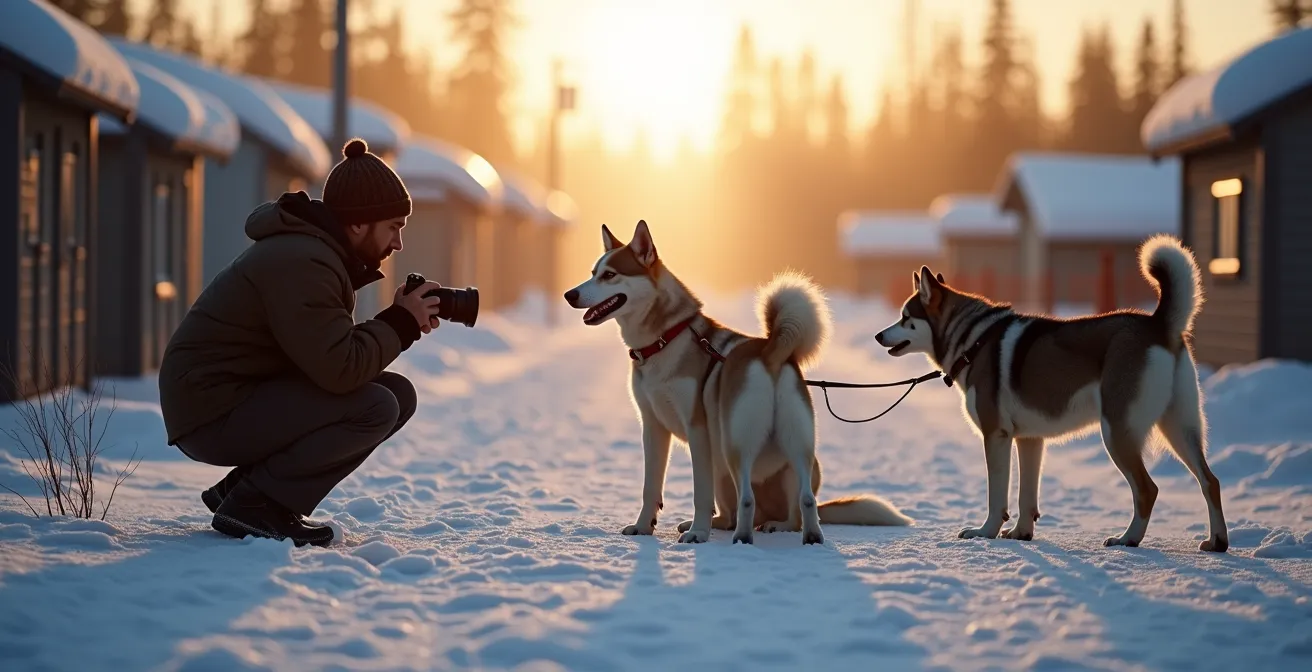
This may seem counterintuitive to the tourist expecting a “puppy-petting” free-for-all, but it is a powerful sign of a deeply ethical operation. As one visitor noted about their experience at a well-regarded Yukon kennel, it was “not at all what I feared it would be,” describing how natural, unforced interactions led to being “pawed and nuzzled and kissed by dogs.” This kind of genuine connection is only possible in an environment where the dogs feel safe and respected, not treated as props. By applying the principles of ethical wildlife viewing, you can help maintain this environment and get far more meaningful photographs and memories as a result.
Key Takeaways
- A high tour price in the Yukon often correlates directly with high standards of year-round animal welfare.
- Ethical mushers can explain the specific role and temperament of each dog, viewing the team as a system of individuals.
- Pay attention to the details: well-fitting harnesses, booties for paw protection, and calm, voice-based commands are all signs of a professional, humane operation.
Flying North: Why Flights to the Yukon Can Cost More Than a Ticket to Europe?
The final piece of the ethical puzzle is understanding the broader economic context of your trip. The high cost of a flight to Whitehorse is not an isolated expense; it’s the first indicator of the “Northern Premium” that affects every aspect of life and business in the Yukon, including dog sledding operations. This logistical reality is the ultimate justification for why an ethical tour cannot be cheap.
Operating in a remote northern environment means contending with a complex and expensive supply chain. As noted by the logistical requirements for the Yukon Quest sled dog race, mushers must be equipped with an extensive list of gear, from axes and cookers to specialized veterinary supplies. This same reality applies to kennel operators year-round. Every bag of high-calorie dog food, every piece of medical equipment, and every replacement part for a sled has to be transported over vast distances at great cost. These are not optional expenses; they are the fundamental building blocks of providing a safe and humane life for the dogs.
When you see that a 3-night dog sledding package in the Yukon starts from CAD $1,774 per person, it’s easy to see it as just a tourism fee. In reality, it is a contribution to a fragile, expensive ecosystem of care. That fee covers not just your few hours on the sled but also the food, shelter, and medical attention for the entire kennel, for the entire year. An operator charging significantly less is making a deficit somewhere, and that deficit is almost always paid by the dogs’ welfare.
Now equipped with this knowledge, you can confidently assess Yukon dog sledding operators. Look beyond the thrilling ride and see the system of care behind it. By choosing an operator who is transparent about their costs, proud of their equipment, and respectful of their animals as individuals, you ensure your adventure supports the very best of this incredible northern tradition.