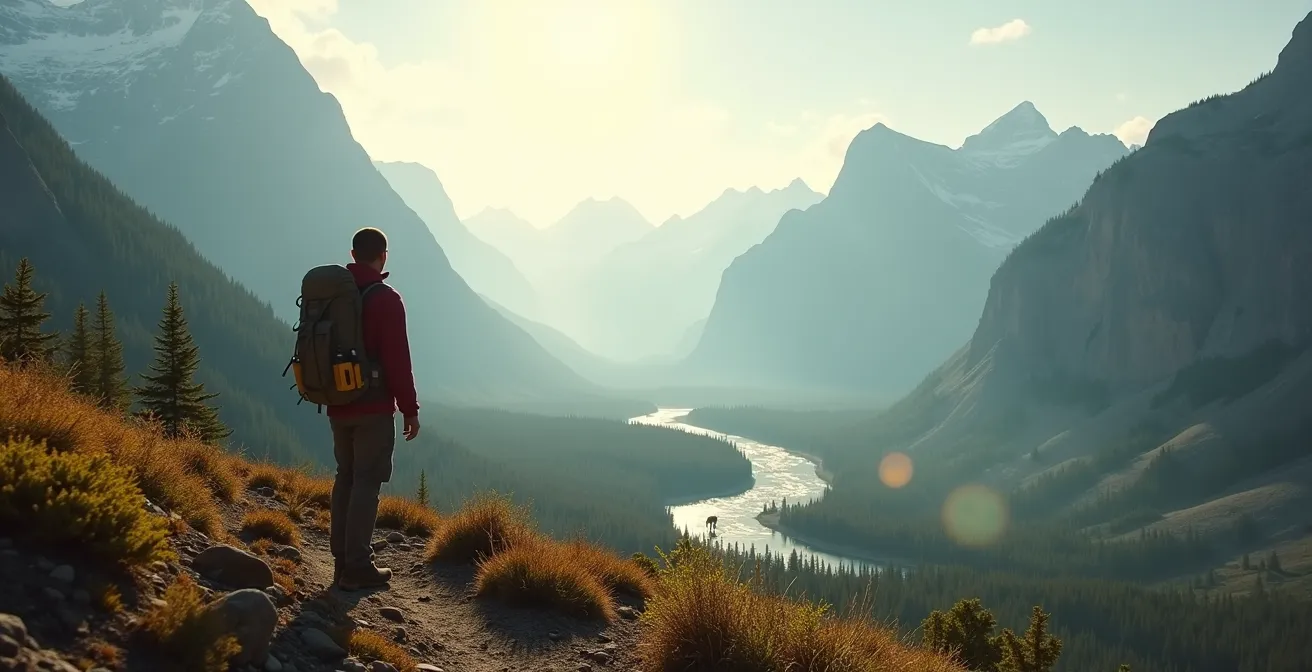
In the Canadian backcountry, safety “guidelines” are iron-clad rules dictated by a harsh environment and strict regulations; treating them as optional is the first step toward disaster.
- Your smartphone is not a rescue device; only a dedicated satellite messenger offers reliable communication in remote Canadian terrain.
- Food storage is not a suggestion but a legal requirement in many national parks, with bear canisters being mandatory where hanging is impossible.
- Standard travel insurance often excludes adventure activities, leaving you exposed to staggering out-of-pocket medical costs as a non-resident.
Recommendation: Shift your mindset from casual hiker to expedition leader. Treat every piece of gear and every regulation not as a burden, but as a critical component of your survival system.
The allure of the Canadian backcountry is undeniable: vast, jagged peaks, turquoise glacial lakes, and a profound sense of solitude. As you plan your expedition, you’ll encounter a checklist of familiar advice—the “ten essentials,” the need for bear spray, the wisdom of leaving a trip plan. But for the serious hiker venturing into the deep wilderness of British Columbia or Alberta, this advice often feels abstract. You might find yourself debating the necessity of a $50 can of bear spray or the hassle of a heavy bear canister.
Let’s be clear: this is a dangerous mindset. In Canada’s untamed wilderness, these are not mere suggestions. They are non-negotiable safety protocols born from decades of search and rescue incidents, wildlife encounters, and unforgiving environmental realities. The debate is not about whether to comply; it’s about understanding the severe, predictable consequences of failure. The mountains do not care about your budget or your convenience. They demand respect, and respect is demonstrated through preparation.
This guide moves beyond the platitudes. It delves into the critical “why” behind each rule, framed specifically for the Canadian context. We will dissect the limitations of modern technology in the wild, the legal mandates of our national parks, the financial devastation of an underinsured accident, and the physical challenges posed by iconic trails. This is not about fear; it’s about building the competence and foresight required to travel safely and return successfully.
To navigate the complexities of a true backcountry adventure, it’s essential to understand each critical component of your preparation. The following sections break down the non-negotiable rules of engagement with the Canadian wild, from communication and food storage to personal health and physical readiness.
Summary: Bear Safety 101: Why Bear Spray Is Mandatory for Your Backcountry Expedition
- Satellite Messenger vs. Cell Phone: Why Your iPhone Won’t Save You in the Wild?
- The Bear Canister Rule: How to Store Food When Trees Are Too Small for Hanging?
- Backcountry Reservations: Why You Can’t Just Pitch a Tent Anywhere?
- Giardia and Beavers: Why You Must Filter Even “Pristine” Glacial Water?
- Cotton Kills: Why Synthetic or Wool Layers Are Critical Even in Summer?
- How to Navigate the Canadian Healthcare System as a Non-Resident Tourist
- Why Standard Travel Insurance Won’t Cover Your Heli-Skiing Accident?
- West Coast Trail Preparation: Can You Carry a 40lb Pack for 7 Days on Ladders?
Satellite Messenger vs. Cell Phone: Why Your iPhone Won’t Save You in the Wild?
The most dangerous illusion in modern hiking is the belief that your smartphone is a reliable lifeline. In the vast majority of the Canadian backcountry, from the coastal ranges of BC to the heart of the Rockies, you will have zero cellular service. The recent introduction of satellite-to-phone messaging services, like that offered by Rogers in Canada, creates a false sense of security. This service is limited, only covering areas south of the 58th parallel and requiring a clear, unobstructed view of the sky. This makes it fundamentally unreliable in the very places you’re most likely to need it: deep, forested canyons, narrow valleys, or during a storm.
A dedicated satellite messenger is not a luxury; it is a mandatory piece of communication equipment. Unlike a cell phone, these devices operate on robust satellite networks designed for remote use. Field testing confirms that devices using the Iridium network offer true global coverage, including Canada’s vast northern and Arctic regions. An SOS button on one of these devices connects you directly to a global emergency response coordination center, which then liaises with local Search and Rescue (SAR) teams. It is the only guaranteed way to call for help when you are outside of cell range.
Simply carrying the device is not enough. Effective use requires meticulous preparation. Your device must be properly registered, your emergency contacts must be up to date, and you must leave a detailed trip plan with a trusted person on the ground. Without this context, your SOS signal is just a dot on a map, delaying and complicating any potential rescue effort. Your communication device is the first link in the chain of survival—ensure it is a strong one.
Action Plan: Pre-Trip SAR Information Prep
- Create a detailed trip plan with GPS waypoints, elevation profiles, and your expected timeline for each leg.
- Leave a copy of the plan with a trusted contact who understands exactly when to call for help if you are overdue.
- Register your device’s emergency contact information with the appropriate service (e.g., GEOS) and local SAR if possible.
- Test your device’s functions, including the SOS button in its designated test mode, before you leave cell service.
- Include planned alternative exit routes in your trip plan in case your primary trail is blocked by fire, flood, or a landslide.
The Bear Canister Rule: How to Store Food When Trees Are Too Small for Hanging?
Proper food storage is not just about protecting your meals; it is a fundamental act of respect for wildlife and a legal obligation in many of Canada’s most popular hiking areas. The adage “a fed bear is a dead bear” is a harsh reality. When bears gain access to human food, they become habituated and are often destroyed by park authorities. The primary method to prevent this is to make your food, toiletries, and all other scented items completely inaccessible. While hanging a food bag (a “bear hang”) is a traditional method, it is often impractical or impossible in the Canadian Rockies.
Many prime camping locations are situated in the sub-alpine or alpine zones, above the treeline where trees are too small, sparse, or brittle to support a proper bear hang. In these environments, a hard-sided, bear-resistant canister is the only effective solution. Recognizing this, Parks Canada mandates that bear-resistant containers are required for backcountry users in large portions of Banff, Yoho, Kootenay, and Jasper National Parks from April 1 to November 15. Ignoring this rule can result in significant fines and an order to leave the backcountry.
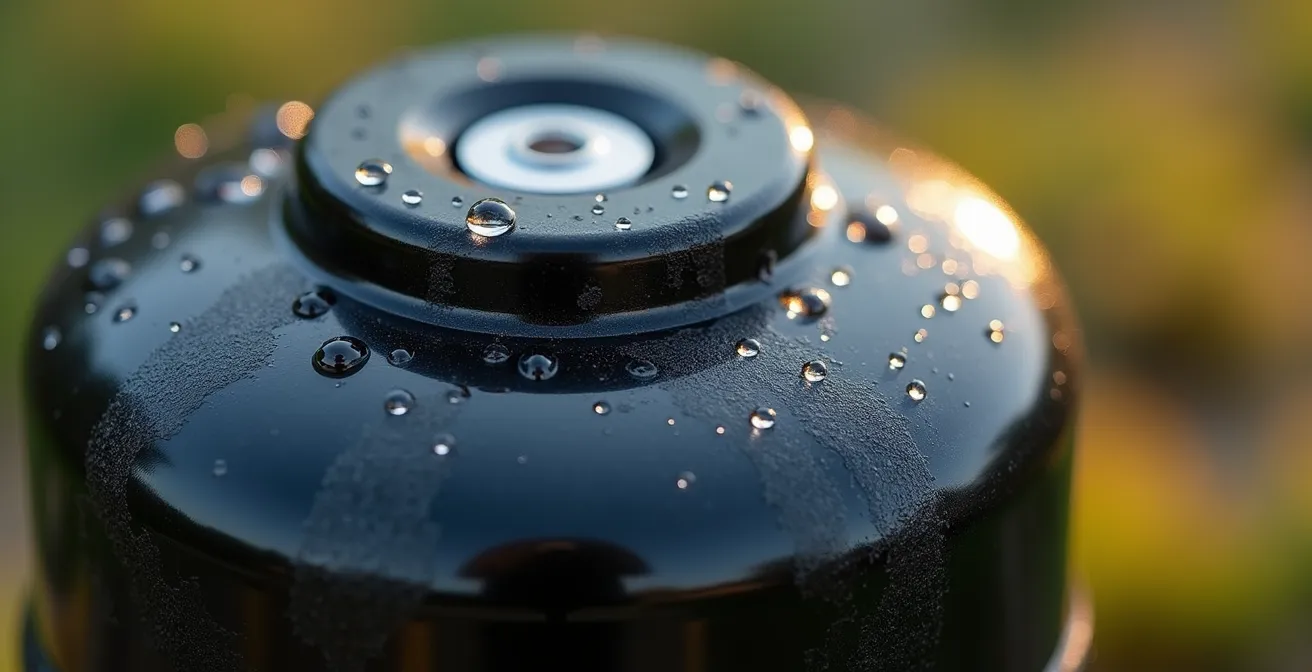
As you can see from the specific regulations, the requirements are not uniform. It is your responsibility to know and follow the rules for the specific area you are visiting. A bear canister is more than just a container; it is a critical piece of equipment that enables safe travel through fragile ecosystems and demonstrates your commitment to wildlife conservation.
This table outlines the specific, non-negotiable requirements for some of Western Canada’s most frequented parks. As this comparative analysis shows, compliance is not a matter of choice.
| National Park | Requirement | When Required | Notes |
|---|---|---|---|
| Jasper NP | Mandatory | Apr 1 – Nov 15 | Required where no park infrastructure exists |
| Banff NP | Mandatory | Apr 1 – Nov 15 | IGBC-approved containers only |
| Yoho NP | Mandatory | Apr 1 – Nov 15 | Some sites have bear poles |
| Kootenay NP | Mandatory | Apr 1 – Nov 15 | Required in all backcountry |
| Glacier NP | Recommended | May – Oct | Bear poles at designated sites |
Backcountry Reservations: Why You Can’t Just Pitch a Tent Anywhere?
The freedom of the backcountry does not mean freedom from rules. The idea of walking into the wilderness and pitching a tent wherever you please is a romantic but dangerous myth in Canada’s popular parks and on its iconic trails. High demand and the need to protect sensitive ecosystems have led to strict quota and reservation systems. Attempting to “wild camp” in a designated park area without a permit is not only illegal but also puts immense pressure on the environment and SAR resources.
Securing a spot on a world-renowned trail like the West Coast Trail or at a coveted location like Lake O’Hara is a competitive, high-stakes process. Reservations for the entire season often fill up within minutes of the system opening online, months in advance. Success requires strategic planning, a fast internet connection, and often, a good deal of luck. Being unprepared means you simply will not get to go. Furthermore, even on trails that don’t require reservations, like the Juan de Fuca Trail, there are logistical bottlenecks. Parking lots can fill up by 8 AM on a summer weekend, effectively ending your plans before they begin.
This system exists for a reason: to manage human impact. Concentrating use on designated, hardened campsites with proper facilities (like outhouses and food lockers) prevents the degradation of meadows, shorelines, and water sources. As the Pacific Crest Trail Association notes, “Regulations and decent hiker ethics stipulate that you must properly protect your food, often times in a very specific way.” This ethical principle extends to where you sleep. Following the reservation system is a core part of being a responsible backcountry user.
The booking process is a key part of your expedition planning. Here is a strategic calendar for some of Canada’s most sought-after backcountry experiences:
- West Coast Trail: Reservations typically open in early January for the entire May-September season. Be ready at 8 AM PST sharp.
- Lake O’Hara: Access to the bus is determined by a random draw system that usually opens for applications in late January.
- Berg Lake Trail: Historically opens on the first Monday of January at 7 AM MST, though recent trail closures have altered this. Always check the official BC Parks site.
- Assiniboine Provincial Park: Key sites like the Naiset Huts and Hind Hut can be booked up to a year in advance for peak season.
- Crown Land: Before planning to camp on provincial Crown Land, research the specific protocols and respect of the Indigenous territories whose land you will be on.
Giardia and Beavers: Why You Must Filter Even “Pristine” Glacial Water?
A crystal-clear, fast-flowing stream high in the Canadian Rockies looks like the definition of pure. The water is frigid, fed directly by ancient glaciers, and appears perfectly safe to drink. This is one ofthe most dangerous assumptions you can make in the backcountry. That “pristine” water is an ecosystem, and it can be contaminated with microscopic pathogens that can cause severe gastrointestinal illness.
In Canada, one of the primary culprits is *Giardia lamblia*, a parasite often spread by the feces of wildlife. Beavers, an iconic Canadian animal, are common carriers, which is why giardiasis is often nicknamed “beaver fever.” A single infected animal upstream can contaminate an entire water source. The illness can take weeks to manifest and involves debilitating symptoms like diarrhea, cramps, and nausea—a disastrous scenario when you are days away from the nearest road. As Parks Canada confirms, parasites like Giardia and Cryptosporidium can be present in any backcountry water source, no matter how clean it appears.
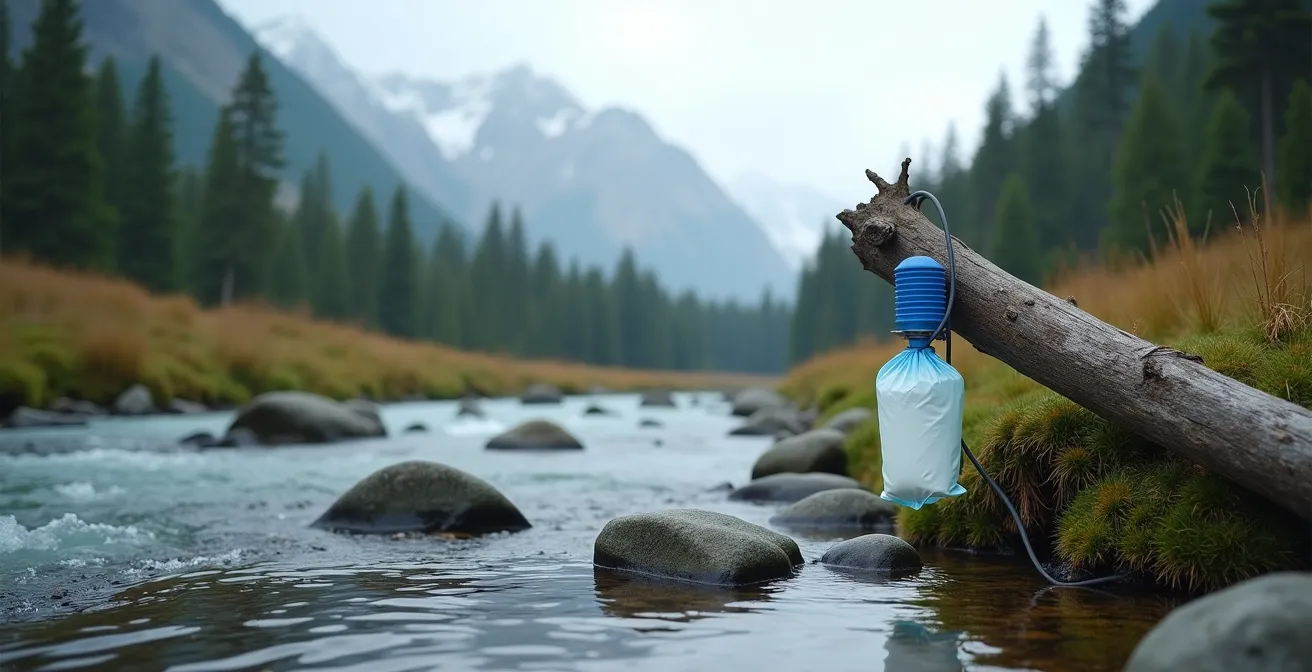
Therefore, treating all water is a non-negotiable rule. There are several effective methods:
- Filtration: Modern hollow-fiber filters are lightweight, fast, and effective at removing protozoa like Giardia and bacteria.
- Purification: Chemical treatments (tablets or drops) or UV light purifiers are also effective and can be a great backup system.
- Boiling: Bringing water to a rolling boil for at least one minute is a foolproof method, though it is time-consuming and uses fuel.
The minimal effort required to treat your water is an incredibly small price to pay to avoid a trip-ending, and potentially dangerous, illness. Never drink directly from any stream, lake, or river in the backcountry, no matter how pure it seems.
Cotton Kills: Why Synthetic or Wool Layers Are Critical Even in Summer?
“Cotton kills” is one of the oldest and most important sayings in outdoor education, yet it is frequently ignored. The danger of cotton lies in its inability to insulate when wet. Cotton fibers absorb and hold onto a tremendous amount of water—from rain, or more insidiously, from your own sweat. This moisture eliminates the air pockets that provide insulation, actively pulling heat away from your body up to 25 times faster than when it’s dry. This can lead to a rapid, dangerous drop in core body temperature, resulting in hypothermia.
This risk is acutely present even in the middle of summer in the Canadian mountains. A common phenomenon in the Alberta Rockies is experiencing “four seasons in one day.” A warm, sunny 25°C afternoon can plummet to near-freezing temperatures with the arrival of a sudden storm, which can bring rain, hail, or even snow at higher elevations. The provincial safety guide for Alberta emphasizes this rapid variability, warning that a proper layering system is essential to prevent hypothermia when clothing becomes wet. A simple cotton t-shirt or hoodie, soaked with sweat from the afternoon climb, becomes a deadly liability in a sudden evening downpour.
The solution is a disciplined moisture management system based on synthetic or wool fabrics. These materials do not absorb water the way cotton does. They actively wick moisture away from your skin to the outer surface of the fabric where it can evaporate, keeping you drier and warmer. Your entire clothing system, from your socks and underwear to your insulating layers, must be made of these performance materials. There is no place for cotton in your pack.
Checklist: Essential Layering for the Canadian Backcountry
- Base Layer: Select a snug-fitting, moisture-wicking layer of merino wool or a synthetic fabric like polyester to pull sweat off your skin.
- Mid Layer: Choose an insulating layer like a fleece jacket or a synthetic fill vest that is breathable and retains warmth even if it gets damp.
- Shell Layer: Carry a fully waterproof-breathable jacket (and pants) to protect you from wind and rain, especially critical for the humidity of the West Coast.
- Emergency Layer: Always pack a “puffy” jacket—either lightweight down or synthetic insulation—to be worn during rest stops or in an emergency.
- Systematic Check: Absolutely avoid all cotton items, including jeans, hoodies, casual t-shirts, and everyday socks. They have no place in a serious backcountry trip.
How to Navigate the Canadian Healthcare System as a Non-Resident Tourist
An accident in the backcountry is not just a physical crisis; for a non-resident tourist in Canada, it can quickly become a financial one. It’s a common misconception that Canada’s “free” healthcare extends to visitors. This is false. Healthcare in Canada is managed provincially, and while it is publicly funded for residents, non-residents are billed for every service they receive. The costs can be staggering.
An emergency room visit for a seemingly minor injury, like a sprained ankle or a deep laceration, can cost hundreds of dollars before you even see a doctor. Add in the physician’s fees, diagnostic tests like X-rays or CT scans, and any necessary medical supplies, and the bill can easily run into the thousands. A more serious incident requiring a multi-day hospital stay or surgery can lead to bills tens or even hundreds of thousands of dollars. As one guide on the system notes, “Healthcare is provincial, with costs and coverage varying significantly between Canada’s thirteen different systems.” You are not covered by your home country’s insurance, and you are not covered by Canada’s.
This financial risk underscores the absolute necessity of comprehensive travel insurance. However, as we will see, not all insurance is created equal. The key is understanding that a simple fall on a trail can have financial consequences that last long after the physical injury has healed. Your preparedness plan must include a robust financial safety net.
The following table provides a sample of potential out-of-pocket costs for a non-resident requiring emergency medical care in Canada. These are estimates, and actual costs can be higher, but they illustrate the significant financial exposure you face without proper insurance coverage. An official overview of the Canadian system highlights this user-pays model for visitors.
| Province | ER Visit Base Fee | Physician Fee | Additional Tests |
|---|---|---|---|
| British Columbia | $600-900 | $150-300 | X-ray: $150+ |
| Alberta | $500-750 | $200-350 | CT scan: $500+ |
| Quebec | $400-700 | $100-250 | Blood work: $100+ |
| Ontario | $600-1000 | $200-400 | MRI: $1000+ |
Key Takeaways
- Communication is Your Lifeline: In the Canadian wilderness, your smartphone is useless. A dedicated satellite messenger is the only reliable way to call for help.
- Respect for Regulations: Rules regarding bear canisters and backcountry permits are not suggestions; they are mandatory laws designed to protect wildlife and fragile ecosystems.
- Master Your Environment: Assume all water is contaminated and must be filtered. Dress in layers of wool or synthetics to manage moisture and prevent hypothermia, even in summer.
Why Standard Travel Insurance Won’t Cover Your Heli-Skiing Accident?
Securing travel insurance is a critical step, but simply buying any policy is not enough. The most common and dangerous mistake backcountry adventurers make is assuming their standard travel insurance policy will cover them. In most cases, it will not. The majority of basic policies contain specific exclusions for activities deemed to be high-risk or “adventure sports.”
From the insurer’s perspective, hiking on a well-marked trail is a different level of risk than heli-skiing in avalanche terrain or ice climbing a frozen waterfall. If your planned activities appear on this exclusion list, you will need to purchase a specific “adventure” or “sports” rider or a specialized policy that explicitly covers them. Without this specific coverage, if you are injured while participating in one of these activities, your claim will be denied, and you will be responsible for 100% of your medical and evacuation costs—which, for a remote helicopter rescue, can be astronomical.
It is your absolute responsibility to read the fine print of your policy document before your trip. Do not rely on the marketing summary. Search the document for keywords like “exclusion,” “hazardous activities,” “sports,” and “mountaineering.” If you are unsure whether your planned activity is covered, you must contact the insurance provider directly and get written confirmation. Assuming you are covered is a gamble you cannot afford to lose.
Checklist: Activities Often Requiring an Insurance Rider in Canada
- Heli-skiing and cat-skiing operations in British Columbia.
- Ice climbing and mountaineering, often with specific altitude limits (e.g., above 4000m).
- Technical canyoning and canyoneering in the Rocky Mountains.
- Multi-day, unsupported sea kayaking on the Great Lakes or the Pacific/Atlantic coasts.
- Via ferrata routes in Quebec, Alberta, and British Columbia.
- Backcountry skiing or splitboarding in unmanaged, non-patrolled avalanche terrain.
- Whitewater rafting or kayaking on rivers rated Class IV or higher.
West Coast Trail Preparation: Can You Carry a 40lb Pack for 7 Days on Ladders?
The West Coast Trail (WCT) on Vancouver Island is a perfect case study—a microcosm of all the challenges the Canadian backcountry can throw at you. It is often underestimated. The question is not simply “can you hike for 75km?” but “can you do it while carrying a 40lb pack, navigating a landscape that is actively trying to work against you?” This is a test of physical endurance, mental fortitude, and meticulous preparation.
The physical challenge is immense. The trail is not a graded path; it involves climbing and descending dozens of steep, slippery wooden ladders, some over 100 feet tall, with a heavy pack throwing off your center of gravity. You will be hauling yourself over fallen logs, scrambling through deep mud, and walking on uneven, rocky beaches. The trail’s difficulty is compounded by the environment. As noted by Off Track Travel, the “constant West Coast rain can turn the trail into a grueling mud pit, effectively increasing the perceived weight of a pack.” Every step requires more energy.
Beyond the physical grind, the WCT demands constant environmental awareness. Beach sections are impassable at high tide, requiring mandatory navigation with a tide chart and watch. Getting caught by a rising tide can be fatal. The trail is also located in a tsunami hazard zone, with marked evacuation routes leading to higher ground—a grim reminder of the Pacific Ring of Fire’s power. All the while, you are in prime black bear and cougar territory, making the food storage protocols we’ve discussed absolutely critical. The WCT is a holistic challenge that punishes the unprepared. It proves that a successful backcountry expedition is the sum of all its parts: physical conditioning, proper gear, logistical planning, and an unwavering respect for the power of the environment.
Your journey into the Canadian backcountry begins not at the trailhead, but months before, with the decision to take preparation seriously. Shift your mindset from that of a casual participant to an expedition leader, responsible for every aspect of your own safety. This is the ultimate sign of respect for the wild places you seek to explore.