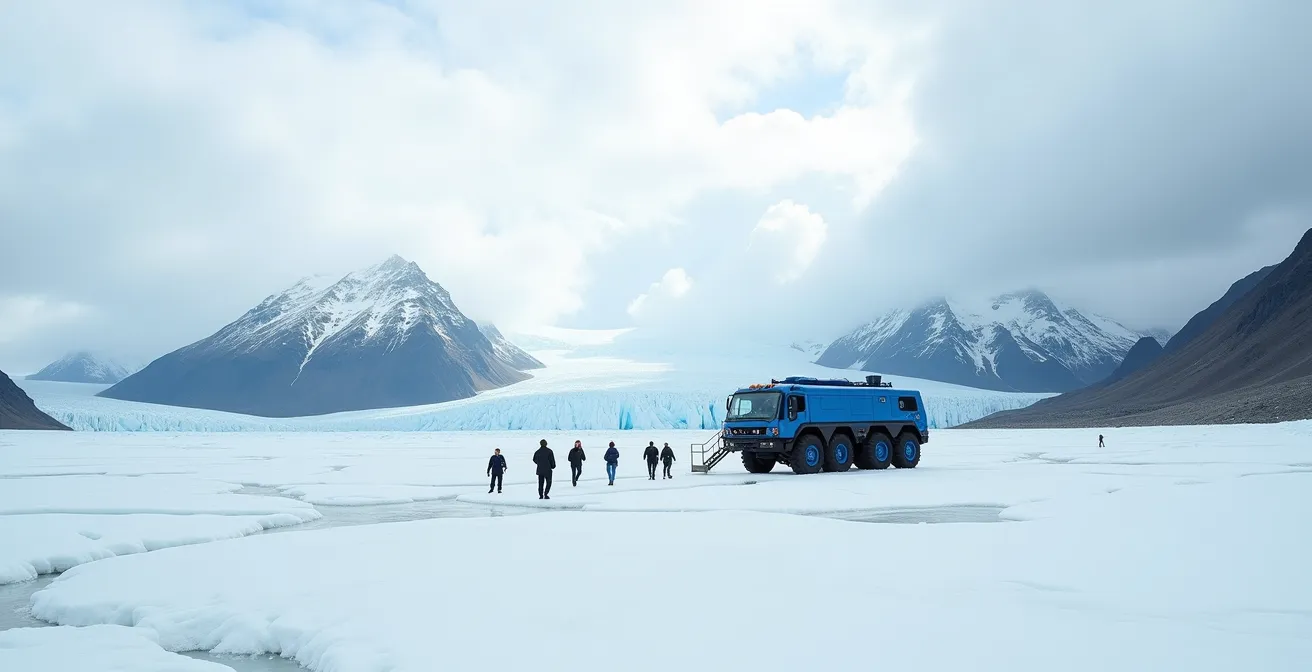
The $100 Ice Explorer tour is less a tourist ticket and more a fee for engineered safety and managed access to a rapidly vanishing, and inherently dangerous, natural wonder.
- The cost is justified by the massive operational and safety infrastructure required to prevent accidents in a hazardous environment.
- The glacier’s significant retreat highlights the ecological cost of such tourism, making the experience a poignant look at a disappearing world.
Recommendation: For the budget-conscious, view the price not as an entertainment expense, but as a necessary investment for safely experiencing a fragile landscape that is otherwise inaccessible and deadly.
The question looms large as you stand in the Columbia Icefield Discovery Centre, gazing at the colossal Ice Explorer buses: is a short walk on the Athabasca Glacier really worth over $100 CAD? For the budget-conscious traveler, the temptation to just enjoy the view from the free parking lot is strong. Many guides and reviews will offer a simple “yes,” citing a once-in-a-lifetime experience. They’ll talk about the thrill of standing on ancient ice and the pristine beauty of the Canadian Rockies.
But this simple evaluation misses the point entirely. The decision isn’t just about the view or the photo opportunity. To truly assess the value, you have to look beyond the surface. What you are paying for is not merely a ride, but a complex system of “engineered access” to an environment that is actively hostile to human life. The real question isn’t whether the tour is fun, but rather: what is the true transaction taking place? If we reframe the cost as a function of the immense safety imperative, the sophisticated engineering, and the ecological reality of a melting giant, the answer becomes far more nuanced.
This analysis will deconstruct the $100 price tag. We will explore the hidden dangers that make unguided access a fatal mistake, the staggering rate at which this natural wonder is disappearing, and the specific environmental factors you must prepare for. We will also critically evaluate the associated attractions like the Skywalk and demystify the practicalities of water safety and insurance, providing a framework to decide if this expensive ticket is a justifiable investment for you.
To help you make an informed decision, this article breaks down every component of the Athabasca Glacier experience, from its inherent dangers to its surprising environmental connections. The following summary provides a roadmap to the key questions you should be asking.
Summary: A Critical Guide to the Athabasca Glacier Experience
- Why Walking on the Glacier Without a Guide Is a Deadly Mistake?
- Receding Ice: How Much Has the Athabasca Glacier Shrunk in 10 Years?
- Why You Need a Winter Jacket on the Glacier Even in July?
- The Skywalk Glass Floor: Thrill or Overpriced Tourist Trap?
- The Triple Continental Divide: Where Does the Meltwater Actually Go?
- The Gasp Reflex: Why Falling into 2°C Water Can Drown You in Seconds?
- Giardia and Beavers: Why You Must Filter Even “Pristine” Glacial Water?
- Why Standard Travel Insurance Won’t Cover Your Heli-Skiing Accident?
Why Walking on the Glacier Without a Guide Is a Deadly Mistake?
From the parking lot, the Athabasca Glacier looks like a solid, walkable river of ice. This illusion is the first and most dangerous trap for unprepared visitors. The glacier’s surface is a treacherous landscape riddled with hidden crevasses—deep fissures in the ice that can be concealed by a thin, fragile layer of snow. These can be hundreds of feet deep. What appears to be solid ground can give way without warning, leading to a fatal fall into the icy darkness below. Furthermore, the glacier is in constant, subtle motion, which can open new crevasses or make existing ones more unstable.
The “engineered access” provided by the Ice Explorer tour is built entirely around this safety imperative. The tour operators spend significant resources scouting and maintaining a safe, designated zone for visitors. The massive, six-wheeled vehicles are specifically designed to navigate this terrain and distribute their weight safely. When you pay for the tour, you are primarily paying for the expertise of certified guides and the operational safety that allows you to step onto the ice without risking your life. Venturing out alone is not an adventurous alternative; it’s a gamble against geology and physics that has had tragic consequences in the past.
Ignoring the marked boundaries or attempting a self-guided walk is an explicit violation of Parks Canada’s safety warnings and an act of extreme recklessness. The cost of the ticket is, in essence, the price of mitigating these invisible but very real dangers.
Your Action Plan: Glacier Safety Essentials
- Always travel with certified guides when approaching glacial areas; never venture onto the ice alone.
- Wear proper safety equipment, including a helmet and harness if you are on a technical ice-field crossing tour.
- Inform someone outside your group of your exact route and expected return time if hiking near, but not on, the glacier.
- Check current conditions and warnings with Parks Canada before any activity in the Columbia Icefield area.
- Never venture beyond the marked safe zones established by the tour operators.
Receding Ice: How Much Has the Athabasca Glacier Shrunk in 10 Years?
The second part of the value transaction is understanding what you are paying to see: a geological marvel that is actively disappearing. The Athabasca Glacier is not a static landmark; it is a dynamic, shrinking body of ice, and its retreat is accelerating at an alarming rate. This ecological reality adds a layer of poignancy and urgency to the experience. You are witnessing a fleeting moment in geological time.
Stone markers along the access route grimly track its retreat since the 19th century, but recent data is even more sobering. According to recent glacier monitoring, the Athabasca Glacier has seen a startling retreat of 60 to 80 meters between 2015 and 2024 alone. This rapid melt is a direct and visible consequence of a warming climate. The massive Ice Explorer buses, with their significant carbon footprint, are part of a complex paradox: the very industry that allows thousands to appreciate the glacier also contributes to the broader climate trends threatening its existence.
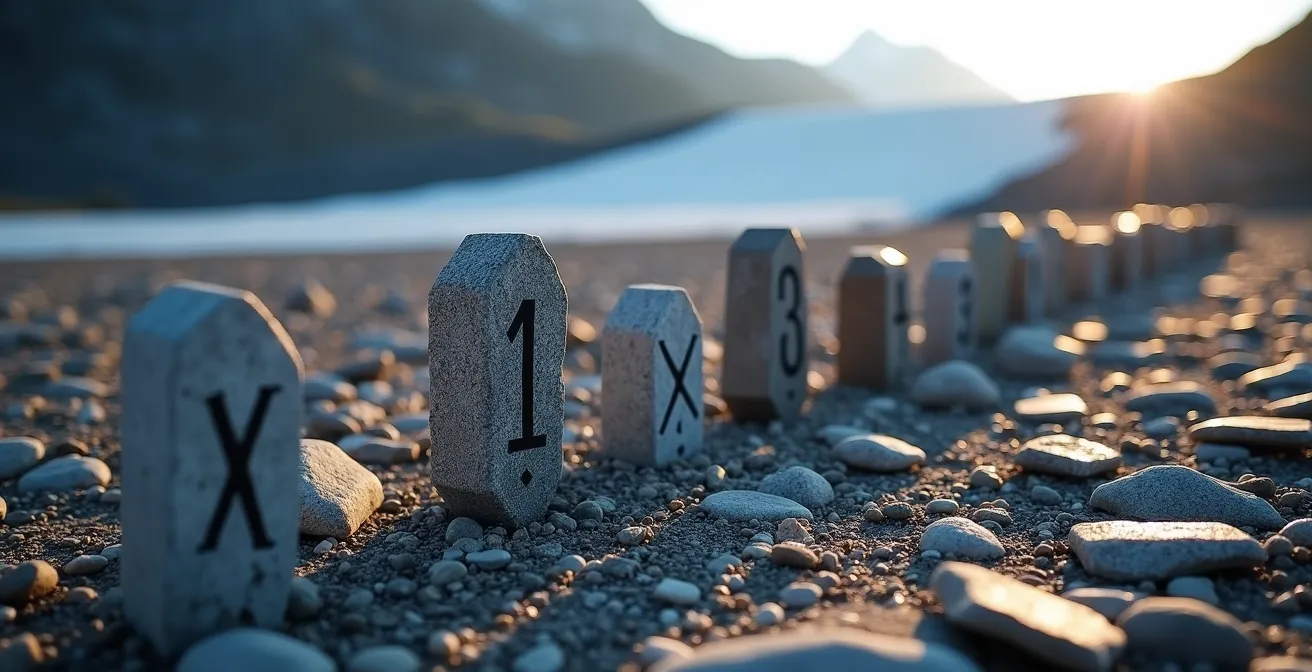
This visible decline transforms the tour from a simple sightseeing trip into an educational experience about climate change. For the sustainability-minded traveler, this presents a difficult question. Is it better to witness and learn from this vanishing wonder, or to abstain due to the ecological footprint of the visit? The price of the ticket, in this context, also funds the infrastructure that manages and contains tourist impact, arguably preventing a chaotic free-for-all that would cause even more damage. The experience becomes a stark reminder of the fragility of our planet’s ecosystems.
Why You Need a Winter Jacket on the Glacier Even in July?
The Canadian Rockies weather is famously unpredictable, but on the Athabasca Glacier, a dramatic temperature drop is a scientific certainty. This is one of the most practical, and often underestimated, aspects of the tour. While it might be a pleasant 22°C in the parking lot, the conditions on the ice itself are drastically different. The ice acts as a giant refrigerator, and its surface is often swept by cold katabatic winds—dense, cold air that flows down the glacier’s slope under the force of gravity.
As a result, it’s not uncommon for the on-glacier temperature to be 5°C or colder, even on a sunny summer day. According to weather monitoring data from the tour operator, temperature drops from 22°C in the parking lot to 5°C or less are standard. This significant differential can catch visitors unprepared, turning an amazing experience into a miserably cold one. The intense reflection of sunlight off the ice can also be blinding, making sunglasses an absolute necessity to prevent snow blindness, even on overcast days.
Dressing appropriately is not just for comfort; it’s a safety measure. Layering is key: a base layer, a fleece or mid-layer, and a windproof and waterproof outer jacket will allow you to adapt. Waterproof gloves are also essential, not just for warmth but to protect your hands if you touch the ice. Failing to prepare for this microclimate is one of the most common mistakes visitors make. The tour price doesn’t include a jacket, so this is a cost you must factor in yourself.
The Skywalk Glass Floor: Thrill or Overpriced Tourist Trap?
Often bundled with the Ice Explorer tour, the Columbia Icefield Skywalk presents another value-for-money dilemma. It’s a feat of engineering: a glass-floored observation platform suspended 280 meters (918 feet) above the Sunwapta Valley. For thrill-seekers, it offers a genuine jolt of vertigo and spectacular views. For the budget-conscious traveler, however, its steep price tag demands scrutiny. Is the thrill a unique experience or just an overpriced, man-made attraction in the middle of a natural paradise?
To put its cost into perspective, a comparison with other major Canadian attractions is useful. While the experience is unique, its price is at the higher end of the spectrum for viewpoint-style attractions, rivaling much more involved experiences.
| Attraction | Location | Price (CAD) | Experience Type |
|---|---|---|---|
| Columbia Icefield Skywalk | Jasper | $95-110 | Glass platform 280m high |
| CN Tower EdgeWalk | Toronto | $225 | Hands-free walk on tower ledge |
| Capilano Suspension Bridge | Vancouver | $66 | Suspension bridge & treetop walk |
| Montmorency Falls Cable Car | Quebec | $20 | Cable car to waterfall viewpoint |
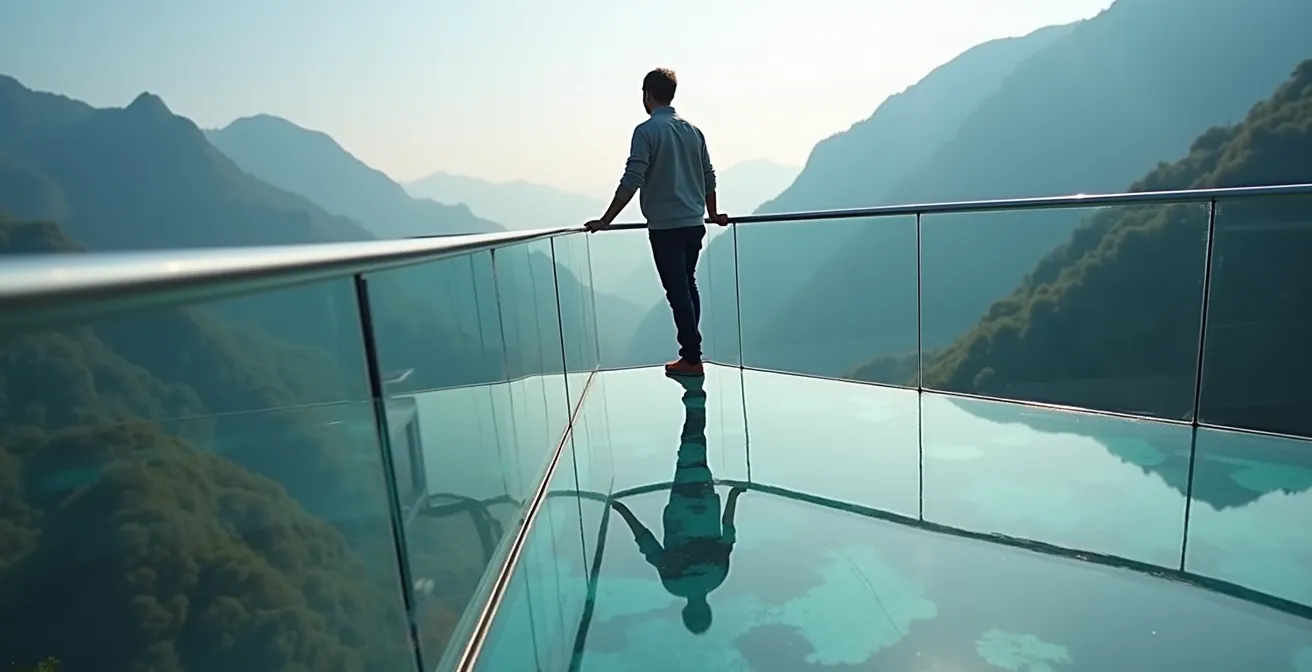
From a sustainability perspective, the Skywalk represents the pinnacle of “engineered access.” It’s a massive structure of steel and glass bolted into a cliffside, designed to create a thrill that nature itself doesn’t provide. Unlike the glacier tour, which provides access to an existing natural feature, the Skywalk is the feature itself. Ultimately, its value is subjective. If you’re a photographer or seek the adrenaline rush of heights, it may be worth it. If your primary goal is to connect with the natural landscape, the numerous free viewpoints along the Icefields Parkway might offer a more authentic—and certainly more economical—experience.
The Triple Continental Divide: Where Does the Meltwater Actually Go?
One of the most profound and easily missed facts about the Columbia Icefield is its unique geographical position. It sits atop the Triple Continental Divide, a hydrological apex from which water flows to three different oceans: the Arctic, the Atlantic, and the Pacific. The meltwater you see pooling on the Athabasca Glacier is not just a local phenomenon; it is the headwater for vast river systems that support ecosystems and communities thousands of kilometers away.
This transforms your understanding of the glacier’s significance. A case study on the Icefield’s water distribution reveals its immense reach. The Athabasca River, fed by the glacier, flows north into the Mackenzie River system and eventually to the Arctic Ocean. The North Saskatchewan River flows east, eventually reaching Hudson Bay and the Atlantic. The Columbia River flows south and west to the Pacific. This single patch of ice connects a continent. The health of this glacier has direct implications for water availability, hydroelectric power, and agriculture far downstream.
The scale of this impact is immense. Research from Athabasca University confirms that 154,097 people (5% of Alberta) depend on the Athabasca River basin alone for their water. When you stand on the glacier, you are at the source of a lifeline for a significant population. This knowledge reframes the tour from a simple mountain visit to a lesson in interconnected environmental systems. It underscores the global importance of these shrinking icefields, making the experience less about personal enjoyment and more about bearing witness to a critical planetary process.
The Gasp Reflex: Why Falling into 2°C Water Can Drown You in Seconds?
The dangers of the glacier extend beyond falling into crevasses. The water on and around the ice is dangerously, life-threateningly cold. A fall into a glacial stream or a meltwater pool (a moulin) triggers an immediate and involuntary physiological response known as the cold shock gasp reflex. When your body is suddenly immersed in water that is 2°C (35°F), you automatically take a deep, sharp inhalation. If your head is underwater at that moment, your lungs will fill with water, causing you to drown in seconds, long before hypothermia sets in.
This is not a matter of willpower or swimming ability; it is an uncontrollable reflex. Even if you survive the initial gasp, the immediate effects of the cold are debilitating. Survival experts use the “1-10-1 Principle” to describe the stages of cold water immersion. This principle highlights the extreme and immediate danger, reinforcing the absolute necessity of guided, controlled access on the ice.
The designated tour area is carefully chosen to be far from these hazards, but understanding them is key to respecting the environment you are in. It’s another layer of the “safety imperative” that justifies the structured, and costly, nature of the tour. The beautiful, turquoise pools of water are not swimming holes; they are deadly traps.
Your Action Plan: The 1-10-1 Cold Water Survival Principle
- 1 Minute: You have about one minute to get your breathing under control after the initial cold shock and gasp reflex.
- 10 Minutes: You have approximately ten minutes of meaningful, conscious movement before your muscles become too cold to function.
- 1 Hour: You have about one hour before you lose consciousness due to hypothermia.
Giardia and Beavers: Why You Must Filter Even “Pristine” Glacial Water?
A highlight for many visitors is the chance to fill a water bottle from a stream on the glacier, tasting “pristine” ancient water. While the guides on the tour will direct you to a safe source, the idea that all glacial water is pure is a dangerous myth. The water may look crystal clear, but it can be contaminated with a host of unseen dangers, from biological pathogens to industrial pollutants.
Firstly, wildlife like birds, marmots, and even beavers further downstream can introduce parasites like Giardia and Cryptosporidium into water sources. These microorganisms can cause severe gastrointestinal illness. Secondly, and more subtly, the glacier itself is a repository of airborne pollutants. A revealing study from the CBC highlights how snowpack acts like a sponge for contaminants carried through the atmosphere. As the snow and firn (the layer between snow and glacial ice) from past decades melts, it releases whatever was in the air at the time—including pollutants from the industrial era.
As scientists noted in the study, while the ancient ice itself may be pre-industrial and clean, the snowpack from the ’70s, ’80s, and ’90s is not. A report on glacier melt from CBC News Interactives explains that more of those contaminants make their way downstream as melting accelerates. Therefore, never assume meltwater is safe to drink. Unless you are directed to a specific, vetted source by a certified guide, you must always filter or purify any water collected in the backcountry, no matter how clean it appears.
Key Takeaways
- The $100+ cost is primarily a fee for safety and engineered access, not just a view.
- The glacier is shrinking rapidly, making the visit a poignant look at a disappearing natural wonder.
- The on-glacier environment is a harsh microclimate requiring winter clothing, even in summer.
Why Standard Travel Insurance Won’t Cover Your Heli-Skiing Accident?
A final, practical consideration in your “value transaction” is understanding the line between tourism and adventure sports. This is especially important when it comes to travel insurance. Many travelers worry if an activity like the Ice Explorer tour is considered an “extreme sport” that would void their policy. For this specific, guided tour, the answer is generally no. Because it is a controlled, guided activity on a designated path, most standard travel insurance policies will cover you as they would for any other tourist bus tour.
However, the moment you step outside these boundaries, the rules change entirely. Activities like un-guided glacier hiking, ice climbing, or heli-skiing in the surrounding area are almost universally classified as adventure or extreme sports. A standard insurance policy will not cover accidents that occur during these activities. You would need a specialized add-on for adventure sports coverage, which comes at a significantly higher premium. This distinction is crucial. The Ice Explorer tour is packaged as a safe, accessible tourist experience, and insurance companies treat it as such.
For Canadian residents traveling from another province, another nuance exists. While your provincial health plan covers emergency medical care, it may not cover ancillary costs like ambulance fees (by ground or air) or transportation back to your home province. Supplemental travel insurance is wise even for domestic travel to cover these potential gaps. The key is to read your policy carefully and understand exactly what is defined as a covered “activity.”
Ultimately, the decision to spend $100 on the Athabasca Glacier tour is a personal one, but it should be an informed one. By understanding that you are paying for a sophisticated safety system, engineered access to a dangerous landscape, and a front-row seat to the effects of climate change, you can better weigh the cost against the profound, multifaceted experience it offers. For those who value safety and wish to witness this vanishing giant, the price is not a barrier, but a necessary key.
Frequently Asked Questions About the Athabasca Glacier Tour
Is the Ice Explorer tour considered ‘extreme sports’ by insurance companies?
No, guided tours on designated paths like the Ice Explorer are typically covered by standard travel insurance as they are not classified as extreme activities. They are treated like a regular bus tour.
What about coverage for Canadian residents traveling between provinces?
While your provincial health plan will cover emergency medical care under inter-provincial agreements, it may not cover costs like ambulance fees, air evacuation, or repatriation. Supplemental travel insurance is highly recommended to cover these gaps.
Which activities at the Columbia Icefield require special insurance?
Un-guided glacier hiking, ice climbing, mountaineering, and heli-skiing are typically considered adventure sports. These activities require a specific adventure sports rider or a specialized insurance policy, as they are excluded from standard coverage.