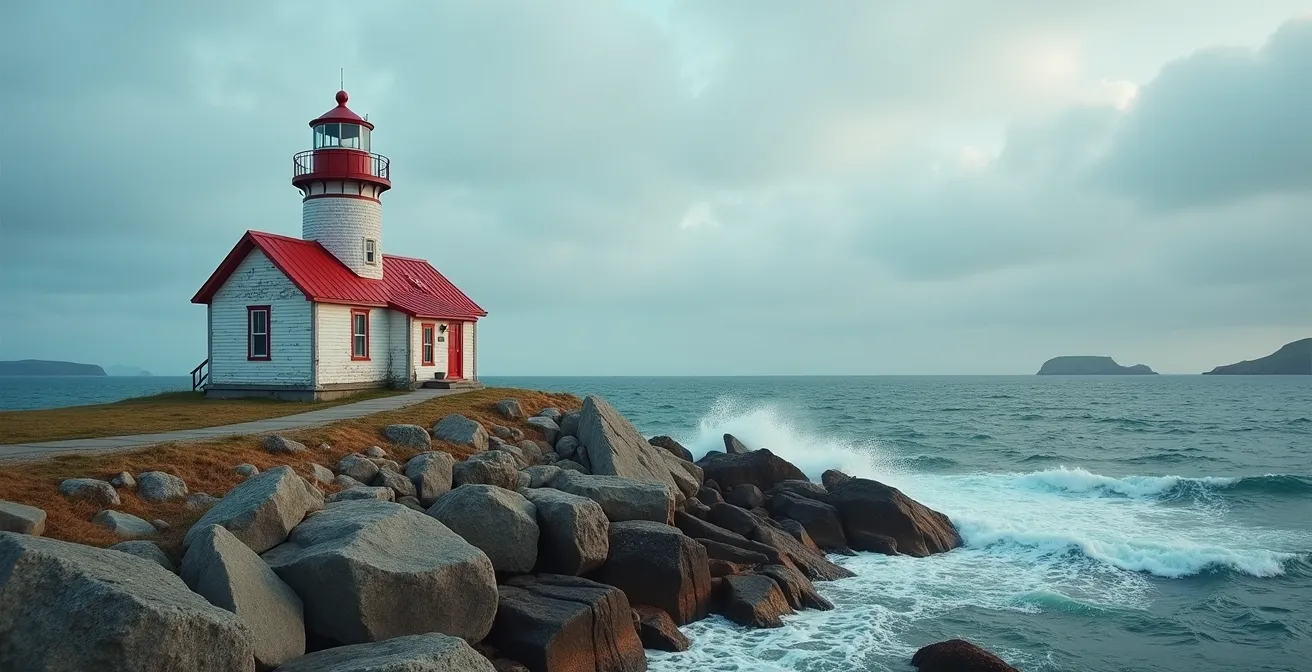
Staying in a Canadian lighthouse is less about novelty and more about an immersive heritage experience that directly supports preservation.
- Accommodations range from rustic, authentic outposts to 4-star heritage inns, catering to different comfort levels.
- Your stay contributes to the upkeep of vital maritime structures, many of which were once slated for demolition.
Recommendation: Choose your stay based on the balance of comfort and historical authenticity you seek, from the rugged coasts of Newfoundland to the accessible shores of Ontario.
The image of a lighthouse has long been a beacon for the romantic soul—a solitary tower against a dramatic sky, promising refuge and a breathtaking view. For couples seeking a truly unique escape, the idea of sleeping in one is the ultimate travel fantasy. It’s an experience often pictured as waking up to the cry of gulls and the endless expanse of the ocean. But this picture, while appealing, only scratches the surface of what a lighthouse stay in Canada truly represents.
Many guides will simply list available locations, focusing on amenities and booking links. They treat these historic structures as quirky alternatives to a standard hotel. But what if the real value wasn’t just the view, but the connection to a life of profound isolation and responsibility? What if the creak of the floorboards and the distant moan of a foghorn were not just novelties, but a direct line to the past? This guide moves beyond the postcard image to explore the deeper experience: inhabiting heritage.
We will delve into the reality of a keeper’s life in the early 20th century, examine the spectrum of modern comforts you can expect, and understand how your tourist dollars are the lifeblood for these crumbling maritime guardians. We’ll explore the art of capturing their beauty, demystify the incredible technology that powered them, and weigh the costs and benefits of different locations. This is not just about finding a room; it’s about finding a story. It’s about understanding that a night in a lighthouse is an intimate dialogue with the solitude, engineering, and enduring spirit of those who kept the light.
To help you navigate this unique travel niche, this article breaks down the essential aspects of choosing and appreciating a heritage lighthouse stay. From the raw history to the practical considerations of comfort and cost, here is your comprehensive guide to inhabiting Canada’s coastal beacons.
Table of Contents: A Guide to Canada’s Historic Lighthouse Stays
- The Life of a Keeper: What Was Daily Isolation Like in the 1900s?
- Luxury vs. Rustic: Are Lighthouse Stays Comfortable or Spooky?
- Where Does Your Money Go? How Tourism Saves Crumbling Lighthouses?
- Fisgard vs. Peggy’s Point: Which Lighthouse Offers the Best Sunset?
- Fresnel Lenses: How Did Old Technology Project Light for Miles?
- Muskoka vs. Kawarthas: Which Lake Region Fits Your Family Budget?
- From Grain to Museum: Which Elevators Have Been Successfully Saved?
- Cape Enrage: How to Enjoy the Views Without Risking the Unstable Cliffs?
The Life of a Keeper: What Was Daily Isolation Like in the 1900s?
Before you can appreciate the comfort of a restored keeper’s cottage, it’s essential to understand the life it once housed. The modern-day romanticism of a lighthouse stay stands in stark contrast to the grueling, relentless reality faced by its original inhabitants. A lighthouse keeper in the early 1900s was not a poet gazing at the sea; they were a technician, a meteorologist, and a labourer, bound to a strict and unforgiving schedule. Their existence was a battle against the elements and entropy, ensuring the light—a vital lifeline for mariners—never faltered.
The isolation was profound. Keepers and their families often lived for months on remote, windswept islands with no communication other than passing supply ships. Their world was contained within the tower and the small cottage, their soundtrack the constant howl of the wind and crash of the waves. This was a life of engineered solitude, where every task was critical. A smudged lens or a failing clockwork mechanism could spell disaster for ships navigating treacherous waters. This historical context is the soul of your stay; you are sleeping within the walls that witnessed this incredible dedication.
To truly grasp the rhythm of this life, consider the typical duties of a Canadian keeper a century ago:
- Rise before dawn to extinguish the light and clean the lens with special cloths and alcohol, removing salt deposits and soot.
- Wind the clockwork mechanism that rotated the lens (a task repeated every 3-4 hours throughout the day).
- Monitor weather conditions and record observations in the official logbook for the Department of Marine.
- Maintain fuel supplies, which involved carrying heavy oil containers up winding spiral stairs to ensure adequate reserves for storms.
- Perform daily maintenance on fog signal equipment, often testing a powerful steam-powered horn mechanism.
- Light the lamp precisely at sunset, carefully adjusting the wick for optimal brightness and minimal smoke.
This routine was the heartbeat of the coast. Today’s serene getaway is built upon a legacy of tireless vigilance. As you watch the sunset from your window, you’re experiencing a moment of peace that was, for the keeper, the beginning of another watchful night on duty.
Luxury vs. Rustic: Are Lighthouse Stays Comfortable or Spooky?
A common question from prospective guests is whether a lighthouse stay is a cozy, romantic retreat or a drafty, spooky ordeal. The answer is: it can be both, and everything in between. The experience exists on a Comfort-Authenticity Spectrum. On one end, you have meticulously restored heritage inns with four-star amenities; on the other, you have rustic, self-catered cottages that offer a more raw and authentic taste of a keeper’s life. Choosing the right stay depends entirely on the experience you’re seeking.
For those who prioritize comfort, many lighthouse accommodations have been fully modernized. They feature comfortable beds, private ensuite bathrooms, and chef-prepared meals. These establishments masterfully blend modern hospitality with historical ambiance. You get the breathtaking views and the sense of seclusion without sacrificing the comforts of a boutique hotel. These are perfect for a romantic getaway where the history is a beautiful backdrop rather than the central challenge.
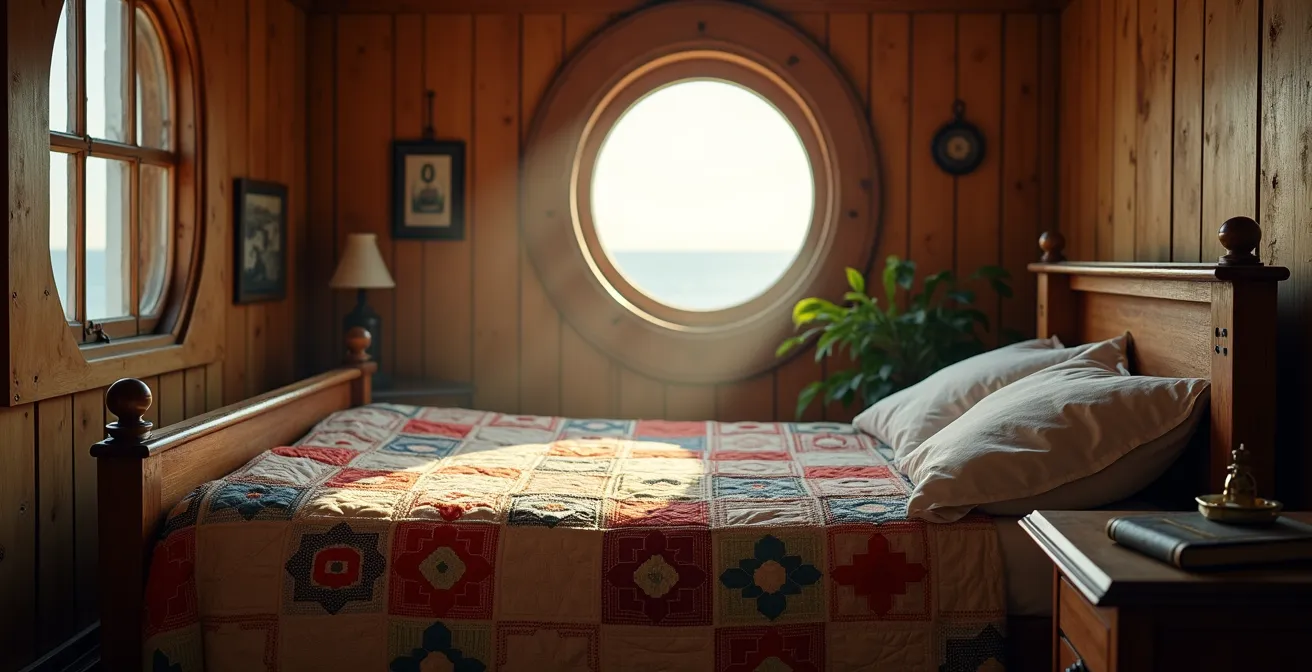
Conversely, for the more adventurous couple, rustic stays offer a deeper immersion. This might mean shared bathrooms, self-catering in a basic kitchen, or even arriving by boat to a location with no Wi-Fi or phone signal. What you trade in luxury, you gain in authenticity. The feeling of being truly disconnected, with only the sounds of the ocean for company, is a powerful reminder of the isolation keepers endured. The “spookiness” some fear is often just the sound of a historic building settling in the wind—a direct, tangible connection to the past.
Case Study: The Quirpon Lighthouse Inn, Newfoundland
The Quirpon Lighthouse Inn perfectly illustrates this spectrum. While upgraded to a 4-star status with quilted beds and heated whale-watching stations, it intentionally maintains its historic isolation. Guests arrive by boat into ‘Iceberg Alley’ and find no TV, Wi-Fi, or phone signal. This curated experience offers the comfort of a luxury inn but the profound, authentic solitude of its 1922 origins, where the only sounds are the Atlantic waves and the spouts of passing whales.
To help you decide, the following table compares a few notable Canadian lighthouse stays along this comfort spectrum.
| Lighthouse | Comfort Level | Amenities | Trade-offs |
|---|---|---|---|
| Quirpon Island, NL | Heritage Comfort (4-star) | Heated viewing station, meals included, private bathrooms | No Wi-Fi, boat access only |
| McKay Island, ON | Moderate Rustic | Full kitchen, 3 bedrooms, road accessible | No guided services, self-catering |
| Île aux Perroquets, QC | Luxury Heritage | 4-star rooms, handcrafted decor, Parks Canada interpretation | Remote island location |
| Cape d’Or, NS | Simple Comfort | 4 bedrooms, on-site restaurant | Shared facilities, active foghorn |
Where Does Your Money Go? How Tourism Saves Crumbling Lighthouses?
Choosing a lighthouse stay is more than a unique vacation; it is an act of patronage. You are directly participating in the preservation of Canadian maritime history. For decades, these iconic structures were seen as obsolete. With the advent of GPS and automated beacons, hundreds of lighthouses across the country were decommissioned, left to crumble under the relentless assault of coastal weather. Many were lost forever, their vital role in the nation’s development all but forgotten.
The tide began to turn with grassroots preservation efforts and the eventual passing of the Heritage Lighthouse Protection Act. This legislation created a framework for communities to take ownership of these structures. However, designation is only the first step. The ongoing costs of maintenance—painting, structural repairs, and preventing erosion—are immense. This is where tourism becomes the crucial lifeline. The revenue generated from overnight stays, tours, and on-site restaurants provides the sustainable funding needed to keep these beacons standing.
The government was hell-bent on tearing them down or abandoning them.
– Senator Mike Forrestall, during the introduction of the Heritage Lighthouse Protection Act
Your stay is a vote with your wallet for the value of this heritage. According to Parks Canada, of the lighthouses designated under the Act, many have been successfully transferred to community groups who rely on tourism to fulfill their stewardship mandates. In essence, you are not just a guest; you are a temporary guardian. Your booking helps fund a new coat of paint that will protect the tower from salt spray for another year, repairs the roof of a keeper’s cottage, or maintains the trail that allows public access.
This model of inhabited heritage transforms a simple holiday into a meaningful contribution. It ensures that the stories of the keepers, the ingenuity of the engineering, and the cultural significance of these landmarks are not lost to time. When you pay for your room, you are investing in the very fabric of Canada’s coastal identity, helping to ensure that future generations can also stand in awe of these sentinels of the sea. The experience offers a rare and rewarding symbiosis: the lighthouse gives you an unforgettable memory, and you give it a future.
Fisgard vs. Peggy’s Point: Which Lighthouse Offers the Best Sunset?
The quest for the “best” lighthouse sunset is a popular one, but framing it as a competition between two icons like Fisgard on the west coast and Peggy’s Cove (Peggy’s Point) on the east misses the point. The truth is, you cannot stay overnight at the famous Peggy’s Cove lighthouse, a classic example of a major tourist beacon that remains a day-use site. The perfect lighthouse photo isn’t about one specific location, but about understanding the unique environment of the lighthouse you *can* stay at and mastering the techniques to capture its magic.
Each coast offers a different canvas. Atlantic lighthouses in places like Newfoundland and Nova Scotia are ideal for capturing the soft, golden light of sunrise over the ocean. West coast lighthouses in British Columbia, on the other hand, are perfectly positioned for dramatic, fiery sunsets. The key is to move beyond a simple snapshot and engage in a form of “chronophotography”—capturing the story of the light and landscape as they change through time.
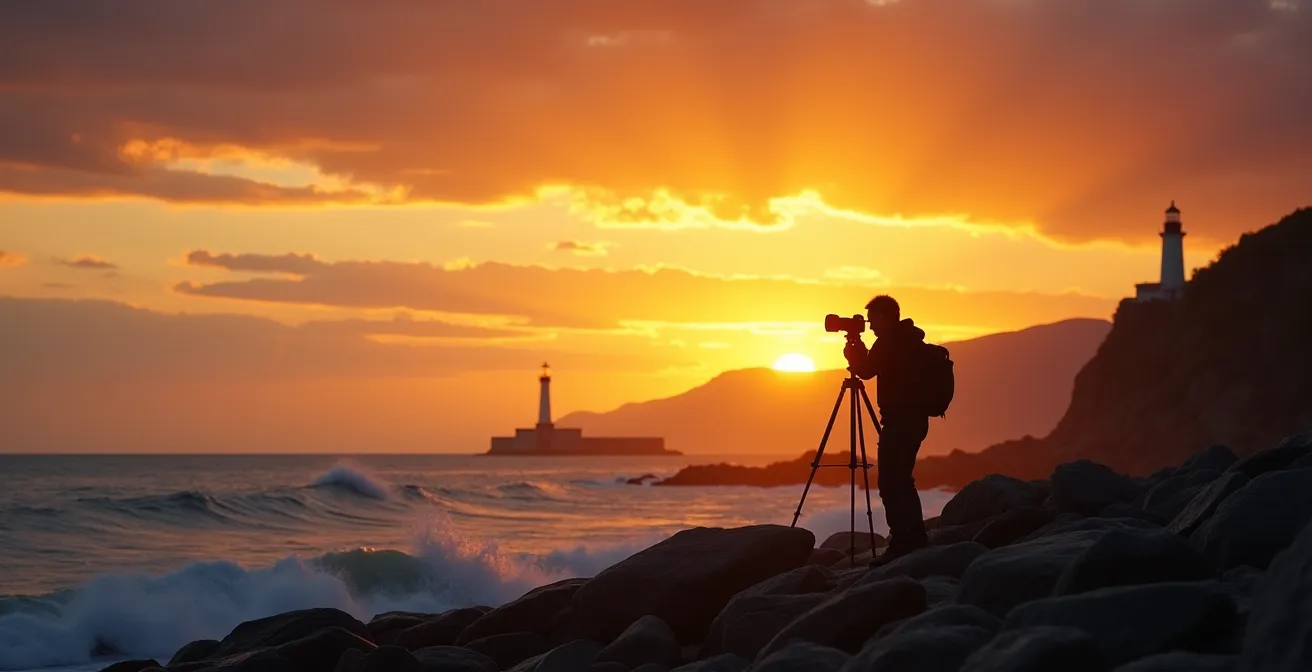
This means considering more than just the golden hour. It’s about capturing the ethereal mist of the “blue hour” on the B.C. coast, framing a Newfoundland lighthouse against a majestic iceberg in late spring, or using a long exposure to show the powerful tidal movement in the Bay of Fundy. The best photo is one that tells the story of that specific place: its weather, its geography, and its unique character. Rather than seeking a single “best” view, the discerning traveler-photographer seeks the most authentic one.
To elevate your photography from a simple vacation snap to a memorable image, preparation is key. This involves understanding the light, the environment, and your equipment.
Your Lighthouse Photographer’s Field Guide: Key Techniques
- Plan for the Light: Remember the rule: west coast for sunset, Atlantic for sunrise. Arrive at your chosen spot at least 45 minutes before the peak moment to set up and compose your shot.
- Embrace the Weather: Don’t be discouraged by fog or mist, especially on the B.C. coast. Shoot during the “blue hour” (the period just before sunrise or after sunset) for an ethereal, moody atmosphere. Use a graduated neutral density filter to balance the bright sky with the darker foreground.
- Capture Motion: When at a location with dramatic water, like the Bay of Fundy, use a fast shutter speed (1/500s or faster) to freeze the action of crashing waves. This adds a dynamic element that contrasts with the static lighthouse.
- Compose with Scale: In places like Newfoundland during iceberg season (May-July), use a telephoto lens. This will compress the perspective, making a distant iceberg appear larger and closer to the lighthouse, creating a powerful composition.
- Shoot for the Stars (and Northern Lights): For lighthouses on the Great Lakes, like those on Lake Superior, position yourself for aurora season (September-March). Use a tripod and experiment with long exposures (15-30 seconds) at a wide aperture (like f/2.8) to capture the northern lights dancing behind the beacon.
Fresnel Lenses: How Did Old Technology Project Light for Miles?
At the heart of every historic lighthouse is a masterpiece of 19th-century technology: the Fresnel lens. Before you see one up close, it’s difficult to comprehend its scale and ingenuity. These are not simple magnifying glasses; they are massive, intricate beehives of glass prisms, meticulously designed to capture, concentrate, and project the light from a single oil lamp over astonishing distances. Understanding this technology is key to appreciating the lighthouse not just as a building, but as a highly sophisticated machine.
Invented by French physicist Augustin-Jean Fresnel, the lens revolutionized maritime safety. Instead of a bulky, solid piece of glass, it used a series of concentric annular rings, each a distinct prism. This design allowed for the construction of very large lenses with a short focal length, making them much thinner and lighter than a conventional lens of the same power. The result was an apparatus that could project a beam of light up to 22 miles out to sea—an almost magical feat for its time. The keepers’ primary duty of cleaning and maintaining this lens was paramount.
The lenses were categorized by “orders,” from the colossal first-order lenses used for major coastal lighthouses down to smaller sixth-order lenses for harbours. Sadly, most of these magnificent glass giants were destroyed during the post-WWII electrification programs, replaced by smaller, more efficient automated beacons. Today, it is a rare privilege to see one in its original glory. In fact, maritime heritage records indicate that only one first-order Fresnel lens remains operational in Canada, at Cape Race, Newfoundland, weighing an incredible 20 tons.
Many of the decommissioned lenses have been preserved in museums, offering a chance to see their brilliance up close. The Maritime Museum of the Atlantic in Halifax, for example, houses the complete first-order lens from the Sambro Island Lighthouse. Standing before it, you can appreciate the craftsmanship of the French manufacturer Barbier, Bénard, et Turenne and understand how hundreds of individual glass pieces work in concert. This is the “ghost in the machine”—the silent, brilliant heart that gave the lighthouse its power and purpose.
Muskoka vs. Kawarthas: Which Lake Region Fits Your Family Budget?
When Canadian families plan a lakeside getaway, names like Muskoka and the Kawarthas often come to mind. These regions are synonymous with cottage life, but they also represent a premium price point, especially during peak season. If the goal is a unique, heritage-focused waterfront experience, comparing these popular regions to an actual lighthouse stay reveals a surprising value proposition. While Muskoka offers steamships and the Kawarthas boast historic lift locks, neither provides the immersive maritime experience of sleeping in a keeper’s cottage.
For a family on a moderate budget, the search for an authentic and affordable coastal or lakeside heritage stay often leads away from these bustling hubs. The key is to look for the hidden gems that offer a direct connection to history without the luxury price tag. One of the best examples is found in Ontario’s Algoma Country, which provides a compelling alternative to the traditional cottage regions. Here, you can find the province’s only road-accessible lighthouse accommodation.
Pat and Larry Peterson, the owners of the McKay Island Lighthouse, sum it up perfectly: “It’s a truly unforgettable, affordable vacation spot for a family, a romantic hideaway, or a lake vacation.” This sentiment captures the essence of the lighthouse stay’s value. It offers not just lodging, but a story and an experience that is difficult to quantify but impossible to forget. It shifts the focus from the generic “cottage on the lake” to the specific “keeper’s house on the shore.”
The following comparison puts the budget into perspective, showing how a dedicated heritage site can be more accessible than a typical rental in a high-demand cottage region.
| Region | Heritage Attractions | Lighthouse Access | Family Budget Range |
|---|---|---|---|
| Muskoka | RMS Segwun steamship, Muskoka Wharf | Gateway to Georgian Bay lighthouses (2-3 hour drive) | Premium ($300-500/night) |
| Kawarthas | Trent-Severn Waterway, Historic Lift Lock | Closer to Lake Ontario lights (1-2 hour drive) | Moderate ($150-300/night) |
| Algoma (Bruce Bay) | McKay Island Lighthouse (only road-accessible keeper’s cottage) | Direct lighthouse stay option | Budget-friendly ($165/night) |
Key Takeaways
- A lighthouse stay is a unique form of “inhabited heritage,” where your visit directly contributes to the preservation of Canadian maritime history.
- Accommodations exist on a spectrum, from rustic and authentic keepers’ cottages to fully modernized, 4-star heritage inns, allowing you to choose your ideal balance of comfort and immersion.
- Beyond the view, the experience connects you to the history of the keepers’ isolated lives and the ingenious 19th-century technology, like the Fresnel lens, that powered these coastal beacons.
From Grain to Museum: Which Elevators Have Been Successfully Saved?
The struggle to save Canada’s lighthouses is not an isolated event; it is part of a broader national conversation about preserving our industrial and rural heritage. To understand the challenges and triumphs of lighthouse preservation, it is insightful to look at a parallel movement: the fight to save Canada’s iconic prairie grain elevators. Like lighthouses, these “prairie sentinels” once dominated their landscape, were vital to the economy, and were made obsolete by modern technology, facing widespread demolition.
By comparing these two preservation stories, we can see different models of success. The movement to save grain elevators, like the one for lighthouses, has relied on passionate local community groups transforming these structures into museums, interpretive centres, and cultural hubs. The Inglis Grain Elevators National Historic Site in Manitoba, with its perfectly preserved row of five elevators, is a testament to this model. It shows that adaptive reuse is possible and that tourism can be a powerful engine for preservation, whether on the prairies or the coast.
However, the comparison also highlights historical disparities in federal recognition. Before the 2008 Act, lighthouse preservation lagged significantly behind that of other heritage structures. For instance, federal heritage statistics reveal that 166 heritage railway stations had been federally designated, compared to only 22 lighthouses receiving the highest level of protection. This gap underscores the critical importance of the Heritage Lighthouse Protection Act and the community-led tourism initiatives that have followed.
For the heritage-minded traveler, this connection opens up the possibility of a fascinating cross-country journey. One could start at the grain elevators of the prairies and travel east, following a trail of preserved industrial heritage that culminates at the maritime beacons of the Atlantic. This journey connects the agricultural heartland with the coastal lifelines, revealing a shared national story of ingenuity, decline, and rebirth through community-driven preservation.
Cape Enrage: How to Enjoy the Views Without Risking the Unstable Cliffs?
Many of Canada’s most dramatic lighthouse locations are perched on volatile, eroding coastlines. The very forces of nature that make these spots breathtaking also make them dangerous. For a couple seeking both romance and adventure, the question becomes how to experience the thrill of such a location safely. Cape Enrage in New Brunswick, home to one of the oldest lighthouses on the Bay of Fundy, provides an exemplary answer. It has transformed itself from a hazardous cliffside into a premier adventure tourism destination by making safety a core part of the experience.
The cliffs at Cape Enrage are famously unstable, shaped by the world’s highest tides, which can rise up to 50 feet. Rather than simply roping off the dangerous areas, the site’s management has adopted an educational approach. They offer guided activities like rappelling down 140-foot cliffs and soaring on a 600-foot zipline over the bay. Crucially, all these activities are managed by certified guides using mandatory safety equipment. This turns potential risk into a managed, thrilling, and educational opportunity.
The key to their success is infrastructure and interpretation. Secure wooden viewing platforms extend over the most dramatic drops, allowing visitors to appreciate the scale of the tides and the geology of the sedimentary rock without taking any risks. Interpretive panels explain the very forces that cause the cliff’s instability, transforming a simple warning sign into a fascinating lesson in geology. This model demonstrates that heritage sites don’t have to be sanitized or overly restrictive to be safe. They can offer heart-pounding experiences by building a framework of professional guidance and robust infrastructure around the inherent risks.
The Cape Enrage model is a blueprint for the future of heritage tourism. It proves that a historic site can be both a place of quiet contemplation and high-adrenaline adventure. It respects the wildness of its environment while ensuring that visitors can engage with it in a secure and meaningful way. For the traveler, it means you can enjoy the staggering views and feel the immense power of the Bay of Fundy, confident that you are in safe hands. It’s the perfect marriage of preservation, education, and exhilarating adventure.
A stay in a lighthouse is not just a booking; it’s an investment in an experience and in the preservation of history. You are stepping into a story of solitude, service, and survival against the elements. By choosing to inhabit this heritage, you become part of its continuing legacy. For your journey into this unique corner of Canadian travel, the next logical step is to explore the specific lighthouses that capture your imagination and match your desired balance of adventure and comfort.