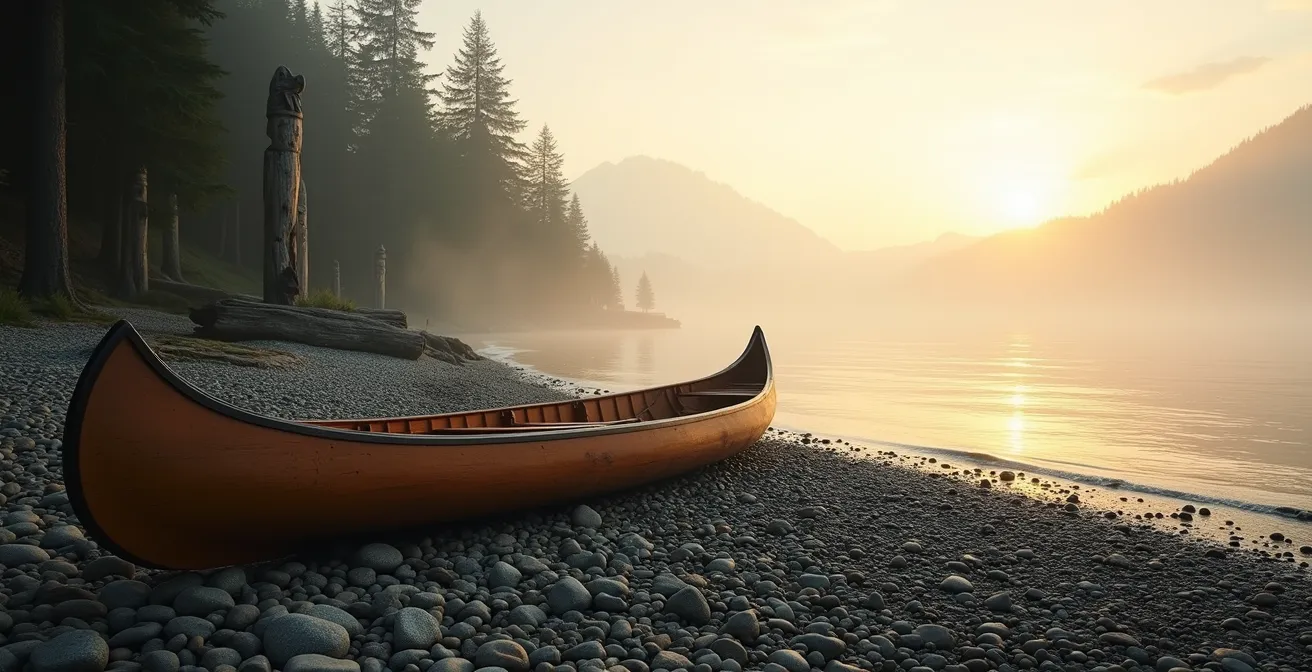
Your visit to Indigenous British Columbia is a direct investment in the economic sovereignty and cultural resilience of First Nations.
- Choosing authenticated Indigenous-owned businesses ensures revenue directly funds community-owned enterprises and vital services like housing and education.
- Paying access fees and hiring local guides supports sophisticated stewardship models that protect unceded territories and preserve traditional knowledge.
Recommendation: To guarantee your tourism dollars contribute to this circular economy, prioritize operators with the official ‘Authentic Indigenous’ designation from Indigenous Tourism BC.
As a socially conscious traveler, you want your vacation dollars to make a positive impact. You’ve heard that supporting Indigenous tourism in British Columbia is a powerful way to do this, but the actual mechanics of that support can feel opaque. Many guides will tell you to “buy local” or “be respectful,” but they rarely explain the sophisticated economic systems you are participating in. The conversation often stops at the surface level, missing the profound connection between your visit and a Nation’s journey toward self-determination.
But what if the true impact of your trip wasn’t just about a single transaction, but about contributing to a meticulously designed ecosystem of community revitalization? The reality is that authentic Indigenous tourism is not simply a business; it’s a strategic tool for building community capital, asserting economic sovereignty, and funding cultural preservation. It’s an engine for a vibrant, self-sustaining circular economy where every dollar spent has a ripple effect.
This guide moves beyond the platitudes. As an economic development officer, I will break down the specific models that turn your travel choices into tangible outcomes. We will explore how to verify true Indigenous ownership, why park fees are an investment in governance, how social enterprise hotels build houses, and why a local guide is an essential part of the economic equation. By understanding these mechanisms, you transform from a simple tourist into a strategic partner in community-led revitalization.
This article provides a clear roadmap for the conscious traveler. By understanding the structures behind authentic Indigenous tourism, you can ensure your journey through British Columbia leaves a lasting, positive legacy, strengthening the very communities that make this land so unique.
Summary: A Traveller’s Guide to Supporting Indigenous Economies in BC
- Ownership Matters: How to verify if a Resort Is 100% First Nations Owned?
- Tribal Park Fees: Why You Should Happily Pay to Access Unceded Territories?
- The Skwachàys Lodge Model: How Social Enterprise Hotels Fund Housing?
- The Value of a Guide: Why Indigenous Interpretation Changes the Hike Completely?
- Reserve Lands vs. Public Lands: Where Are You Not Allowed to Go?
- Local Staffing: Does the Lodge Employ Locals or Fly in Staff from the City?
- Appropriation vs. Appreciation: How to Avoid “Native-Style” Items Made by Non-Natives?
- Powwow Etiquette: How Non-Indigenous Visitors Should Behave at Cultural Gatherings?
Ownership Matters: How to verify if a Resort Is 100% First Nations Owned?
The single most important factor in ensuring your tourism dollars support community revitalization is ownership. When a business is majority-owned (at least 51%) by an Indigenous person, community, or Nation, profits are far more likely to be reinvested into local priorities. This principle of economic sovereignty is the bedrock of authentic Indigenous tourism. It ensures that the community controls not only the narrative and the experience but also the flow of capital generated from their own lands and culture.
Distinguishing between a genuinely Indigenous-owned enterprise and a business that simply uses Indigenous branding can be challenging. The ‘Authentic Indigenous’ designation from Indigenous Tourism BC (ITBC) is your most reliable starting point, as it requires at least 51% Indigenous ownership. Beyond this, look for transparency. Legitimate businesses are often proud to state their ownership structure, whether it’s a Band-owned corporation or a family enterprise, and can articulate how revenue benefits their Nation.
A prime example of this model in action is the Klahoose Wilderness Resort. As a 100% First Nations-owned destination, it represents complete value-chain control. The Klahoose Nation manages the accommodation, the meals, the cultural activities, and the wildlife tours. This vertical integration means that revenue generated at every stage of the visitor experience flows back to the Klahoose people, funding community programs and creating sustainable, local employment. This is not just a resort; it’s an economic engine for the Nation.
Tribal Park Fees: Why You Should Happily Pay to Access Unceded Territories?
When you encounter an access fee for a Tribal Park or protected area, it’s crucial to reframe your thinking. This is not a mere entry toll; it’s a direct investment in Indigenous-led governance and conservation. These fees are a modern expression of treaty rights and inherent jurisdiction over unceded territories. They fund essential stewardship models, including Indigenous Guardian programs that monitor ecological health, protect cultural sites, and manage visitor impact in ways that provincial or federal systems often cannot.
Your contribution directly empowers a Nation to exercise its sovereignty and responsibility to the land. This is a critical component of the economic ecosystem, providing a consistent revenue stream that is independent of government funding and entirely controlled by the community. With over 480 Indigenous tourism businesses across 200+ First Nations in BC, these user-fee models are becoming an increasingly vital part of the economic landscape, creating jobs and reinforcing cultural practices tied to the land.
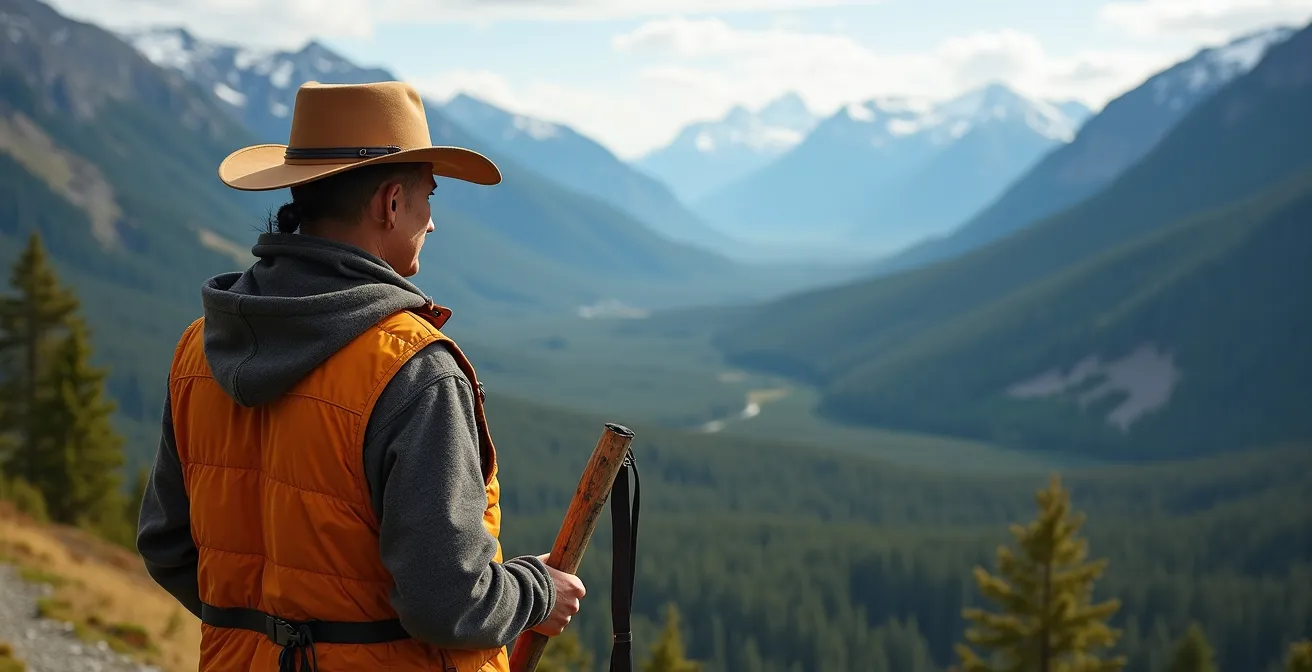
As you can see, the role of an Indigenous Guardian goes far beyond that of a typical park ranger. They are knowledge keepers, educators, and the living embodiment of a Nation’s commitment to its territory. By paying the fee, you are not just buying access; you are honouring this deep-rooted connection and funding the continuation of millennia-old stewardship practices. It is a tangible acknowledgement of the right and ability of Indigenous peoples to manage their own lands for the benefit of all.
The Skwachàys Lodge Model: How Social Enterprise Hotels Fund Housing?
A powerful evolution in Indigenous tourism is the rise of the social enterprise model, where a for-profit business is explicitly designed to fund a social mission. Skwachàys Lodge in Vancouver is Canada’s premier example of this concept in action. On the surface, it is a stunning boutique art hotel, with each of its 18 suites uniquely designed by a team of Indigenous artists and Vancouver-based hotel designers. But its true purpose lies beneath the surface.
Skwachàys Lodge is a 100% Indigenous-owned and -operated enterprise whose profits directly fund 24 housing units for at-risk Indigenous artists in the building below. This creates a brilliant system of circular economics. Your stay at the hotel provides the revenue that subsidizes the housing, giving artists the stability they need to practice their craft. In turn, these artists create the beautiful works that adorn the hotel and are sold in the on-site gallery, enhancing the guest experience and generating further revenue.
This model demonstrates how tourism can be a direct solution to pressing social issues like housing insecurity. It moves beyond simple job creation to build a holistic ecosystem of support. The hotel becomes a platform for cultural expression, a source of stable housing, and a self-sustaining economic engine. When you choose to stay at a place like Skwachàys, you are not just a guest; you are an active participant in a model that transforms tourism revenue into community capital, providing homes and empowering artists.
The Value of a Guide: Why Indigenous Interpretation Changes the Hike Completely?
A hike through the British Columbia wilderness can be a beautiful experience. A hike with an Indigenous guide is a transformational one. Hiring a local guide is one of the most direct ways to inject your tourism dollars into the local economy while gaining an incomparably richer experience. The value lies not just in their knowledge of the trail, but in their ability to interpret the landscape through a cultural, historical, and spiritual lens that has been passed down for generations.
An Indigenous guide can point out a cedar tree and explain its use in making regalia, canoes, and longhouses. They can identify a plant not by its Latin name, but by its medicinal properties and the stories associated with it. This deep interpretation turns a simple walk in the forest into a living history lesson. As Indigenous Tourism BC eloquently puts it, “Time spent in the wilderness is never wasted. For Indigenous peoples, activities on the land are opportunities to share stories, collect food and medicine, and receive the beautiful return from creation.” Hiring a guide gives you access to this profound relationship.
Organizations like Sea Wolf Adventures, operated by the Kwakwaka’wakw Nation, exemplify this. Their guides are trained not only in modern wildlife guiding but also in the traditions and heritage of their people. They don’t just show you a grizzly bear; they explain the bear’s role in their cosmology and the history of their people’s coexistence with them. This is the true value: you are paying for an authentic perspective that re-enchants the landscape and grounds your experience in a deep, human context that is impossible to find in a guidebook.
Reserve Lands vs. Public Lands: Where Are You Not Allowed to Go?
Understanding and respecting land boundaries is a non-negotiable aspect of ethical tourism. The landscape of British Columbia is a complex mosaic of public lands, provincial parks, and First Nations reserve lands and traditional territories. While much of BC is open for exploration, it is crucial to recognize that reserve lands are legally distinct and are, in essence, private property belonging to a specific Nation. Uninvited entry is not just disrespectful; it is trespassing.
The challenge for a traveler is that these boundaries are not always clearly marked. Furthermore, many culturally or spiritually significant sites are located on what might appear to be public “Crown land,” but are part of a Nation’s unceded traditional territory. The fact that British Columbia is home to more than 200 distinct First Nations—one-third of all Indigenous people in Canada—means there is no single, uniform rule. Each Nation has its own protocols and designated areas.
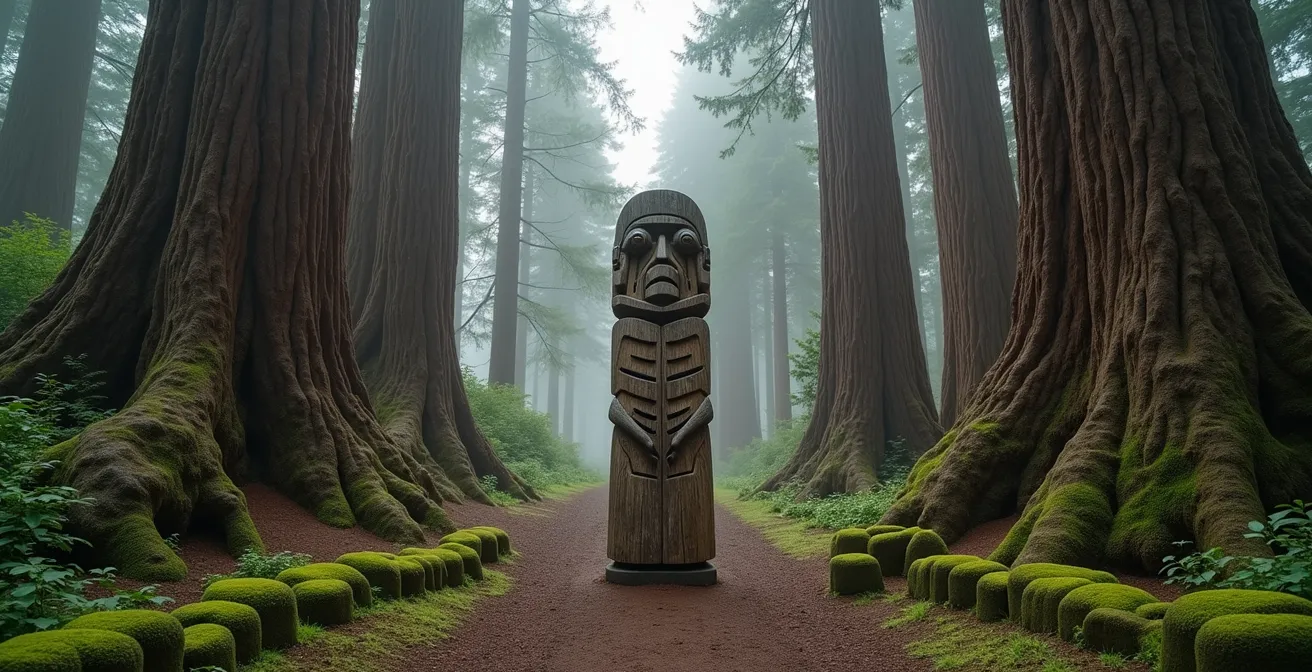
The most respectful and reliable way to navigate this is to engage with Indigenous-owned tourism operators. These businesses have the explicit permission and established protocols to host visitors on their lands. They will guide you to appropriate areas while ensuring sensitive sites are protected. When in doubt, always assume you do not have permission. Heeding signage, staying on marked trails, and never entering areas marked as private or ceremonial are baseline expectations.
Your Action Plan: Respectful Access to Indigenous Territories
- Always check if the land you’re visiting is traditional territory—BC has over 200 distinct First Nations with unique protocols.
- Book experiences through official Indigenous tourism operators who have permission and protocols in place.
- Respect any signage indicating private or ceremonial areas, as these are equivalent to entering someone’s home uninvited.
- When in doubt, hire an Indigenous guide who knows the appropriate areas for visitor access.
- Support Indigenous Guardian programs through fees or donations to acknowledge stewardship of unceded territories.
Local Staffing: Does the Lodge Employ Locals or Fly in Staff from the City?
A key indicator of a tourism operation’s commitment to community revitalization is its staffing policy. An enterprise that prioritizes hiring and training local community members creates a powerful ripple effect. It provides stable, meaningful employment that builds skills, keeps families together, and strengthens the local economic base. Conversely, an operator that primarily flies in temporary staff from urban centres extracts value from the region without building long-term community capital.
The impact of local employment cannot be overstated, especially given the sector’s vulnerability. A report from ITBC noted that a staggering 74% of Indigenous tourism businesses had to lay off staff during the pandemic, highlighting how crucial these jobs are to the economic fabric of many communities. When you support a business that employs locals, you are contributing to economic resilience and stability.
Proactive initiatives are in place to build this local workforce. The FirstHost program, for example, delivers workshops by Indigenous trainers to develop world-class hospitality skills rooted in cultural values, emphasizing the special relationship between host, guest, and place. Similarly, the Aboriginal Ecotourism Training Program (AETP), a partnership involving Vancouver Island University and several First Nations, has successfully graduated over 70 students from 27 different Nations since 2014, equipping them for careers in the tourism sector. These programs are the long-term solution, ensuring communities have a trained and ready workforce to lead their own tourism economies.
Appropriation vs. Appreciation: How to Avoid “Native-Style” Items Made by Non-Natives?
One of the most common pitfalls for well-intentioned travelers is the purchase of inauthentic, mass-produced souvenirs that appropriate Indigenous art forms. These “Native-style” items, often made overseas, directly harm the Indigenous economy by flooding the market and undercutting authentic artists who have spent a lifetime honing their craft. Choosing appreciation over appropriation means making a conscious effort to ensure your money goes directly to an Indigenous artist and their community.
The key is to purchase from reputable sources. Your first stop should always be Indigenous-owned galleries, artist cooperatives, or cultural centres. These venues are curated to showcase authentic work and can provide you with the artist’s name, Nation, and the story behind the piece. This context is part of the value; an authentic carving is not just an object but a story, a piece of a lineage. As one established Indigenous gallery notes, “Since 1996, visitors and collectors alike have appreciated the curated artworks of Canada’s Indigenous First Nations and Inuit people. Affordable prints share an inviting space with one-of-a-kind sculptures and fine art.”
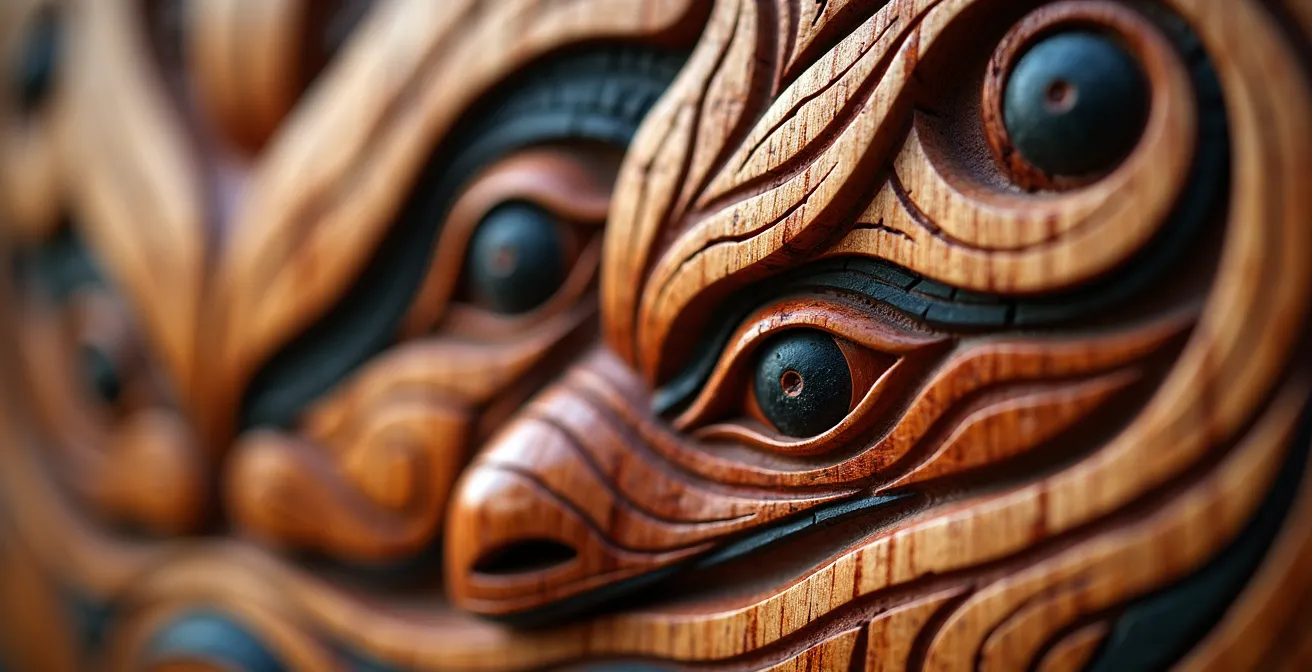
To be certain, you can follow a simple verification process. Look for the ‘Authentic Indigenous’ logo. Ask the seller about the artist. Be wary of items that lack any information or feel suspiciously cheap. True art has value because it carries culture, skill, and story. By investing in an authentic piece, you are not just acquiring a beautiful souvenir; you are validating an artist’s livelihood, honouring their cultural heritage, and contributing to a sustainable creative economy.
Key Takeaways
- Ownership is Paramount: Ensure your spending supports businesses with at least 51% Indigenous ownership to guarantee revenue flows back into the community.
- Fees are Investments: View access fees for Tribal Parks as direct contributions to Indigenous-led conservation, governance, and stewardship programs.
- Support Circular Economies: Prioritize social enterprises like hotels and galleries where profits are systematically reinvested to fund vital community services like housing and education.
Powwow Etiquette: How Non-Indigenous Visitors Should Behave at Cultural Gatherings?
After focusing on the economic structures of Indigenous tourism, the final, crucial piece is the human interaction. Attending a community event like a Powwow is a privilege and an incredible opportunity to witness culture firsthand. Powwows are vibrant celebrations of song, dance, food, and art. Some are competitive, while others are more ceremonial, but many are open to the public, and non-Indigenous visitors are often welcome. However, your presence comes with the responsibility to be a respectful and observant guest.
The foundation of proper etiquette is humility and respect. Dress modestly, listen more than you speak, and be aware of your surroundings. The Master of Ceremonies (MC) is your guide; listen to their announcements for instructions on when to stand, when to remove hats, and when photography is or isn’t permitted. It is almost always forbidden to photograph or record during prayers, honour songs, or the Grand Entry without explicit permission. Always ask for consent before taking a picture of an individual, especially a dancer in their regalia, which is considered a sacred and personal expression of their spirit.
Bring cash for the many vendors selling authentic arts, crafts, and food, as this is another direct way to support local families. Above all, you are a guest in a community’s celebration. The entire economic relationship we’ve discussed culminates in this moment of shared experience. As the Hawaiian tourism pioneer Dr. George Kanahele stated in principles adopted by many Indigenous tourism programs, the ultimate goal is a relationship of equality.
The relationship between place, host and guest must be one of equality.
– Dr. George Kanahele, as quoted in FirstHost program materials
To put these principles into action, begin your journey by exploring the authenticated experiences on the Indigenous Tourism BC directory. Your conscious choice is the first step in a powerful economic partnership.
Frequently Asked Questions on Indigenous Tourism in BC
How does Indigenous tourism create economic opportunities beyond direct employment?
Tourism creates new opportunities for economic development in First Nations communities and provides opportunities for Elders, youth and community members to share their stories, dances and songs. It stimulates entrepreneurship and can support the revitalization of cultural practices.
What makes BC’s Indigenous tourism industry unique globally?
The Indigenous cultural tourism industry in British Columbia has some of the most diverse and best-developed operators in the world. This is due to the incredible diversity of the over 200 distinct First Nations in the province, each with unique cultures, languages, and territories, offering an unparalleled range of authentic experiences.
How does ITBC support community-based tourism development?
Through training initiatives, information resources, networking opportunities, and co-operative marketing programs, ITBC is an important resource for Indigenous entrepreneurs and First Nations communities in British Columbia who are operating or looking to start a tourism business. ITBC works closely with industry, business, education, and government organizations to support the development and promotion of authentic Indigenous tourism experiences.
What are powwows and who can attend?
Powwows are Indigenous community celebrations of culture and the best excuse to appreciate art, dance, food, song, and laughter. They can be ceremonial or competitive with cash prizes, indoor or outdoor events, for community members only or open for the public to join in the celebration. Always check if a specific powwow is public before attending.
How should visitors prepare for their first powwow experience?
Research the specific Nation’s protocols beforehand if possible. It’s wise to bring cash for vendors and potential donations (for drum groups or dancers), dress modestly and comfortably for the weather, and most importantly, arrive with an open mind and a respectful attitude, ready to listen and observe.
What photography rules should visitors follow at a powwow?
Always ask permission before photographing individuals, especially dancers in their regalia. Never photograph during sacred moments like prayers, the Grand Entry, or specific honour songs unless the Master of Ceremonies explicitly grants permission to the public. When in doubt, put your camera away.