
A successful cross-Canada trip hinges less on finding the cheapest motel and more on mastering the logistical levers of time, distance, and seasonal demand that overwhelm most first-timers.
- Falling into the ‘Scale Trap’ by underestimating driving times is the number one budget and schedule killer.
- Peak season accommodation in July and August isn’t just expensive; it requires booking with military precision months in advance.
- Strategic choices, like flying over the prairies or using a ‘base camp’ approach, save more money and sanity than tactical penny-pinching.
Recommendation: Shift your planning focus from “how to save” to “how to be efficient.” Prioritize realistic driving days and smart accommodation strategies over simply trying to cover the most ground for the least money.
The dream of a cross-Canada expedition is a powerful one: the rugged peaks of the Rockies, the vast horizons of the Prairies, and the charming coastlines of the Maritimes. For many families and couples visiting from Europe or the US, it’s the trip of a lifetime. Yet, this dream often collides with a harsh reality: Canada’s immense scale. Many tourists fall into the ‘Scale Trap,’ applying travel planning logic from smaller countries and ending up exhausted, over budget, and disappointed. Standard advice like “book in advance” or “cook your own meals” barely scratches the surface of the logistical challenge.
This is where a strategic shift is needed. The key to a successful and affordable three-week journey isn’t just about saving a few dollars on lunch; it’s about making intelligent trade-offs between time, money, and comfort. It’s about understanding the unique logistical levers that govern travel in this vast country. This guide moves beyond the platitudes to give you a realistic, expert framework for your adventure. We’ll focus on the critical decisions that prevent budget blowouts and turn a potentially stressful marathon into a memorable journey.
By focusing on strategic planning, you can navigate the complexities of distance, seasonal pricing, and essential services like a seasoned local. We will explore how to realistically schedule your driving, choose the right mode of transport for different legs of the journey, and avoid the hidden costs that catch so many visitors by surprise. This article is your logistical roadmap to experiencing the grandeur of Canada without breaking the bank or your spirit.
Summary: Mapping Out Your Epic and Affordable Canadian Journey
- Why Underestimating Driving Times Can Ruin Your Canadian Road Trip?
- Train vs. Rental Car: Which Option Is Best for a Coast-to-Coast Journey?
- The Hidden Accommodation Costs That Surprise Tourists in July and August
- How to Navigate the Canadian Healthcare System as a Non-Resident Tourist
- Prepaid SIM Cards: Finding the Best Data Coverage for Rural Canada
- Why a 10-Year-Old DUI Can Prevent You From Entering Canada?
- PRESTO Card: Is It Worth Buying for a 3-Day Trip to Toronto?
- How to Structure a 14-Day Itinerary from Toronto to Vancouver Without Exhaustion?
Why Underestimating Driving Times Can Ruin Your Canadian Road Trip?
The single most significant mistake first-time visitors make is trusting digital maps without context. The sheer scale of Canada means that a 10-hour drive on paper can easily become a 13-hour ordeal, throwing your entire itinerary and budget into disarray. This isn’t just about distance; it’s about the unique variables of the Canadian landscape. Mountain passes, summer-long construction projects on the Trans-Canada Highway, and unpredictable wildlife encounters are not exceptions—they are the norm.
Real Experience: The 20-30% Time Underestimation
One traveler documenting a solo trip from Vancouver Island to Cape Breton Island found that Google Maps consistently underestimated driving times by 20-30%. An 8,000-kilometer journey was punctuated by frequent stops for wildlife jams (elk, bison), unexpected delays from avalanche control in Rogers Pass, and extensive single-lane traffic due to summer highway repairs. These delays add up, forcing late arrivals, cancelled activities, and the costly stress of finding last-minute accommodation.
Factoring in these delays is not pessimism; it’s strategic planning. On monotonous but critical stretches like the 800-kilometre drive along Highway 17 north of Lake Superior, driver fatigue becomes a major safety and time factor. Likewise, anyone planning to explore British Columbia’s coastal routes must account for ferry wait times, which can stretch from 2 to 4 hours during peak summer weekends. Ignoring these time-adding factors leads to a domino effect of rushed sightseeing and blown budgets.
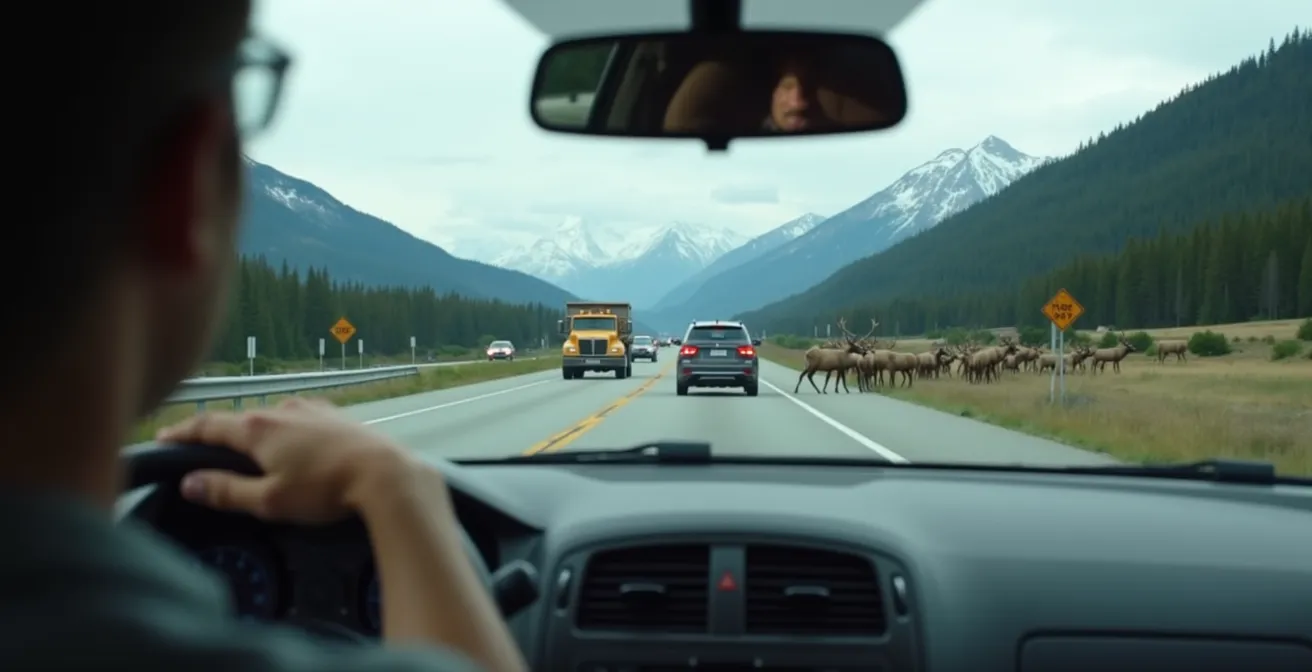
As the image above illustrates, the reality of a Canadian road trip often involves patience. A herd of elk, essential road maintenance, or a sudden mountain storm can bring traffic to a standstill. Building a 30% buffer into your daily driving schedule is the most crucial logistical lever you can pull to protect your itinerary, your budget, and your enjoyment of the journey.
Train vs. Rental Car: Which Option Is Best for a Coast-to-Coast Journey?
Choosing between rail and road is a fundamental decision that shapes your entire cross-Canada experience. It’s a classic Time-Cost Matrix problem where each option presents a different trade-off. A rental car offers unparalleled freedom to explore remote parks and small towns, but it comes at a significant cost in both money and driving fatigue. One-way rental fees alone can add hundreds, if not thousands, of dollars to your budget.
On the other hand, VIA Rail’s iconic cross-country service, “The Canadian,” offers a romantic and relaxing way to see the landscape without the stress of driving. However, this comes at the cost of flexibility. You are tied to a fixed schedule and can only access major urban centres along the route, missing out on the detours and spontaneous discoveries that make a road trip special. The entire Trans-Canada Highway spans 7,821 km, requiring over 100 hours of driving, a commitment not to be taken lightly.
A third, often overlooked option is a vehicle relocation deal. These deals allow you to drive a car or RV one-way for an extremely low price, but they come with a strict deadline and fixed route. This can be a phenomenal budget-saver for one leg of your journey if the route and timing align with your plans. To make an informed decision, it’s essential to compare the hard numbers. The following table breaks down the approximate costs and benefits for a three-week trip, based on data from an analysis of different transport methods.
| Transport Option | Total Cost (3 weeks) | Travel Time | Flexibility | Coverage |
|---|---|---|---|---|
| VIA Rail Canrailpass | $1,200-1,800 CAD | 4-5 days coast-to-coast | Limited (fixed schedule) | Major cities only |
| Standard Car Rental | $2,100-3,500 CAD | Flexible (50-100 hours driving) | Complete freedom | Anywhere with roads |
| Relocation Deal (RV/Car) | $21-200 CAD total | Fixed deadline (7-14 days) | One-way route locked | Specific routes only |
For many, a hybrid approach is the most strategic solution. For example, you could fly from Toronto to Calgary to bypass the 35+ hours of prairie driving, then rent a car to explore the Rockies for two weeks. This combines the time-saving efficiency of air travel with the flexibility of a car where it matters most, optimizing both your budget and your experience.
The Hidden Accommodation Costs That Surprise Tourists in July and August
While transport is a major expense, accommodation during Canada’s peak season (July and August) is often the budget line item that truly shocks visitors. In popular tourist destinations like Banff, Jasper, or the Okanagan Valley, prices don’t just increase; they skyrocket. Basic motel rooms that might cost $100 in the shoulder season can easily exceed $300-$400 per night. This seasonal demand is a powerful logistical force you must plan for with precision.
One traveler’s real-world data from an August 2022 trip highlights this challenge vividly. In the small northern Ontario town of Dryden, the cheapest available hotel room was $125, forcing them to drive an extra hour just to find more affordable lodging. The total accommodation cost for the trip averaged $150 per night, with significant spikes around civic holidays. Relying on finding “something along the way” is a recipe for disaster in summer; you will either pay exorbitant prices or find no vacancies at all.
For those hoping to save money by camping, the challenge is availability, not price. Spots in national and provincial parks are highly coveted and must be booked the moment they become available, which is often in January or February for the upcoming summer. Each park system (Parks Canada, BC Parks, Ontario Parks) has its own separate reservation platform and opening day, requiring coordinated effort to secure your desired dates.
Action Plan: Securing Peak-Season Campsites
- Mark Your Calendar: Research the exact opening dates and times for reservations in January/February for all parks on your route. These dates are non-negotiable.
- Create Accounts in Advance: Pre-register on the different booking systems (Parks Canada, BC Parks, etc.) to save critical time on reservation day.
- Be Ready to Click: Log in 15 minutes before the reservation window opens and have multiple browser tabs open for your top-choice locations and dates.
- Prepare Backup Plans: Popular sites like the Lake Louise campground can sell out in under five minutes. Have second and third-choice dates and locations ready to go.
- Book Mid-Week Stays: If possible, plan your arrivals for Tuesdays or Wednesdays. You can often avoid weekend premium pricing and find better availability, potentially saving 20-30%.
This isn’t just about booking; it’s about a strategic race against thousands of others. Missing the reservation window by even a few hours can mean the difference between a scenic $35 campsite and a $350 motel room 50 kilometres away from the park entrance.
How to Navigate the Canadian Healthcare System as a Non-Resident Tourist
While planning for beautiful sights, it’s crucial to also plan for unforeseen circumstances. A medical issue, even a minor one, can become a major financial crisis for non-resident tourists in Canada. Your home country’s health insurance is unlikely to cover you, and Canada’s universal healthcare system does not extend to visitors. You are responsible for 100% of the costs, which can be substantial.
For instance, according to an analysis of visitor expenses, non-resident tourists in Canada typically pay between $100 and $250 CAD for a simple walk-in clinic consultation for a minor ailment. However, an emergency room visit for something more serious like a broken bone or severe allergic reaction can easily start at $800 CAD and climb rapidly into the thousands, not including the cost of ambulance services or hospitalization.
This is why comprehensive travel insurance is not a recommendation; it is an absolute necessity. However, not all policies are created equal. Given the nature of a cross-Canada trip, which often involves activities in remote, wild places, your insurance must include specific clauses. Here are the essential points to verify in your policy:
- Remote Wilderness Evacuation: This is the most critical and often overlooked coverage. A helicopter rescue from a remote hiking trail can cost over $10,000 CAD. Ensure your policy explicitly covers this.
- Adventure Activities: Standard policies may exclude activities like kayaking, skiing, or even extensive hiking. Verify that all planned activities are covered.
- Minimum Coverage Limits: Given the high cost of Canadian hospitals, a minimum coverage of $2 million CAD is a safe baseline.
- Pre-existing Conditions: If you have any pre-existing medical conditions, you must declare them and confirm they are covered by your policy to avoid a claim being denied.
Having the right insurance provides peace of mind, but knowing where to go for care is also key. Downloading an app like Medimap.ca before your trip can help you find nearby walk-in clinics and see their wait times in real-time, potentially saving you a costly and lengthy visit to the ER for a non-emergency issue.
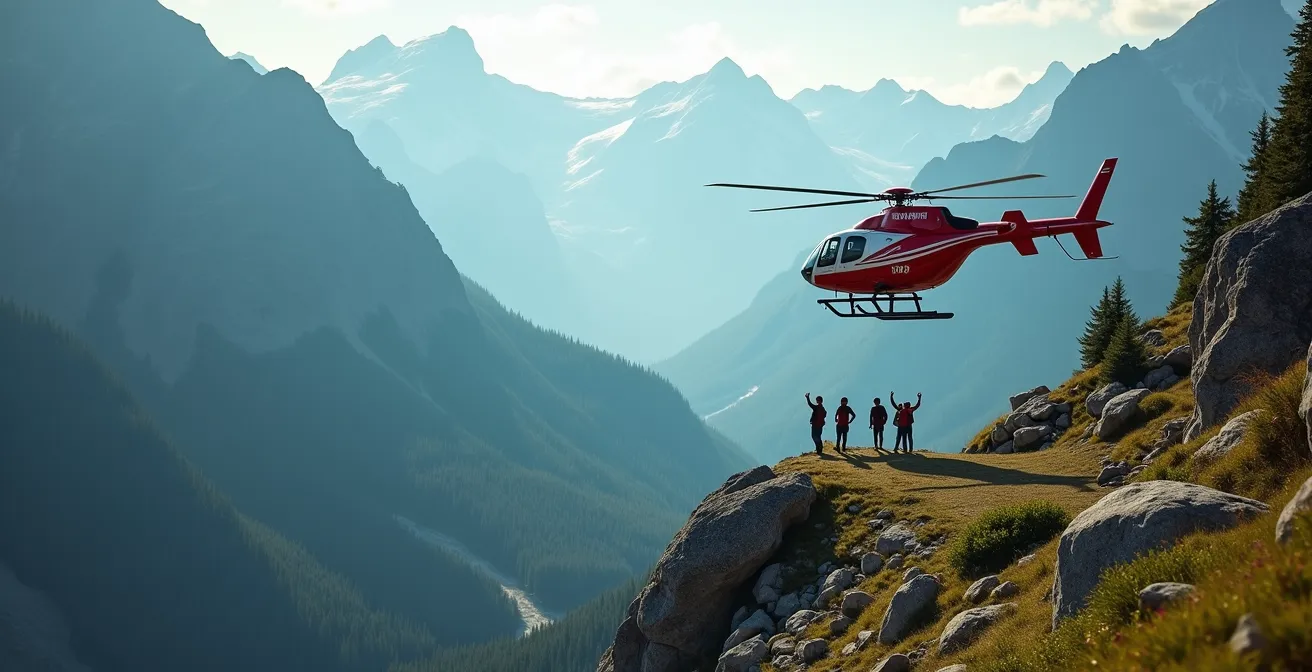
The vast and sometimes isolated Canadian wilderness is a huge part of its appeal, but as this image suggests, it also presents unique risks. Being prepared with the right insurance isn’t just a financial decision; it’s a critical safety measure that ensures you can get the help you need, no matter where your adventure takes you.
Prepaid SIM Cards: Finding the Best Data Coverage for Rural Canada
In today’s world, a reliable data connection is essential for navigation, booking accommodation on the fly, and staying in touch. Many tourists from Europe assume that Canada’s mobile coverage is as seamless and ubiquitous as their own. This is a dangerous assumption. Canada’s population is highly concentrated, and once you leave major cities, mobile coverage can become patchy or non-existent, especially on long stretches of highway in Northern Ontario, the Prairies, and the mountain regions.
Your home SIM card’s roaming plan might work well in Toronto or Vancouver, but it will likely be expensive and may not connect to the best available network in rural areas. Purchasing a Canadian prepaid SIM card or an eSIM is the most cost-effective and reliable strategy. Based on real-world usage, experienced road trippers recommend a plan with an 8GB+ monthly data minimum to comfortably cover navigation, research, and communication needs for a three-week trip.
The key logistical decision is not just getting a Canadian SIM, but choosing a provider based on your route. Canada’s network infrastructure is dominated by three major players, and their coverage varies geographically:
- For Western Canada, the Rockies, and most rural areas, choose a provider that uses the Bell or Telus network. They share cell towers in these regions, offering the most extensive and reliable coverage.
- For travel focused on major urban centres and the Southern Ontario corridor (Toronto-Montreal-Ottawa), the Rogers network generally offers strong performance.
- For ultimate flexibility, consider an eSIM provider like Airalo or Holafly, which allows you to download a data plan directly to your phone before you even land in Canada.
Even with the best plan, you will encounter dead zones. It is absolutely critical to download offline maps using an app like Google Maps or Maps.me for your entire route, especially for known no-signal areas like Highway 17 between Sault Ste Marie and Thunder Bay, parts of the Alaska Highway, and the interior of Newfoundland. Pre-downloading playlists, podcasts, and other entertainment is also a wise move for enduring these long, disconnected stretches.
Why a 10-Year-Old DUI Can Prevent You From Entering Canada?
One of the most devastating and least-known trip-ruiners has nothing to do with budgets or itineraries. It happens at the border. Canada has very strict rules regarding criminal inadmissibility, and many US citizens are shocked to learn that a past conviction, even a misdemeanor from many years ago, can result in being denied entry. The most common issue is a conviction for Driving Under the Influence (DUI) or Driving While Intoxicated (DWI).
Canada’s laws treat a DUI as a serious criminal offense. Even if it was considered a minor offense in your home state, it may be equivalent to an indictable offense in Canada. The rules are complex and depend on when the offense occurred and when you completed your sentence (including probation and payment of all fines). Simply hoping the border officer won’t see it is not a strategy; the Canada Border Services Agency (CBSA) has extensive access to US criminal databases.
Understanding your status before you arrive at the border is critical. The consequences of being deemed inadmissible can range from a simple administrative process to being turned away after a long drive. A breakdown from travel experts, sourced from an analysis of Canadian admissibility rules, can help clarify where you might stand.
| Time Since Completion | Status | Required Action | Cost | Processing Time |
|---|---|---|---|---|
| Over 10 years | Deemed Rehabilitated | Usually no action needed | $0 | N/A |
| 5-10 years | Must Apply | Individual Rehabilitation application | $200-1000 CAD | 6-12 months |
| Under 5 years | Inadmissible | Temporary Resident Permit (TRP) | $200 CAD | At border/consulate |
| Serious offense | Always Inadmissible | TRP required regardless of time | $200 CAD | Officer discretion |
If more than 10 years have passed since the completion of your sentence, you are generally “deemed rehabilitated” by the passage of time and should not have an issue. However, if it has been between 5 and 10 years, you must apply for Individual Rehabilitation, a lengthy process that can take up to a year. If it’s been under 5 years, your only option is to apply for a Temporary Resident Permit (TRP), which is granted at the discretion of the border officer and requires a compelling reason for your visit. If you have any doubts, consulting with a Canadian immigration lawyer well before your trip is the only way to ensure your dream vacation doesn’t end before it begins.
PRESTO Card: Is It Worth Buying for a 3-Day Trip to Toronto?
For travelers starting or ending their journey in Toronto, navigating the city’s public transit system, the TTC, is a common task. You may hear about the PRESTO card, the local reloadable transit pass, and wonder if you need to buy one for a short stay. The short and simple answer is: absolutely not. This is a classic tourist trap where visitors waste time and money on a system designed for commuters, not short-term visitors.
In the past, visitors had to deal with tokens, tickets, or day passes. Today, the TTC system is fully equipped with modern contactless payment readers. This means you can simply tap your own contactless credit card, debit card, or the card in your phone’s mobile wallet directly on the PRESTO reader on any bus, streetcar, or at any subway station entrance. It is the easiest and most efficient way to pay your fare.
The system is designed to be tourist-friendly. Tapping your card pays for a single adult fare, which currently provides for 120 minutes of unlimited transfers across the entire TTC network. This two-hour window is a powerful tool for efficient sightseeing. For example, you can take the subway from your hotel, visit St. Lawrence Market, and then hop on a streetcar to the Distillery District, all on a single fare, as long as you complete the journey within two hours of your first tap.
Here’s your smart transit strategy for Toronto:
- Skip the PRESTO Card: Do not buy a physical PRESTO card. It costs $6 upfront and requires you to load funds onto it, which can be a hassle to manage for a short trip.
- Use Your Own Card: Tap your contactless credit/debit card directly on the green PRESTO readers.
- Be Consistent: Use the same card for every trip. The system automatically tracks your usage and will cap your daily or weekly fares, so you never pay more than the price of a day or week pass.
- Remember It’s Local: The PRESTO system is primarily for Ontario. If your travels take you to Vancouver, you’ll use their Compass Card system, and Montreal has its OPUS card. Each major city has its own system, but many are now adopting contactless payment.
By using the payment method already in your pocket, you save money, time, and avoid the headache of managing yet another card. It’s a small but significant logistical win that makes your time in Toronto smoother and more efficient.
Key Takeaways
- The 30% Rule: Always add a 30% time buffer to any driving day calculated by a GPS to account for Canada’s unique delays (wildlife, construction, weather).
- Book Six Months Out: For peak season (July/August), accommodation and campsites in popular areas must be booked in January or February to avoid sold-out destinations and extreme prices.
- Insurance is Non-Negotiable: Your travel insurance must explicitly cover “remote wilderness evacuation” and any adventure activities you plan to do. A standard policy is not enough.
How to Structure a 14-Day Itinerary from Toronto to Vancouver Without Exhaustion?
A common but grueling leg of a cross-Canada trip is the journey from Toronto to Vancouver. While a three-week trip allows for a more leisurely pace, many travelers try to cover this 4,500 km stretch in two weeks. Doing so without a smart logistical plan is a recipe for exhaustion. The key is to abandon the idea of driving every single day and instead adopt a more sustainable rhythm that prioritizes experience over sheer mileage.
The most effective method is the ‘Base Camp’ strategy. Instead of the tiring routine of checking in and out of a different motel each day, you establish a hub in a strategic location for 3-4 nights. This dramatically reduces fatigue from packing and unpacking and allows for more relaxed day trips. For example, Calgary is an ideal base camp. From there, you can easily take day trips to Banff National Park (1.5 hours), the otherworldly Badlands of Drumheller (1.5 hours), and the historic Head-Smashed-In Buffalo Jump (2 hours), returning to the same comfortable bed each night.
To make this strategy work, you must adhere to a strict daily driving limit. The 4-Hour Driving Day Rule is a sustainable guideline. This means limiting your travel between base camps to a maximum of 4-5 hours (around 300-400 km). This allows you to start your drive at 8 AM, arrive at your next destination by lunchtime, and still have the entire afternoon for an activity, like hiking at Lake Louise or visiting a winery in the Okanagan Valley. Another powerful strategic move is to fly from Toronto to Calgary, skipping the 35 hours of prairie driving and starting your road trip in the heart of the action.
Here is a sample structure for a 14-day itinerary from Toronto to Vancouver incorporating these principles:
- Day 1: Fly Toronto to Calgary. Pick up rental car. Settle into your Calgary ‘base camp’.
- Days 2-3: Day trips from Calgary (e.g., Banff, Drumheller).
- Day 4: Drive Calgary to Revelstoke or Kelowna (4-5 hours). Settle into your Okanagan ‘base camp’.
- Days 5-7: Explore the Okanagan Valley, Glacier National Park, or local wineries. Include a ‘zero-driving’ rest day.
- Day 8: Drive from the Okanagan to Vancouver (4 hours). Drop off car if staying in the city.
- Days 9-14: Explore Vancouver and surrounding areas, or continue on to Vancouver Island to complete your three-week journey.
This structure transforms a relentless cross-country dash into a series of focused, regional explorations. It respects Canada’s scale and ensures your trip is remembered for the sights you saw, not the hours you spent exhausted behind the wheel.
Frequently Asked Questions About How to Plan a 3-Week Cross-Canada Expedition Without Breaking the Bank?
Can a US cannabis possession charge prevent entry to Canada?
Yes, even though cannabis is legal in Canada, past convictions can still result in inadmissibility under criminal rehabilitation requirements.
What if my US misdemeanor was just petty theft?
Canada evaluates based on ‘equivalency’ – your misdemeanor might equate to a more serious indictable offense in Canada, potentially requiring rehabilitation.
Can I bring CBD products across the border?
No, bringing any cannabis-derived products across the border remains a federal crime, regardless of legalization status in either country.
Now that you have the strategic framework for managing time, cost, and logistics, the next logical step is to begin mapping your own route. Use these principles as your guide to build an itinerary that is not only affordable but also deeply rewarding and sustainable for the trip of a lifetime.