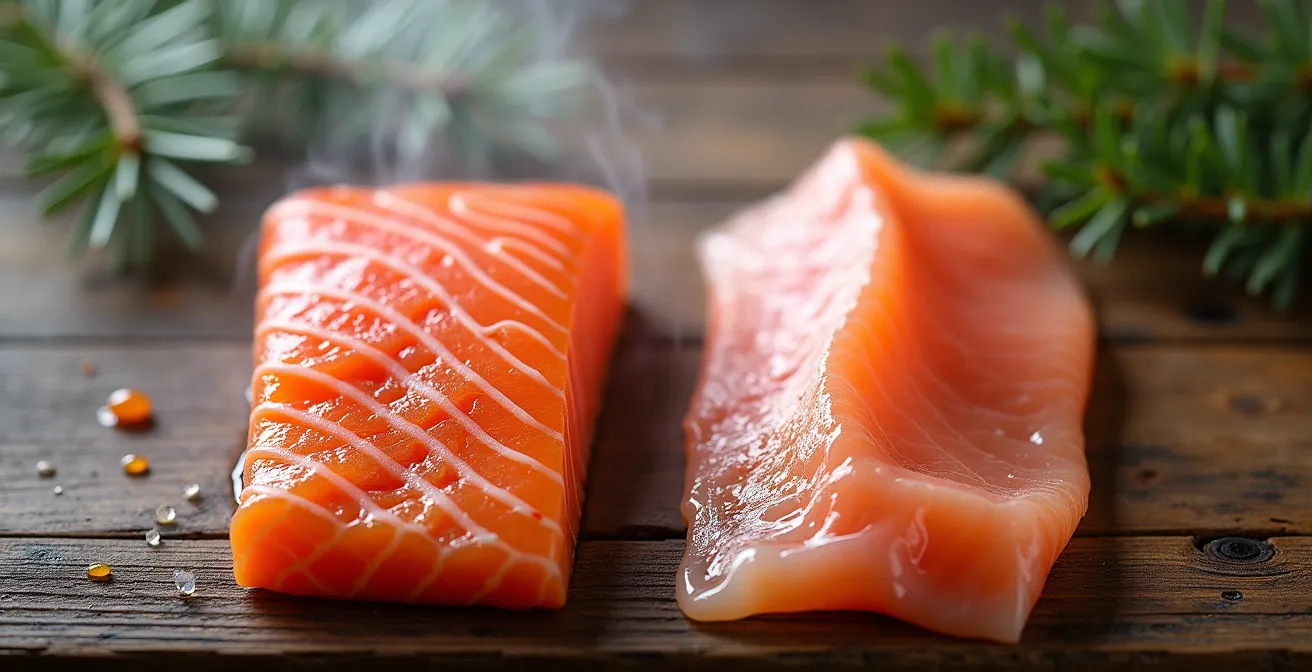
The key difference between West Coast hot-smoked and cold-smoked salmon isn’t just temperature; it’s a triangle of texture, tradition, and species.
- Hot-smoked salmon is fully cooked, flaky, and defined by the gentle smoke of woods like alder.
- Cold-smoked salmon is cured, not cooked, resulting in a silky, lox-style texture that showcases the quality of fish like Sockeye.
- “Salmon candy” is a distinct third style: a hot-smoked, sweet-glazed West Coast delicacy.
Recommendation: To truly understand the difference, taste all three: the rich, flaky hot-smoked Chinook; the silky, delicate cold-smoked Sockeye; and the chewy, sweet-and-salty salmon candy.
Stand in front of any seafood counter in Vancouver, from Granville Island to Steveston, and the confusion is palpable. You see “Lox,” “Candied Salmon,” “Hot-Smoked,” and “Cold-Smoked,” often side-by-side. You know one is flaky and robust, perfect for a cedar plank dinner, while the other is silky and translucent, the classic companion to a bagel and cream cheese. But why? Is it just the heat? The common answer points to temperature, and while that’s part of the story, it misses the soul of the craft. The difference isn’t a simple binary; it’s a trinity of textures deeply rooted in Canadian, and specifically British Columbian, culinary tradition.
The real distinction lies in a combination of three elements: the type of wood whispering its flavour into the fish, the specific species of salmon chosen for its unique fat content and texture, and the time-honoured techniques—from brining to glazing—that transform it. Many guides will tell you hot smoking cooks the fish and cold smoking cures it. That’s true, but it’s like saying a car is different from a bicycle because one has an engine. It ignores the artistry of the engineering, the purpose of the design, and the experience of the ride. We’re not just applying heat; we’re practicing a form of alchemy passed down from First Nations traditions and perfected in coastal smokehouses.
This guide will take you inside the smokehouse. We will go beyond the basic temperature charts to explore how the choice between alder and hickory dictates the final flavour, how salmon candy earns its coveted sweet-salty profile, and why a Sockeye is destined for a different smoking style than a mighty Chinook. By the end, you won’t just know the difference; you’ll understand the craft and be able to choose—and serve—each style like a true West Coast connoisseur.
To help you navigate these delicious distinctions, this article breaks down the key aspects of the West Coast smoking tradition. The following summary provides a quick-access guide to each stage of the process, from the forest to the feast.
Summary: Understanding the Craft of West Coast Smoked Salmon
- Alder vs. Hickory: How Does the Wood Choice Change the Salmon’s Flavor?
- Salmon Candy: How Is This Sweet-Salty Delicacy Actually Made?
- Sockeye or Chinook: Which Salmon Species Smokes the Best?
- Retort Pouches: How to Fly with Smoked Salmon Without Refrigeration?
- Beyond the Bagel: Creative Ways to Serve Smoked Salmon at Dinner?
- Ocean Wise: How to Ensure Your Sushi Is Sustainably Sourced in Vancouver?
- Frozen Raw Fish: How is Arctic Char Sashimi Different from Japanese Style?
- Shucking 101: How to Open Oysters Without Stabbing Your Hand?
Alder vs. Hickory: How Does the Wood Choice Change the Salmon’s Flavor?
The first and most fundamental decision a smokehouse master makes is the choice of wood. It’s the soul of the final product, the invisible ingredient that infuses the salmon with its characteristic aroma and taste. On the Canadian West Coast, one wood reigns supreme: alder. Its smoke is delicate, subtly sweet, and almost floral, which complements the rich flavour of Pacific salmon without overpowering it. This is no accident; it’s a tradition with deep cultural roots. For the Coast Salish peoples, alder was not just a source of fuel but an integral part of their food preservation and spiritual practices. The gentle smoke was perfect for both cold smoking, which could be done at temperatures as low as 85 degrees Fahrenheit, and hot smoking, where temperatures reach around 145 degrees to fully cook the fish.
In contrast, woods like hickory, famous in Southern US BBQ, are far too aggressive for most salmon. Its heavy, bacon-like smoke would obliterate the nuanced flavour of a Sockeye or Coho. While other woods have their place in Canada—maple for its mild sweetness, particularly in Eastern Canada, and birch for unique artisanal preparations in Quebec—alder remains the undisputed king of Pacific Northwest smoking. It is the signature flavour of our coast.
This comparative table shows how different woods impart distinct personalities to the fish, a choice that is central to regional Canadian smoking styles. According to an analysis of wood flavour profiles, the selection is anything but arbitrary.
| Wood Type | Flavor Profile | Best For | Regional Tradition |
|---|---|---|---|
| Alder | Subtly sweet, delicate, almost floral | All Pacific salmon species | Pacific Northwest/BC |
| Maple | Mild smoky and sweet | Salmon candy | Eastern Canada |
| Hickory | Aggressive, smoky, bacon-like | Not ideal for salmon | Southern US BBQ |
| Birch | Unique, gaining popularity | Artisanal preparations | Quebec |
Salmon Candy: How Is This Sweet-Salty Delicacy Actually Made?
While the hot-versus-cold debate dominates most discussions, the true connoisseur of West Coast seafood knows there is a third, equally important category: salmon candy. Also known as “Indian Candy,” this sweet, chewy, jerky-like treat is a regional specialty with a unique production process. It is not simply smoked salmon with a bit of sugar. It is an art form of glaze alchemy, a multi-day process that transforms the fish entirely. It begins with firm-fleshed salmon like Chinook or Coho, which are cut into smaller, uniform pieces to ensure an even cure. The first critical step is a salt brine cure, which can last up to 48 hours. This draws out a significant amount of moisture, firming the flesh and preparing it for what comes next.
After a thorough rinsing, the fish is left to air-dry until a sticky layer, known as the pellicle, forms on the surface. This is essential, as it provides the perfect tacky canvas for the smoke and, most importantly, the glaze to adhere to. The glaze itself is a sweet concoction, traditionally made with maple syrup, brown sugar, or, for a uniquely Canadian twist, birch syrup. The fish is then hot-smoked at over 120°F for as long as eight hours, with the glaze being reapplied periodically throughout the process. This builds up a beautiful, deep amber crust and creates that irresistible sweet-and-salty, chewy texture. At places like Vancouver’s iconic Granville Island Market, you can spot the real deal by its rich, non-uniform colour and flaky-yet-firm appearance, a stark contrast to mass-produced versions that are often cloyingly sweet and artificially uniform.
Sockeye or Chinook: Which Salmon Species Smokes the Best?
The choice of wood sets the stage, but the salmon itself is the star of the show. Not all salmon are created equal, and a smokehouse master knows that the species dictates the method. The decision between hot and cold smoking is fundamentally a question of fat content. Chinook (King) salmon, with its extremely high fat content, is the undisputed champion of hot smoking. As it cooks, the fat renders, basting the flesh from within and resulting in a rich, buttery, and incredibly flaky texture. Trying to cold-smoke a fatty Chinook can lead to a soft, almost mushy result if not handled with absolute precision.
On the other end of the spectrum is Sockeye salmon. Known for its deep red flesh and leaner, firmer texture, Sockeye is the perfect candidate for cold smoking. Its lower fat content allows it to cure beautifully without cooking, absorbing the delicate smoke while developing a silky, firm texture that slices into the perfect, translucent ribbons for lox or nova-style salmon. Coho (Silver) salmon sits comfortably in the middle with a medium fat content, making it a versatile all-rounder that performs well with both methods. Meanwhile, Chum (Keta), with its lower oil content, is traditionally used for drying to create a firm, jerky-like product, a staple in Indigenous preservation methods.

The unique characteristics of each species, shaped by their life cycles and diets in the Pacific, are not just a detail; they are the blueprint for the entire smoking process. An in-depth look at Pacific salmon confirms that matching the species to the smoking method is paramount.
| Species | Fat Content | Best Smoking Method | Texture Result | Traditional Use |
|---|---|---|---|---|
| Chinook (King) | Extremely High | Hot Smoking | Rich, flaky, buttery | Premium smoked portions |
| Sockeye | Lean, firm flesh | Cold Smoking | Silky, lox-like, deep red | Traditional lox/nova |
| Coho (Silver) | Medium | Both methods work | Versatile all-rounder | General purpose |
| Chum (Keta) | Lower oil content | Traditional drying | Firm, jerky-like | Indigenous dried salmon |
Retort Pouches: How to Fly with Smoked Salmon Without Refrigeration?
For visitors to British Columbia, bringing home a taste of the coast is a time-honoured tradition. For decades, this meant carefully packing frozen or refrigerated salmon and hoping for the best. Today, modern packaging technology offers a far more convenient solution: the retort pouch. This soft-sided, metallic pouch is a marvel of food preservation, allowing fully cooked, hot-smoked salmon to be shelf-stable for months, or even years, without refrigeration. The process involves sealing the salmon in the pouch and then heating it under pressure to a temperature that ensures commercial sterility, much like traditional canning but with a flexible package.
This makes retort-pouched salmon the perfect travel souvenir. It is lightweight, durable, and, crucially, not considered a liquid by airport security agencies like CATSA (Canadian Air Transport Security Authority). You can pack it in either your carry-on or checked luggage without worry. However, it’s important to ensure the packaging is intact and that it is clearly marked as “shelf-stable.” Once you arrive at your destination, it can be stored at room temperature until opened, after which any leftovers must be refrigerated. This technology allows the authentic flavour of alder-smoked salmon to be shared far from the shores of the Pacific.
Action Plan: Traveling with Retort Pouch Salmon
- Verify Packaging: Check that the pouch is clearly marked with “shelf-stable” or “retort pouch” and is factory-sealed with no damage, punctures, or bulging.
- Packing: Pack the pouches in either your carry-on or checked luggage. CATSA permits them as they are not classified as a liquid or gel.
- Destination Regulations: Before you fly, do a quick search on the import regulations for fish products in your destination country to avoid any issues at customs.
- Storage: Store the unopened pouches at room temperature. Once a pouch is opened, you must refrigerate any remaining salmon.
- Gifting and Serving: Enjoy the taste of the West Coast at home, or give it as a unique and delicious gift that doesn’t require immediate refrigeration.
Beyond the Bagel: Creative Ways to Serve Smoked Salmon at Dinner?
While cold-smoked salmon on a Montreal-style bagel is a Canadian institution, limiting smoked salmon to breakfast is a culinary crime. Both hot and cold-smoked varieties are incredibly versatile and can be the star of an elegant dinner or appetizer. The key is to play with the contrasting textures and flavours. A Canadian-themed salmon board is a fantastic way to showcase this diversity. Arrange flaky, hot-smoked Chinook alongside delicate ribbons of cold-smoked Sockeye. Add a pile of glistening salmon candy for a sweet and chewy counterpoint. Surround them not just with cream cheese, but with a tangy Quebec goat cheese, pickled fiddleheads, and a sweet preserve from the Okanagan Valley. Serve it with traditional bannock crackers for an authentic touch.
For a main course, flake hot-smoked salmon into a creamy pasta with dill and lemon, or fold it into a rich chowder. Cold-smoked salmon can be diced and mixed with crème fraîche and chives to top blinis or potato pancakes. It can also be wrapped around asparagus spears or used to create elegant salmon-and-dill terrines. The possibilities are endless once you move beyond the morning meal.
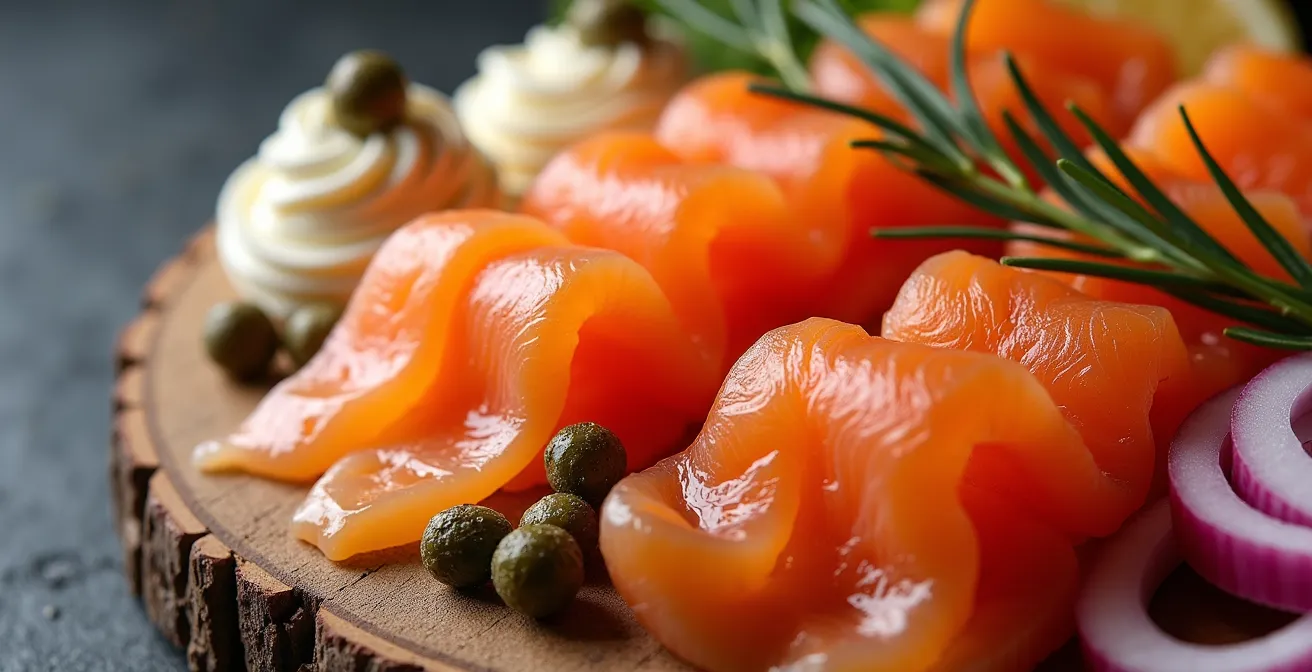
Pairing these dishes with the right Canadian beverage elevates the experience even further. The crisp acidity of a BC Pinot Gris cuts through the richness of cold-smoked salmon, while a bold West Coast IPA stands up to the smoky intensity of hot-smoked Chinook.
| Salmon Type | Wine Pairing | Beer Pairing | Flavor Notes |
|---|---|---|---|
| Cold-smoked Sockeye | BC Pinot Gris | Light wheat beer | Crisp acidity cuts through silky texture |
| Hot-smoked Chinook | Okanagan Pinot Noir | West Coast IPA | Bold flavors complement smoky richness |
| Salmon Candy | Okanagan dry rosé | Amber ale | Balances sweet glaze with refreshing finish |
Ocean Wise: How to Ensure Your Sushi Is Sustainably Sourced in Vancouver?
Enjoying West Coast seafood comes with a responsibility to protect the oceans that provide it. While the title mentions sushi, the guiding principle for sustainability is universal across all seafood, including our beloved smoked salmon. In Canada, the most trusted emblem of this commitment is the Ocean Wise logo. This conservation program, created by the Vancouver Aquarium, partners with suppliers, restaurants, and retailers to help consumers make ocean-friendly choices. Seeing the Ocean Wise symbol on a package of smoked salmon means that the fish was caught or farmed in a way that ensures the long-term health and stability of that species and the greater marine ecosystem.
As ButcherBox Canada explains in their guide, ” Ocean Wise is a conservation program created by the Vancouver Aquarium that partners with businesses and organizations to promote sustainable seafood choices.” For smoked salmon on the West Coast, this generally means choosing wild Pacific salmon species like Sockeye, Chinook, or Coho, which are often harvested using sustainable methods like trolling and gillnetting. Certain closed-containment farmed options can also earn the Ocean Wise recommendation, as they minimize the impact on wild populations and the surrounding environment.
When you’re at the market, look for the logo. Don’t be afraid to ask the vendor about the salmon’s origin and fishing method. A reputable seller will be proud to tell you about their sustainable sourcing. By choosing Ocean Wise certified products, you are directly supporting responsible fisheries and ensuring that the tradition of smoked salmon can be enjoyed for generations to come. Your choice matters, and it’s the most powerful tool you have for protecting our oceans.
Frozen Raw Fish: How is Arctic Char Sashimi Different from Japanese Style?
While Pacific salmon is the heart of British Columbia’s smoking culture, Canada’s vast geography fosters a diverse tapestry of regional traditions. This H2 title, though referencing sashimi, opens a door to explore another iconic Canadian fish: the Arctic Char. This beautiful fish from our Northern territories offers a fascinating flavour profile, a unique hybrid that sits somewhere between salmon and trout. While it can be served raw as sashimi, its true traditional preparation involves smoking. Inuit communities have smoked Arctic Char for centuries, often using local tundra plants and dwarf shrubs, which impart a completely different set of aromatics than the alder of the West Coast.
This highlights a crucial point: “Canadian smoked fish” is not a monolith. The experience is radically different from coast to coast to coast. In the Maritime provinces, the focus is on hot-smoking oily fish like mackerel and herring (kippers), using woods like oak and beech for a bold, oceanic flavour. Head inland to Ontario and Quebec, and you’ll find lake trout being hot-smoked over sweet maple or apple wood, creating a mild, delicate product worlds away from the robust flavour of a smoked East Coast mackerel.
This regional diversity is Canada’s great culinary strength. While a visitor to BC will be immersed in the world of alder-smoked salmon, a journey across the country reveals a rich mosaic of smoking styles, each perfectly adapted to its local environment and fish species. Understanding this context enriches our appreciation for every piece of smoked fish we eat.
| Region | Fish Type | Traditional Wood | Smoking Style | Flavor Profile |
|---|---|---|---|---|
| British Columbia | Pacific Salmon | Alder | Hot & Cold | Delicate, sweet |
| Northern Territories | Arctic Char | Local tundra plants | Traditional cold | Salmon-trout hybrid |
| Maritimes | Mackerel/Herring | Oak/Beech | Hot smoking | Bold, oceanic |
| Ontario/Quebec | Lake Trout | Maple/Apple | Hot smoking | Sweet, mild |
Key Takeaways
- The difference between hot and cold-smoked salmon is more than temperature; it’s a combination of wood, salmon species, and technique.
- West Coast smoking is defined by alder wood for its delicate flavour, while salmon candy represents a unique third style of sweet-glazed, hot-smoked fish.
- Sustainability is key; look for the Ocean Wise logo to ensure your salmon is sourced responsibly from healthy fisheries.
Shucking 101: How to Open Oysters Without Stabbing Your Hand?
Now that we’ve journeyed deep into the world of smoked salmon, it’s time to pull back and see its place in the grander scheme of a West Coast seafood feast. While the H2 asks for a shucking lesson, the true “101” for a visitor is understanding the “West Coast Seafood Trinity”: smoked salmon, fresh oysters, and seasonal spot prawns. These three pillars represent the incredible biodiversity and culinary identity of British Columbia. Smoked salmon tells the story of tradition and preservation. Oysters, like the briny Fanny Bay or the crisp Kusshi, offer a direct taste of our coastal “merroir”—the unique flavour imparted by a specific marine environment. And succulent spot prawns, available fresh only during their brief harvest window from May to July, represent a celebrated seasonal delicacy.
To experience this trinity is to experience the true soul of BC’s coast. You can build the perfect day around it. Start your morning with a classic cold-smoked salmon bagel from a waterfront deli in Vancouver. For lunch, head to a raw bar on Vancouver Island for a platter of freshly shucked oysters. In the evening, if you’re here in season, indulge in a plate of simple, perfectly sautéed spot prawns. And throughout the day, sample different types of salmon candy from the vendors at Granville Island Market. This isn’t just a meal plan; it’s an itinerary for tasting the very essence of the Pacific Northwest.
Case Study: The West Coast Seafood Trinity Experience
British Columbia’s culinary identity centers on three iconic seafood products: smoked salmon, oysters, and spot prawns. Together, they represent the province’s marine biodiversity and sustainable fishing practices. Smoked salmon showcases both indigenous traditions and modern innovation, BC oysters like Fanny Bay and Kusshi offer distinct merroir from different growing regions, while spot prawns provide a seasonal delicacy available only during their brief May-July harvest window, creating a complete West Coast seafood experience.
Your journey into West Coast smoked salmon is now complete, but the tasting has just begun. The next time you stand before that seafood counter, you’ll see not just products, but stories of wood, water, and tradition. The ultimate next step is to curate your own tasting board and experience these differences firsthand.