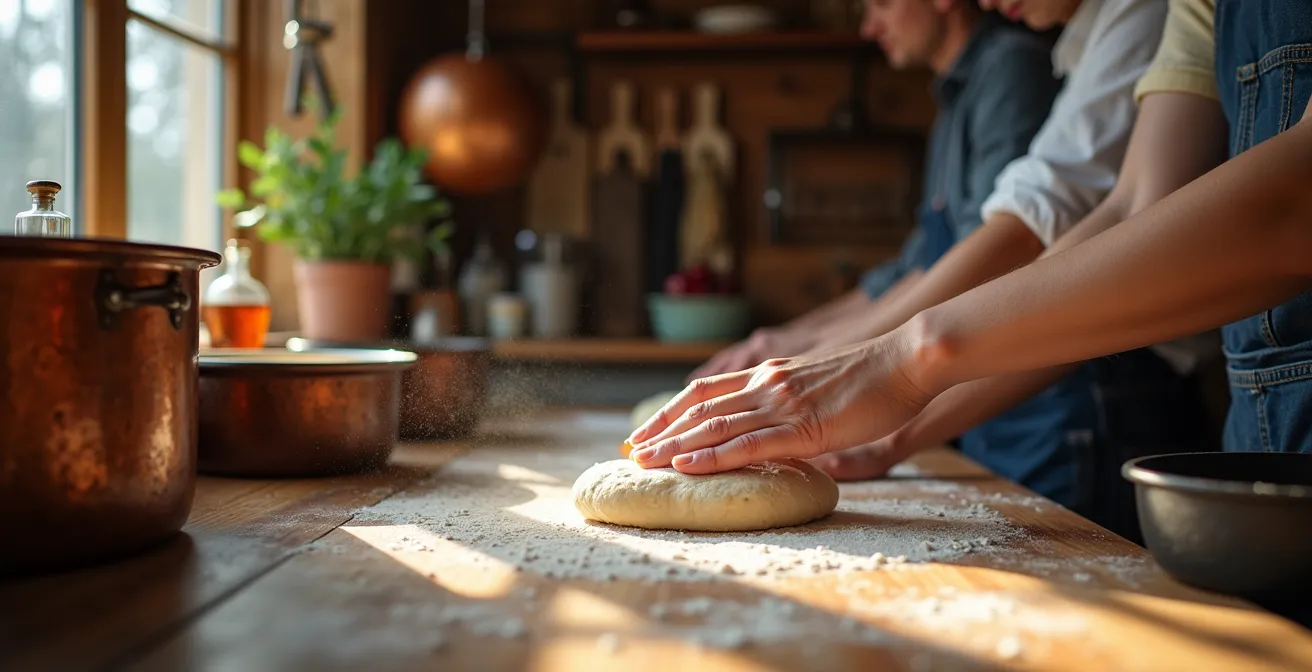
Learning to cook in Canada is the ultimate souvenir—a skill and a story you take home with you.
- Focus on hands-on workshops over simple demonstrations for a truly immersive and memorable experience.
- Prioritize classes that connect you with local producers and the deep cultural heritage behind the dishes.
Recommendation: Look for small class sizes and instructors with a genuine, personal connection to the cuisine to transform your trip into a meaningful learning adventure.
For many travelers, experiencing Canadian cuisine means ticking boxes: poutine in Montreal, a Nanaimo bar in British Columbia, maybe a lobster roll on the East Coast. You eat, you take a photo, and you move on. But what if you could go deeper? What if you could bring home more than just a memory, but a skill, a story, and a genuine connection to the culture? The typical travel advice often points you to restaurants, but it overlooks the most rewarding experience of all: becoming a participant, not just a spectator.
This guide is for the traveler who prefers to get their hands dirty. It’s about transforming your view of Canadian food from something you simply consume into something you understand and create. We’ll bypass the usual restaurant lists and dive into the world of hands-on culinary workshops. The true secret to understanding a culture isn’t just tasting its food, but learning the ‘why’ behind the ‘how’—the history in a tourtière crust, the resilience in a piece of bannock, and the community spirit in a pot of maple taffy. This is where you trade the dining table for the kitchen counter and learn the stories behind the recipes.
We will explore how to choose an experience that fits your style, from immersive foraging trips to focused skill-based classes. We’ll uncover where you can learn to master iconic dishes, handle unique tools, and even find edible treasures in the wild, all while connecting with the passionate chefs and artisans who are the keepers of Canada’s culinary heritage.
To set the stage, the following video offers a beautiful, authentic look at the Mi’kmaq tradition of making Lusknikn, a form of bannock. It’s a perfect glimpse into the kind of deep cultural connection that hands-on cooking can provide, showcasing that a simple bread is never just bread—it’s a story.
This guide is structured to take you on a journey through Canada’s most engaging hands-on food experiences. From mastering foundational techniques to exploring vibrant local markets, each section provides the resources you need to become an active participant in the country’s rich culinary traditions.
Summary: Your Guide to Hands-On Canadian Cooking Experiences
- The Secret of Lard: Why Traditional Pie Crusts Use Animal Fat?
- Bannock on a Stick: How to Cook Indigenous Bread Over an Open Campfire?
- Edible Wilds: How to Safely Identify Fiddleheads for Your Cooking Class?
- Shucking 101: How to Open Oysters Without Stabbing Your Hand?
- Demonstration vs. Participation: How to Choose a Cooking Class That Fits Your Style?
- The Ulu Knife: How Modern Chefs Are Utilizing Ancient Tools in Professional Kitchens?
- Kensington Market: How to Eat Your Way Through the World for Under $20 CAD?
- Maple Taffy on Snow: How to Roll the Perfect Stick Without Making a Mess?
The Secret of Lard: Why Traditional Pie Crusts Use Animal Fat?
A true French-Canadian tourtière is defined by two things: its spiced, savoury meat filling and its incredibly flaky, tender crust. While modern recipes often substitute butter or shortening, the authentic texture and flavour come from one traditional ingredient: lard. Understanding why is the first step to mastering this iconic Québec dish. Unlike butter, which has a higher water content, lard creates larger pockets of fat in the dough. When baked, this fat melts and creates steam, separating the flour into the delicate, flaky layers that are the hallmark of a perfect pie crust. It’s not just about tradition; it’s about food science.
This technique is a direct link to Canada’s colonial past. Historically, lard was the primary fat used in early Quebec colony cooking when olive oil was expensive and butter was scarce. Learning to work with it connects you to centuries of culinary heritage. The key is temperature. Keeping the lard, flour, and even the water ice-cold is essential to prevent the fat from melting prematurely, ensuring maximum flakiness.
Case Study: The Quest for the Perfect Tourtière
Proving the importance of technique, Montreal food enthusiast Ryk Edelstein famously tested eleven different tourtière recipes from across Québec, making each one twice. His exhaustive process, which involved multiple ovens and twenty-two pies, aimed to identify the ultimate recipe. The winner, celebrated in a contest by the Montreal Gazette, featured a classic lard-and-butter crust, highlighting that traditional methods often yield the best results.
For those ready to try, mastering this dough is a rewarding challenge. It requires a light touch and respect for the ingredients. A successful crust is a badge of honour for any baker and the foundation of an unforgettable tourtière. It’s a delicious history lesson you can create with your own hands.
Bannock on a Stick: How to Cook Indigenous Bread Over an Open Campfire?
Bannock is more than just bread; it’s a symbol of resilience, history, and community in Indigenous cultures across Canada. While its origins are complex and tied to the introduction of flour by European traders, it has been adapted into a staple of Indigenous cuisine. Learning to make it, especially in its most elemental form—cooked over an open fire—is a powerful way to connect with this culinary heritage. The experience is about simplicity and resourcefulness: a basic dough of flour, water, salt, and leavening, transformed by fire and patience into a warm, comforting meal.
The most iconic method for outdoor cooking is “bannock on a stick.” The dough is wrapped in a snake-like coil around a green, debarked stick and held over the hot embers of a campfire. It’s a slow, meditative process. You must turn the stick constantly to ensure the bread cooks evenly, developing a golden, crisp crust on the outside while remaining soft and fluffy inside. The scent of woodsmoke infusing the baking dough is an unforgettable part of the hands-on immersion.
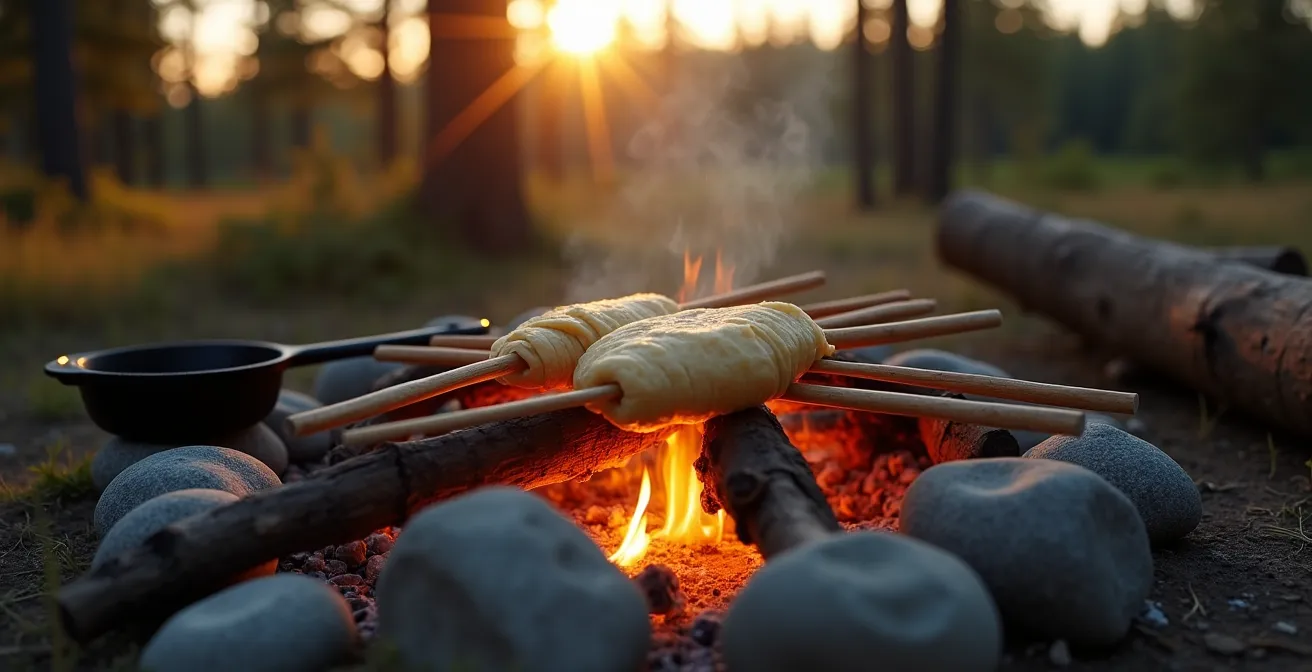
This experience is offered through various Indigenous-led tourism operators who share not just the recipe, but the stories and cultural significance behind it. In Edmonton, for instance, Scott Iserhoff of Pei Pei Chei Ow offers Indigenous cooking classes where participants learn to make bannock and other traditional foods. These opportunities provide a respectful and authentic way to engage with Indigenous culture, turning a simple cooking lesson into a meaningful exchange.
Edible Wilds: How to Safely Identify Fiddleheads for Your Cooking Class?
Foraging for your own food is the ultimate farm-to-table experience, and in Canada, one of the most celebrated wild edibles is the fiddlehead. These tightly coiled tips of young ostrich ferns emerge for a fleeting period in the spring, particularly in Eastern and Central Canada. Their flavour is unique, often described as a mix between asparagus, spinach, and artichoke. However, foraging is a skill that demands respect and knowledge. The most critical lesson is proper identification and preparation, as not all fern heads are edible, and some can be toxic.
The edible ostrich fern fiddlehead has a few key identifiers: a deep, U-shaped groove on the inside of the smooth stem and a thin, brown, papery husk that flakes off easily. They are never fuzzy. The second, non-negotiable rule of safety comes directly from Canadian health authorities. Due to the presence of natural toxins, Health Canada requires boiling or steaming fiddleheads for 15 minutes before any further cooking, such as sautéing or frying. This crucial step ensures they are safe to eat, and any cooking class or foraging tour worth its salt will emphasize this.
To learn these skills safely, joining a guided tour is highly recommended. For example, Foraging with You in Chilliwack, BC, offers spring tours led by a Red Seal chef. These excursions teach participants not just how to identify and harvest fiddleheads, but also other wild foods like stinging nettle and oyster mushrooms, ensuring you learn from an expert.
The variety of wild edibles in Canada changes dramatically with the seasons and regions, offering a continuous learning opportunity for the curious forager. This table highlights just a few examples of the bounty available across the country.
| Season | Edible | Region | Preparation |
|---|---|---|---|
| Spring (April-May) | Fiddleheads | Eastern Ontario, New Brunswick | Boil 15 min, then sauté |
| Spring | Wild Leeks (Ramps) | Quebec, Ontario forests | Use raw or cooked |
| Summer | Saskatoon Berries | Alberta Prairies | Fresh or preserved |
| Summer | Sea Asparagus | BC Coast | Blanch and serve |
| Fall | Chanterelle Mushrooms | BC, Ontario forests | Sauté with butter |
Shucking 101: How to Open Oysters Without Stabbing Your Hand?
There’s a certain elegance to serving fresh oysters, but for the uninitiated, opening them can be an intimidating—and potentially dangerous—task. Learning to shuck an oyster properly is a quintessential coastal skill, and a hands-on workshop is the best way to gain confidence and avoid a trip to the emergency room. The process is a combination of leverage, finesse, and the right tools, not brute force. A proper oyster knife (short, sturdy, with a pointed tip) and a thick cloth or protective glove are non-negotiable for safety.
The first step is to identify the oyster’s anatomy. It has a cup side (the deeper, rounded shell) and a flat side. The hinge is the pointed end where the two shells meet. Your goal is to sever the adductor muscle, which holds the shell tightly closed. To do this, you place the oyster cup-side down in a folded towel to secure it. Find the hinge, insert the tip of the oyster knife, and with firm but gentle pressure, twist the knife like turning a key. You should feel a “pop” as the hinge gives way. From there, you slide the knife along the inside of the top shell to cut the upper part of the muscle, then do the same along the bottom shell to free the oyster completely.
This is a skill best learned by doing, with an expert to guide your hand. In places like coastal British Columbia, you can find experiences that combine foraging with hands-on skill-building. For instance, chef Robin Kort of Swallow Tail in Vancouver leads sea foraging excursions where participants hunt for oysters and clams. These workshops not only teach you the safe technique for shucking but also connect you directly to the source, ending with a fresh seafood chowder on the beach. It’s a perfect example of turning a meal into a memorable achievement.
Demonstration vs. Participation: How to Choose a Cooking Class That Fits Your Style?
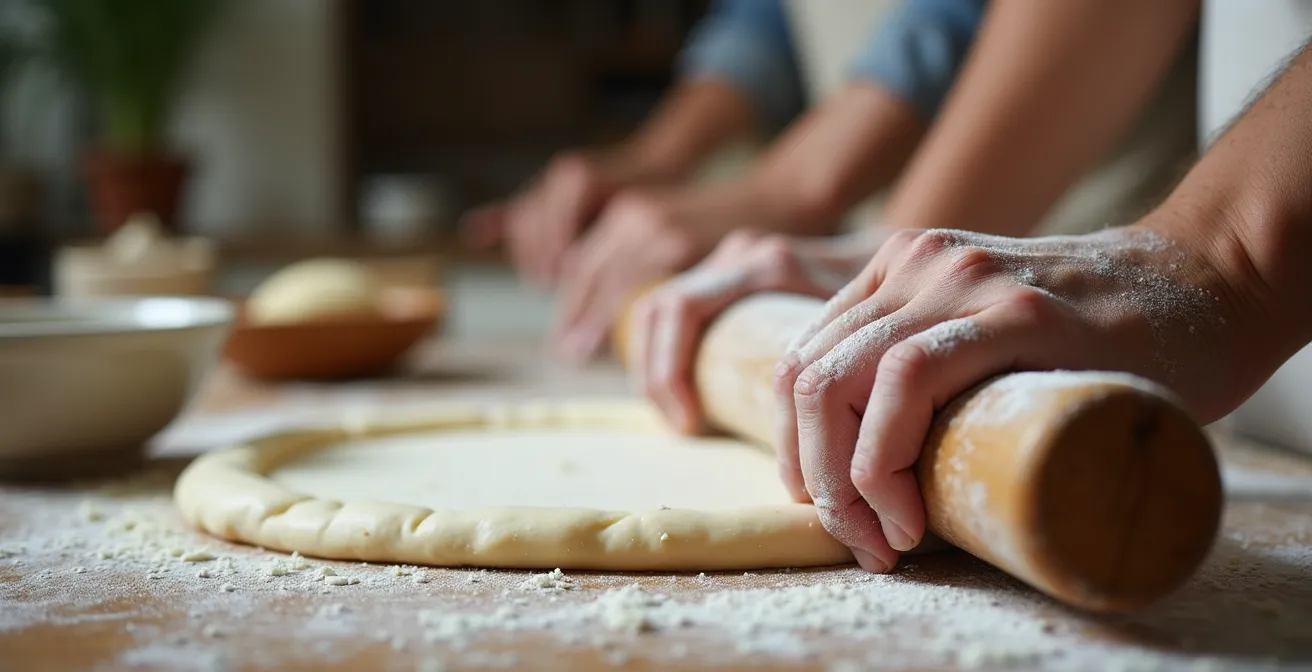
Not all cooking classes are created equal. As an experiential traveler, the most important distinction to understand is the difference between a demonstration and a participatory class. A demonstration class is like watching a live cooking show: you sit, watch a chef prepare dishes, take notes, and usually get to taste the results. It can be informative and entertaining, but it’s a passive experience. A participatory class, on the other hand, is where you truly learn. You get your own station, your own ingredients, and you perform the techniques yourself under the guidance of an instructor.
For anyone who wants to bring a skill home, a hands-on, participatory class is always the superior choice. You build muscle memory, make your own mistakes, and learn how the dough should feel or how the sauce should smell. This is where the learning sticks. When researching options, look for keywords like “hands-on,” “workshop,” and “interactive.” Pay close attention to the class size; smaller groups mean more personal attention from the instructor.
The instructor’s background is also a critical factor. Are they a chef with professional experience, or a home cook with a passion for tradition? More importantly, what is their connection to the cuisine they are teaching? An Indigenous chef teaching bannock or a Québecois home baker teaching tourtière brings a layer of cultural authenticity that cannot be replicated. When programs are culturally aligned, with Indigenous professors and curriculum, success soars; some data shows graduation rates increase to 94% in such environments. This highlights the power of learning from those with deep cultural connections.
Your Checklist for Choosing a Canadian Cooking Class
- Connection to Cuisine: What is the instructor’s personal or cultural connection to the food being taught?
- Ingredient Sourcing: Does the class use locally sourced Canadian ingredients, connecting you to the region’s terroir?
- Class Size: What is the maximum number of participants? (Fewer is almost always better for hands-on learning).
- Format: Is it a demonstration-only class, or will you be actively participating and cooking yourself?
- Take-Home Value: Are recipes and any leftovers provided for you to take home after the class?
The Ulu Knife: How Modern Chefs Are Utilizing Ancient Tools in Professional Kitchens?
In the quest for authenticity and efficiency, some of Canada’s most forward-thinking chefs are looking to the past. The ulu, a traditional, all-purpose knife used for centuries by Inuit, Yupik, and Aleut peoples, is finding a new home in modern professional kitchens. With its crescent-shaped blade and a handle in the center, the ulu is a marvel of ergonomic design. The force is applied directly over the middle of the blade, making it exceptionally efficient for mincing, dicing, and filleting. It allows for a rocking motion that makes quick work of herbs, vegetables, and even butchering fish and game.
Chefs specializing in contemporary Indigenous cuisine are at the forefront of re-popularizing this ancient tool. They see it not as a historical artifact, but as a superior piece of technology for certain tasks. Its design reduces wrist strain and offers a level of control that can be difficult to achieve with a standard chef’s knife. By incorporating the ulu into their kitchens, these chefs are doing more than just adopting a tool; they are honouring and preserving a vital piece of culinary heritage. It serves as a tangible link to traditional knowledge and sustainable practices that have been passed down through generations.
A key priority for Paul is educating the next generation of chefs on sustainable food supply, cooking methods and preserving culture through Indigenous culinary experiences.
– Indigenous Culinary of Associated Nations, ICAN Leadership Profile
This movement is also visible in culinary education. At Ottawa’s Algonquin College, the Indigenous Cook Apprenticeship program, launched by Chef Wes Wilkinson, is a prime example. The program invites chefs from various Indigenous nations to teach both practical skills and historical lessons. The success of such programs, which have seen graduation rates as high as 94%, demonstrates a powerful demand for culinary education that is rooted in authentic cultural traditions and tools like the ulu.
Kensington Market: How to Eat Your Way Through the World for Under $20 CAD?
While a structured class is a fantastic way to learn, sometimes the best hands-on experience is a self-guided adventure. Toronto’s Kensington Market offers exactly that. This vibrant, multicultural neighborhood is a National Historic Site of Canada and a living mosaic of global food culture. Here, you can design your own tasting tour, sampling authentic dishes from around the world, often for just a few dollars each. It’s an exercise in culinary exploration where your only tools are a bit of cash and a curious palate.
The strategy is simple: come hungry and be adventurous. Instead of committing to one large meal, graze your way through the market’s eclectic mix of grocers, bakeries, and street food stalls. You can start with a flaky Jamaican patty, grab a few savory empanadas from a Latin American vendor, try Tibetan momos (dumplings), and finish with a sweet, creamy Portuguese pastel de nata. Each stop is an opportunity to interact with vendors, many of whom have been serving their family recipes for generations. The cost-effective nature of the market means you can build a diverse, multi-course meal for under $20.
This experience is a hands-on lesson in the diversity of Canadian food culture. It’s a reminder that Canadian cuisine is not a monolith, but a rich tapestry woven from the culinary traditions of immigrants from every corner of the globe. It also reflects a broader movement, as Indigenous and global cuisines are reclaiming their rightful place on the culinary landscape, fuelling a renaissance of authentic food experiences across the country. Kensington Market is the delicious, chaotic, and affordable epicenter of this movement.
Key takeaways
- Prioritize hands-on participation over passive demonstrations to truly learn and retain culinary skills.
- Seek out instructors with authentic cultural authority and a deep connection to the cuisine they teach.
- Embrace regional specialties from coast to coast, as Canada’s culinary landscape is incredibly diverse and tied to its geography.
Maple Taffy on Snow: How to Roll the Perfect Stick Without Making a Mess?
Of all the Canadian culinary experiences, making “tire d’érable,” or maple taffy on snow, is perhaps the most joyful and iconic. It’s a classic feature of any “cabane à sucre” (sugar shack) visit in Québec and beyond. The concept is simple: pure maple syrup is heated to the “soft-ball” stage (around 235-240°F), then poured onto a bed of fresh, clean snow. The cold instantly chills the syrup, turning it into a soft, chewy taffy. But the real skill lies in the final step: rolling it onto a popsicle stick without creating a sticky disaster.
The secret is timing and technique. After pouring the hot syrup onto the snow, you must wait a few crucial seconds. This allows the bottom layer to firm up just enough. Then, you place your stick at one end of the syrup ribbon and begin to roll, keeping the stick parallel to the snow. The motion should be slow and steady. As you roll, the taffy will wrap around the stick, building on itself. If you go too fast or lift it too early, you’ll end up with a dripping, stringy mess. A final twirl as you lift the stick from the snow helps wrap up any loose ends.
Mastering this simple skill is incredibly satisfying. It’s a fun, interactive activity for all ages and a delicious way to participate in a tradition that is quintessentially Canadian. With Canada producing up to 75% of the world’s maple syrup, this experience is a direct connection to one of the country’s most famous natural resources. It’s the perfect, sweet ending to any Canadian culinary adventure, turning a simple ingredient into a moment of pure, sticky delight.
Now that you’re equipped with the knowledge to choose and master these experiences, the next step is to start planning your own culinary journey. Look for local operators, check seasonal availability, and book a class that speaks to your curiosity. Your Canadian adventure in hands-on cooking awaits.