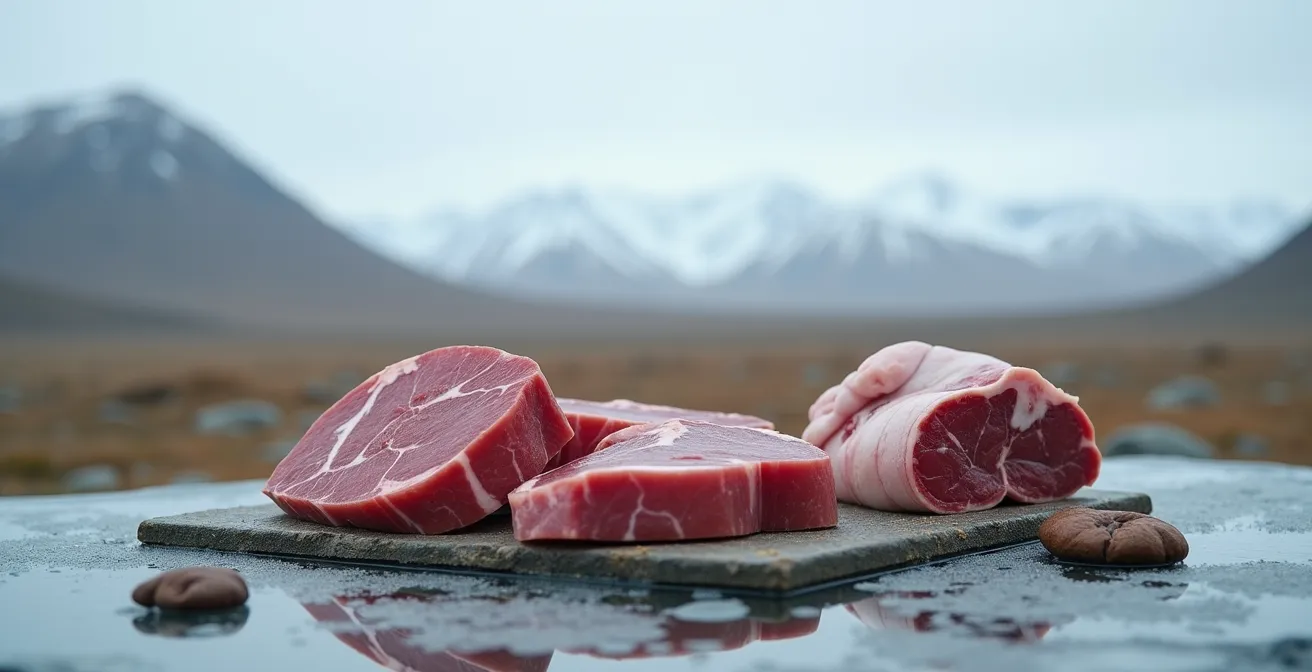
Tasting Arctic ‘country food’ is less about consuming an exotic product and more about understanding a complex cultural system.
- The availability of meats like seal or muskox is governed by a dual system: provincially/territorially inspected commercial sales and a traditional Indigenous “gift economy.”
- Flavours are a direct result of the Arctic ecology, with high-fat and iron-rich profiles providing necessary survival nutrients, which also dictates preparation methods.
Recommendation: Approach this cuisine with curiosity and respect. Seek out regulated products from community-owned enterprises and be open to the cultural significance of food that is shared rather than sold.
The thought of tasting muskox, caribou, or seal can ignite a sense of culinary adventure. For the curious foodie, it represents a journey to the edge of the map, a chance to experience flavours shaped by one of the world’s most extreme environments. Many approach this as they would any other novel protein, asking “What does it taste like?” and “Where can I buy it?”. These questions, while natural, barely scratch the surface of what it means to eat ‘country food’ in Northern Canada.
The usual narrative often frames these meats as daring delicacies for the brave. Yet, this perspective misses the profound context from which they originate. This isn’t simply about gamey flavours or finding a niche restaurant. Consuming these foods touches upon vital principles of Indigenous food sovereignty, complex legal frameworks, and a deep, nutritional wisdom passed down through generations. To treat muskox as a simple steak or Arctic char as just another sashimi is to overlook the intricate cultural and ecological system it represents.
But what if the true key to an ethical and authentic experience wasn’t in finding a place to buy it, but in understanding why you often can’t? This guide shifts the focus from the plate to the system behind it. We will explore the unique flavour profiles as a function of the Arctic environment, decode the legal and cultural rules that distinguish a purchased good from a shared gift, and see how modern Inuit chefs are acting as cultural intermediaries, reinventing tradition for a new audience. This is a journey into a cuisine that is not a commodity, but a cornerstone of culture.
This article delves into the essential aspects of appreciating Arctic cuisine respectfully. From decoding unique tastes to understanding the intricate web of tradition and regulation, you will gain a comprehensive view of this remarkable food landscape. The following sections will guide you through this discovery.
Summary: A Guide to Canada’s Arctic Meats
- What Does Seal Meat Taste Like? Decoding the Iron-Rich Flavor Profile
- Why You Can’t Buy Certain Wild Meats in Restaurants and Must Be Gifted Them?
- Frozen Raw Fish: How is Arctic Char Sashimi Different from Japanese Style?
- Cloudberries: Why Are These “Arctic Gold” Berries So Expensive?
- Wine or Tea: What Drinks Pair Best with Gamey Northern Meats?
- Can You Bring Food into Canada? Understanding CFIA Restrictions
- Arctic Tacos: How Fusion Cuisine Is Making Country Food Accessible to Tourists?
- Modern Inuit Cuisine: How Chefs Are Reinventing Traditional Country Food?
What Does Seal Meat Taste Like? Decoding the Iron-Rich Flavor Profile
To understand the taste of seal is to understand the Arctic environment itself. Often described with simple terms like “gamey” or “fishy,” its true profile is far more complex and is a direct result of the animal’s biology. Seal meat is a deep, dark red, almost purple, which immediately signals its most dominant characteristic: it is incredibly rich in iron. A nutritional analysis reveals that a 100g serving can provide over 250% of the daily iron requirement. This mineral-heavy quality translates to a robust, potent flavour with a metallic tang, similar to liver or some wild game birds, but with a distinct marine essence.
This flavour is not “fishy” in the sense of spoiled fish, but rather carries the clean, briny notes of the ocean ecosystem where the seal lives and feeds. The other critical component is its fat. According to a University of Bergen study, seal meat is lean, often containing less than 2% fat. However, the blubber is a different story and is a prized part of the animal. This fat is not just for calories; it’s a concentration of healthy monounsaturated fats (MUFAs) and long-chain omega-3s, which gives it a rich, clean taste without the heavy feeling of saturated fats from domestic animals.
The preparation method drastically alters the experience. Eaten raw and fresh (a traditional Inuit practice), the flavour is purest and the texture is surprisingly tender. When cooked, it must be done quickly, seared rare like a high-quality tuna steak. Overcooking tightens the proteins and intensifies the iron flavour, leading to the “gamey” taste many outsiders report. Modern culinary campaigns, such as those by SeaDNA, are now focusing on educating consumers and chefs on proper preparation to highlight its unique and healthful properties, moving it from a survival food to a gourmet ingredient.
Why You Can’t Buy Certain Wild Meats in Restaurants and Must Be Gifted Them?
One of the most confusing aspects for a visitor to the North is the availability of country food. You might see muskox burgers on a menu in Yellowknife, but be told you cannot buy narwhal *maktaaq* (skin and blubber) anywhere—it can only be received as a gift. This isn’t arbitrary; it’s the result of a crucial distinction between two parallel systems: government-inspected commercial food and the traditional gift economy.
Meats like muskox and Arctic char can be commercially sold if they are harvested by licensed hunters and processed in a government-inspected facility. This regulation ensures the meat meets federal and territorial food safety standards, allowing it to be sold in stores and restaurants. Organizations like Kitikmeot Foods in Cambridge Bay are examples of Indigenous-owned businesses operating within this regulated system. However, many culturally significant foods, especially marine mammals like narwhal or certain types of uninspected caribou, fall outside this commercial framework. These are procured through subsistence harvesting, a practice protected by Indigenous rights in Canada.
This food is central to community life and is shared, not sold. It operates within a gift economy, where the act of giving and receiving food strengthens social bonds, ensures everyone has access, and honours the animal. To put a price on it would violate the cultural principles that underpin the entire system. Sharing is a demonstration of community care and a core tenet of Inuit Qaujimajatuqangit (Inuit traditional knowledge). For an outsider, being offered this food is a sign of immense respect and inclusion.

This image captures the essence of this exchange, where the value lies not in a monetary transaction but in the human connection and cultural continuity. So, while you can’t “buy” it, participating in community feasts or cultural events are ways you might be fortunate enough to experience it. The key is to approach it with humility and gratitude, understanding you are part of a cultural practice, not a commercial one.
Your Action Plan: How to Ethically Source Country Food in Canada
- Research Regulated Retailers: Identify and support community-owned, government-inspected suppliers like Nunavut Country Food in Iqaluit or Kivalliq Arctic Foods in Rankin Inlet for products like char, caribou, and muskox.
- Engage with Cultural Centers: Visit local cultural centers or participate in community events. Food sharing is often a central part of these gatherings, offering an authentic and respectful context for tasting.
- Explore Local Markets (with care): In some communities, you may find local “Sell and Swap” groups or markets. Inquire respectfully about the source of the food to distinguish between regulated products for sale and items for community sharing.
- Understand the “Gift”: If you are offered country food as a gift from a local hunter or family, accept it with gratitude. Understand this is an act of generosity and cultural importance, not a transaction.
- Ask, Don’t Demand: When dining out, if country food is on the menu, ask the staff about its source. This shows interest and respect for the supply chain and supports businesses that source their products ethically.
Frozen Raw Fish: How is Arctic Char Sashimi Different from Japanese Style?
Seeing “Arctic char sashimi” on a menu in the North might seem like a simple nod to a popular global dish. However, the Inuit practice of eating raw, frozen fish—known as *quaq*—is a tradition that predates Japanese sashimi by millennia and is fundamentally different in both philosophy and technique. While both involve raw fish, their purposes and preparations are shaped by vastly different environments.
Japanese sashimi is an art of precision and freshness. The fish is sliced meticulously to highlight its texture and subtle flavours, often served chilled but not frozen, with condiments like soy sauce and wasabi meant to complement it. The focus is on aesthetic presentation and the delicate, clean taste of the fish. In contrast, *quaq* is born from necessity and an intimate knowledge of the Arctic environment. Fish is frozen immediately after being caught, which not only preserves it but also kills parasites. It is then sliced thinly and often eaten while still frozen. The frozen state provides a unique, firm texture that melts in your mouth, releasing the rich, fatty flavour of the char.
This high fat content is no accident; it is essential for survival in the cold. A scientific analysis of traditional Arctic diets shows that they could derive as much as 50% of their calories from fat, compared to 15-20% from carbohydrates. Arctic char is a prime source of these high-energy, omega-3-rich fats. Eating it raw and frozen preserves these delicate oils, which would be altered by cooking. There are no condiments to mask the flavour; the taste of the fish itself is what is celebrated. Modern producers like Kivalliq Arctic Foods now offer char in various forms, from frozen fillets perfect for *quaq* to smoked and dried versions, bridging traditional methods with commercial availability.
Cloudberries: Why Are These “Arctic Gold” Berries So Expensive?
Moving beyond the world of meat and fish, another northern delicacy that captures the imagination is the cloudberry. Known as “bakeapples” in Newfoundland and Labrador, these amber-coloured berries are often called “Arctic Gold,” a nickname that hints at their high value. Their expense is not due to marketing hype, but to a challenging combination of geography, biology, and intense manual labour.
Cloudberries grow wild, primarily in subarctic bogs and tundra. They cannot be cultivated commercially on a large scale, meaning every single berry must be hand-picked from its natural, often remote, habitat. The plants themselves are finicky; they have separate male and female plants, so only a fraction of them produce fruit. Furthermore, each stem produces only one single berry, making the yield per plant incredibly low. The picking season is frustratingly short—just a few weeks in mid-to-late summer—and a good harvest is heavily dependent on the year’s weather.
This scarcity and labour-intensive harvesting process naturally drive up the price. While market analysis shows that prices vary wildly based on the annual harvest, their value remains consistently high. The flavour itself is a complex mix of tart and sweet, often described as a blend of apricot, passionfruit, and honey. They are too precious to be eaten casually. Instead, they are transformed into highly prized jams, sauces, liqueurs, and desserts. In Canada, Newfoundland and Labrador is a hotspot for cloudberry products. You can find roadside vendors selling them in quart sealers, or specialized companies like the Dark Tickle Company creating artisanal sauces and syrups. These berries are a true taste of the northern landscape: rare, fleeting, and intensely rewarding.
Wine or Tea: What Drinks Pair Best with Gamey Northern Meats?
Pairing a beverage with the strong, unique flavours of northern meats like caribou and muskox is a delightful challenge. The lean, iron-rich profile of these meats can overwhelm delicate drinks, while their richness requires a beverage that can cut through or complement it. The best pairings are often found by looking at both traditional and modern northern practices.
Traditionally, the go-to beverage is often a simple, warming broth made from the animal’s bones or a locally foraged herbal tea. Labrador tea is a classic example. This fragrant, earthy infusion, made from the leaves of the *Rhododendron groenlandicum* plant, has a grounding, slightly floral flavour that harmonizes beautifully with the lean meatiness of caribou. Similarly, spruce tip infusions offer a bright, citrusy note that can cut through the richness of fattier meats. These traditional pairings work because they come from the same *terroir* as the animals themselves.
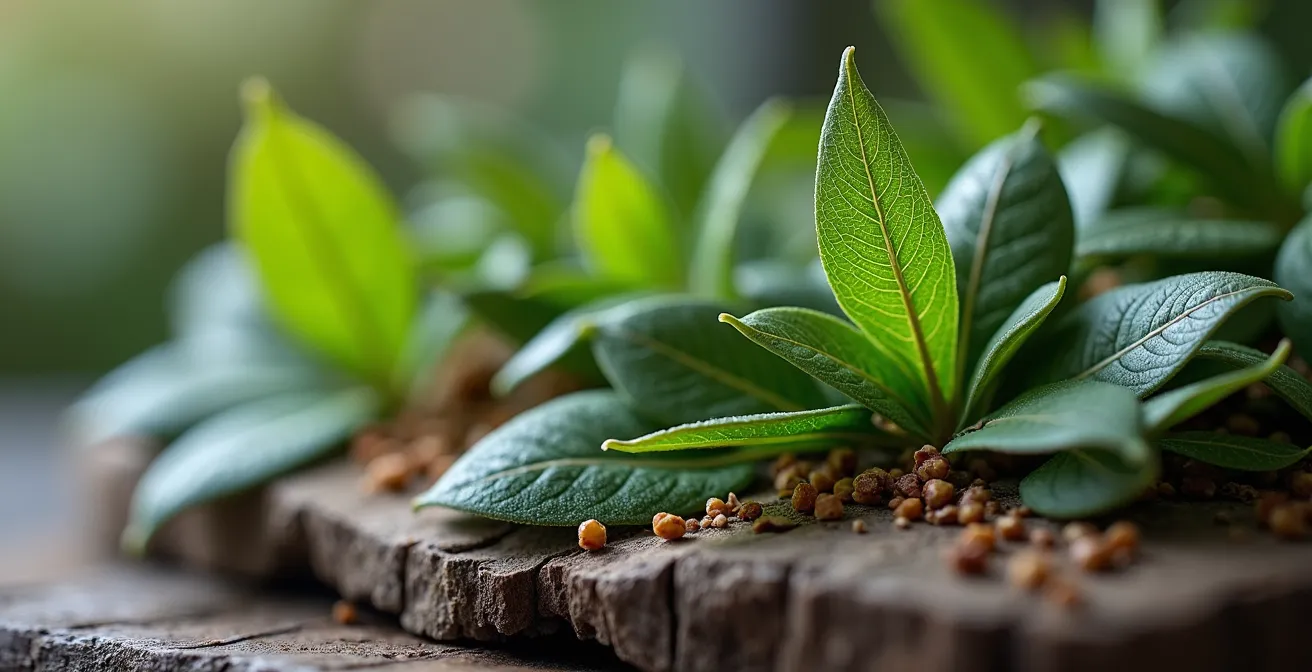
For those looking for a modern twist or an alcoholic pairing, the burgeoning craft beverage scene in Canada’s North offers exciting options. The robust character of muskox stands up well to a dark, malty stout from NWT Brewing Co., while the earthy notes of caribou can be matched with ales from the Nunavut Brewing Company. If wine is your preference, a bold Canadian rye whisky can balance the intense flavour of seal meat. For the more delicate Arctic char, a crisp white wine from British Columbia’s Okanagan Valley can provide a refreshing counterpoint without overpowering the fish. The following table offers a guide to these pairings.
| Arctic Meat | Traditional Pairing | Modern Pairing | Flavor Notes |
|---|---|---|---|
| Caribou | Labrador tea | Nunavut Brewing Company ales | Lean meat pairs with earthy, herbal notes |
| Muskox | Birch syrup drinks | NWT Brewing Co. stout | Rich meat needs robust beverages |
| Seal | Traditional broth | Canadian rye whisky | Iron-rich flavor balanced by spirits |
| Arctic Char | Spruce tip infusion | BC Okanagan Valley wines | Delicate fish with light, crisp pairings |
Can You Bring Food into Canada? Understanding CFIA Restrictions
For the traveler who has had a taste of authentic country food, the desire to bring some home is understandable. However, transporting these products, whether across international or even provincial borders, is a legally complex issue. The primary governing body at the national level is the Canadian Food Inspection Agency (CFIA), but provincial and territorial regulations add another layer of complexity.
When entering Canada, all food products must be declared. The CFIA has strict rules to prevent the introduction of animal diseases. For commercially prepared and packaged meat from another country, the rules are stringent and often prohibitive. For country food specifically, the situation is different. An Indigenous person has the right to bring traditional food across the border for their own use, but this right does not extend to non-Indigenous individuals. Therefore, a tourist cannot legally bring gifted, uninspected country food into Canada.
The rules for inter-provincial transport are just as nuanced. You can generally transport meat that has been processed in a government-inspected facility, provided it has the official “Government Inspected” stamp and you keep the receipts. This means a muskox steak purchased from a regulated retailer in the Northwest Territories can likely be taken to Ontario. However, gifted, uninspected country food—like dried caribou from a community hunt—generally cannot be legally transported across provincial or territorial borders by non-Indigenous people. These regulations exist to manage food safety and wildlife resources, and they reinforce the principle that much of this food is intended for local and community consumption, not for mass distribution.
Arctic Tacos: How Fusion Cuisine Is Making Country Food Accessible to Tourists?
How does a curious but cautious traveler begin to explore these powerful northern flavours? The answer is increasingly found in the rise of Arctic fusion cuisine, where traditional ingredients are presented in familiar formats. Chefs across the North are acting as cultural intermediaries, creating dishes that are both accessible to visitors and respectful of the ingredients’ origins.
A perfect example is the “Arctic taco.” Using bannock—a simple, versatile flatbread with deep roots in Indigenous and settler cultures across Canada—as the shell, chefs create a vessel for showcasing country food. Instead of ground beef, the taco might be filled with shredded muskox or pulled caribou. This approach, sometimes called an “Indian taco,” lowers the barrier to entry for someone unfamiliar with the texture or intensity of wild game. It reframes the ingredient in a recognizable, comforting context.
This trend is visible across the North. In Iqaluit, restaurants offer creative dishes that bridge tradition and modernity. You might find roasted Arctic char at The Frob, caribou meatballs at the Asqarniit Lounge, or even caribou and shrimp spring rolls at the Black Heart Cafe. These dishes are not about diluting the experience but about translating it. They provide a gateway for tourists to develop a palate for these foods in a controlled, culinary setting. It is an invitation to taste the North, prepared by chefs who understand both the traditional ingredients and the modern palate. This creative approach helps build a sustainable local food economy that celebrates, rather than exoticizes, its unique resources.
Key Takeaways
- Ethical consumption of Arctic foods requires understanding the dual system of regulated commercial sales and the Indigenous “gift economy.”
- The unique, intense flavours of meats like seal and caribou are a direct result of the Arctic ecology and the animals’ biology, not just a “gamey” taste.
- Modern Inuit chefs and community leaders are at the forefront of a culinary renaissance, using food as a tool for cultural revitalization and economic self-determination.
Modern Inuit Cuisine: How Chefs Are Reinventing Traditional Country Food?
The evolution of Arctic cuisine is not just about making it accessible to tourists; it’s a powerful movement of cultural reclamation and revitalization. Led by a new generation of Inuit chefs, hunters, and media producers, modern Inuit cuisine is about celebrating traditional foods and knowledge while adapting them for the 21st century. This movement is a profound expression of food sovereignty—the right of a people to define their own food systems.
This isn’t about creating museum pieces. It’s about a living, breathing culinary culture that is both deeply rooted in the past and confidently looking to the future. It’s about taking pride in ingredients that have sustained a people for millennia and showcasing their versatility and gourmet potential. As Malaya Qaunirq Chapman, a prominent cultural figure in Nunavut, states, this food system is far from a historical relic.
It’s one of the most interesting and sustainable cuisines on the planet.
– Malaya Qaunirq Chapman, Nunavummi Mamarijavut cooking show
This sentiment is put into practice through initiatives that bring this knowledge to a wider audience. The television show *Nunavummi Mamarijavut* (which means “the food we love in Nunavut”), hosted by Chapman, is a prime example. Instead of a polished studio kitchen, the show is filmed in people’s homes, on the land, and in community halls, demonstrating how to prepare traditional foods in a contemporary context. It highlights everything from preparing seal to foraging for berries, reinforcing the community-based practices that keep the cuisine alive.
Case Study: The “Nunavummi Mamarijavut” Cooking Show
Hosted by Malaya Qaunirq Chapman, this Inuktitut-language cooking show is more than just a culinary program; it’s a cultural project. By filming in real homes and kitchens across Nunavut, the show documents and shares traditional knowledge in an accessible format. It showcases local hunters, elders, and home cooks, giving them a platform to share their expertise. The show’s success demonstrates a strong community desire to celebrate and perpetuate Inuit food traditions, providing a powerful counter-narrative to the idea that country food is outdated or inaccessible. It serves as a vital tool for both cultural preservation and modern adaptation, demonstrating that Inuit cuisine is dynamic and thriving.
This culinary renaissance sends a clear message: Arctic food is not something to be merely “discovered” by outsiders. It is a sophisticated, sustainable, and evolving tradition being proudly carried forward by the Inuit people themselves.
Frequently asked questions about Eating Muskox and Caribou: A Guide to Ethical Consumption of Arctic Meats?
Can I bring government-inspected muskox from NWT to Ontario?
Yes, if it has the ‘Government Inspected’ stamp and you keep receipts for declaration. Products processed in federally or provincially inspected facilities can generally be transported between provinces for personal use.
Is gifted country food like dried caribou transportable between provinces?
No, gifted uninspected country food generally cannot be legally transported across provincial borders. These foods are intended for the community and fall under different regulations than commercially inspected products.
What’s the difference between CFIA and provincial regulations?
The CFIA (Canadian Food Inspection Agency) primarily governs food safety at the international border and for inter-provincial trade of inspected goods. However, each province and territory also has its own regulations regarding the harvesting, processing, and trade of meat within its borders, which is especially relevant for wild game.
Ultimately, approaching the foods of the Canadian Arctic is an exercise in respect. It requires shifting from a consumer mindset to that of a guest. By seeking out regulated products from Indigenous-owned businesses, you contribute to local economies and food sovereignty. By appreciating the flavours as a reflection of the environment, you connect with the land in a deeper way. And by understanding the profound cultural importance of the gift economy, you can participate in this remarkable culinary world with the honour and gratitude it deserves.