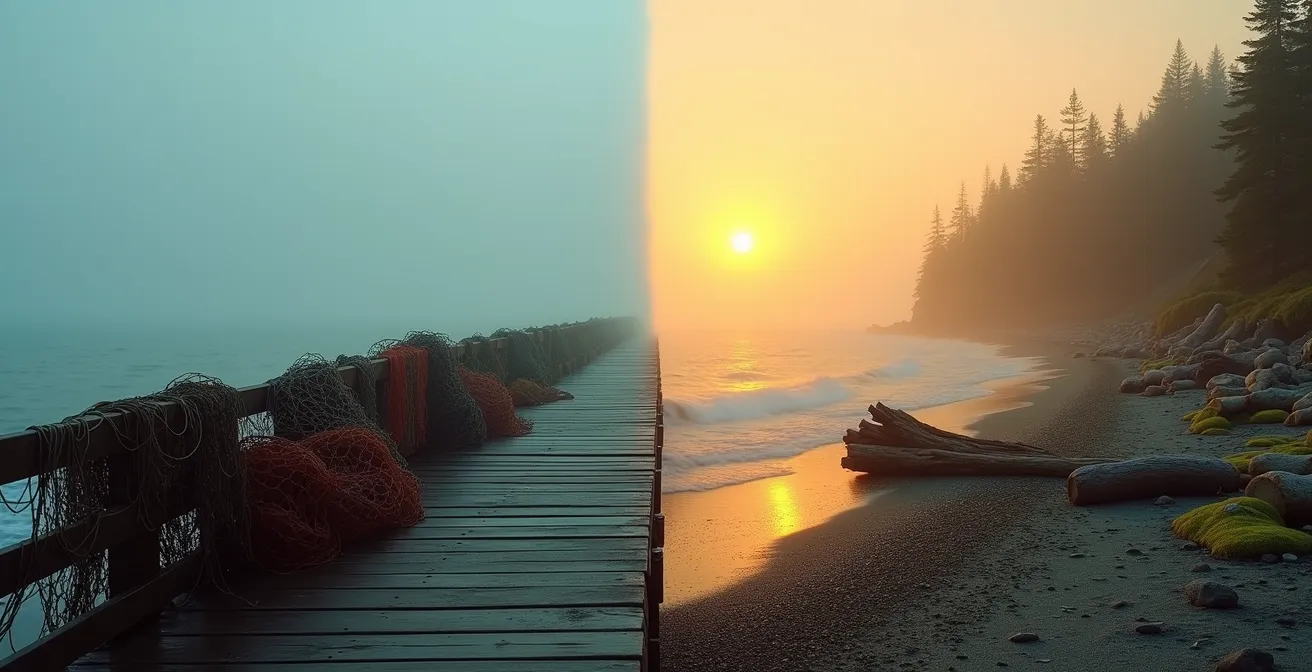
Choosing between Canada’s coasts is less about landscapes and more about matching the destination’s inherent rhythm to your personal travel style.
- The West Coast demands a higher budget and rewards independent adventurers with vast, rugged nature and world-class wildlife encounters.
- The East Coast offers superior value and suits cultural explorers with its dense history, accessible coastline, and intimate community feel.
Recommendation: Prioritize the West for an epic, active adventure centred on mountains and iconic fauna. Choose the East for a relaxed journey rich in coastal charm, live music, and historical discovery.
For the traveler with two precious weeks to explore Canada, the fundamental question looms: East or West? It’s a classic dilemma, often framed as a simple choice between the Rocky Mountains’ grandeur and the quaint lighthouses of the Atlantic. Most guides present lists of attractions, leaving you to weigh Whistler against the Cabot Trail. But this approach misses the most crucial element of a truly satisfying trip: the vibe. The decision isn’t just about what you’ll see; it’s about how you’ll feel and the rhythm your days will adopt.
The real difference lies in the personality of each coast. Are you an adventurer who thrives on epic scale, seeking solitude in vast wilderness? Or are you a cultural explorer who finds joy in historical texture, spontaneous conversations, and the charm of human-scale landscapes? The West Coast is an opera of dramatic, raw nature that demands effort and rewards with awe. The East Coast is a folk song, intimate and layered with stories, offering discoveries around every corner. This guide moves beyond the surface-level comparisons to explore the logistical and cultural signatures of each region.
By examining everything from packing and budgeting to language and festivals through this lens of “travel personality,” you can make a choice that aligns not just with your bucket list, but with your very nature as a traveler. We will dissect the practical realities that define a trip to either coast, helping you determine which Canadian vibe truly suits your style.
This article breaks down the key decision-making factors for your trip, providing a clear comparison to help you choose the coast that best fits your travel aspirations. Explore the sections below to find your perfect Canadian destination.
Summary: A Tale of Two Coasts: Navigating Your Canadian Adventure
- Why Packing for British Columbia Is Different Than for Quebec in October?
- How Much Does a Week in the Maritimes Cost Compared to British Columbia?
- Navigating the Language Barrier: Where Is French Essential Outside of Quebec?
- Whales or Bears: Choosing Your Destination Based on Wildlife Priorities
- When to Visit to Catch the Best Regional Festivals from Stampede to Jazz?
- June Gloom: Why Early Summer Is the Foggiest Time on the Atlantic Coast?
- Why Are Prairie Sunsets and Storms More Dramatic Than Anywhere Else?
- How to Structure a 14-Day Itinerary from Toronto to Vancouver Without Exhaustion?
Why Packing for British Columbia Is Different Than for Quebec in October?
Packing for an October trip to Canada isn’t a one-size-fits-all affair; it’s a direct reflection of each coast’s character. The key difference is a battle between technical performance for the West and layered style for the East. In British Columbia, the weather is dictated by the Pacific’s moody temperament. You’re dressing for function first, as coastal drizzle and mountain chills are a given. Conversely, Quebec in October calls for a wardrobe that can move from a crisp walk through a historic city to an evening in a sophisticated bistro.
The climate data tells the story: while Quebec sees a wide range from near-freezing mornings to pleasant 15°C afternoons, BC’s October temperatures average a consistent 10°C, with trails on Vancouver Island or near Whistler dropping 5°C cooler. This means BC demands reliable waterproof gear. A high-quality GORE-TEX shell jacket isn’t a luxury; it’s essential for everything from rainforest hikes in Tofino to navigating a rainy day in Vancouver. Footwear must be equally versatile, with waterproof hikers for trails and comfortable city shoes for urban exploration.
In contrast, Eastern Canada, particularly cities like Montreal and Quebec City, embraces a more European approach. The cold is a drier, crisper cold. Here, the strategy is smart layering. An insulated jacket with a hood is your outer shield, but underneath, you’ll want merino wool base layers and stylish sweaters or cardigans. You’re more likely to be exploring cobblestone streets, museums, and galleries, so fashionable yet comfortable walking shoes, wool scarves, and leather gloves are more appropriate than rugged hiking gear. Ultimately, you pack for BC’s wilderness, but you dress for Quebec’s culture.
How Much Does a Week in the Maritimes Cost Compared to British Columbia?
Your travel budget will stretch significantly further on the East Coast, a crucial factor for any traveler weighing their options. While the West Coast offers epic experiences, they often come with a premium price tag. A recent travel budget analysis reveals that a week in British Columbia costs around $1,125 CAD per person, a figure that can be 30-40% higher than a comparable trip in the Maritime provinces of Nova Scotia, New Brunswick, or Prince Edward Island.
This cost disparity is rooted in the different economies and tourism infrastructures of the regions. BC is home to world-renowned destinations like Whistler and Banff (just over the border in Alberta), where demand drives up prices for accommodation, dining, and activities. In contrast, the Maritimes’ charm lies in its accessible, community-oriented tourism. The table below illustrates the stark differences in weekly expenses.
| Expense Category | British Columbia (Weekly) | Maritime Provinces (Weekly) | Savings |
|---|---|---|---|
| Accommodation (per couple) | $1,120 | $700-840 | 25-35% |
| Dining (per person) | $350-420 | $245-315 | 25-30% |
| Activities & Parks | $200+ (paid parks, gondolas) | $50-100 (mostly free coastal access) | 50-75% |
| Local Transport | $154 | $100-120 | 22-35% |
The “return on effort” for your dollar is different, too. On the East Coast, value is part of the experience. A lobster roll from a roadside stand in PEI might cost $15, offering an authentic taste of place that’s hard to beat. In BC, a similar quality seafood meal in a tourist hub like Tofino could easily be $30-$40. The East’s abundance of free coastal access points, farmers’ markets, and community-run events provides natural opportunities for budget-conscious travel, whereas the West’s iconic experiences—like gondola rides and admission to exclusive parks—are almost always paid attractions.
Navigating the Language Barrier: Where Is French Essential Outside of Quebec?
The question of language in Canada is more nuanced than a simple English-vs-French binary. While Canada is officially bilingual, for the average traveler, English is sufficient for navigating almost the entire country, including Montreal’s tourist areas. However, understanding where French transitions from a cultural asset to a communication necessity is key to appreciating the East Coast’s unique texture. Outside of Quebec, French is rarely “essential,” but it is the heart of vibrant Acadian communities, primarily in New Brunswick.
New Brunswick is Canada’s only officially bilingual province, and in its northern and eastern regions, you’ll find a lively Francophone culture. In towns along the Acadian Peninsula, you are just as likely to be greeted with “Bonjour” as “Hello.” While service staff will almost always switch to English, making an effort with a few French pleasantries is a sign of respect that is deeply appreciated and can transform your interactions from transactional to genuinely welcoming.
Smaller pockets of French-speaking communities also exist in the Evangeline Region of PEI and around Chéticamp on Nova Scotia’s Cabot Trail. Approaching these areas not as a “language barrier” but as a cultural opportunity enriches the travel experience. It’s a chance to connect with the resilient history of the Acadian people, who have preserved their language and traditions for centuries. On the West Coast, this dynamic is largely absent; while Vancouver is a multicultural city with many languages, English is the undisputed lingua franca for travelers.
Whales or Bears: Choosing Your Destination Based on Wildlife Priorities
For many, a trip to Canada is defined by its wildlife. The choice between coasts often comes down to a simple question: do you want to see whales or bears? The good news is that both are possible on either coast, but the *quality*, *accessibility*, and *type* of experience are vastly different. Your decision should be based on which animal is your absolute priority and what kind of viewing experience you’re seeking.
The West Coast, particularly British Columbia, is the undisputed king of bear viewing. It is one of the best places on earth to see grizzly bears, especially during the autumn salmon runs. For a truly bucket-list experience, remote lodges in the Great Bear Rainforest offer exclusive, fly-in trips. For something more accessible, boat tours from Tofino or Campbell River provide excellent opportunities to see black bears foraging on shorelines at low tide. The West is also premier territory for orcas (killer whales), with the calm waters of the Salish Sea offering reliable sightings from May to September.
The East Coast offers a different, though equally thrilling, wildlife portfolio. The Bay of Fundy is a world-renowned feeding ground for marine life, making it one of the best places to see massive humpback whales breaching in the rougher Atlantic waters. The experience is often more rugged and adventurous, taking place on zodiacs that cut through the waves. While the East lacks grizzlies, black bears are common throughout the region, though sightings are generally more opportunistic. The East’s unique trump card is its seabird population, especially the charming Atlantic puffin colonies found in Newfoundland and Nova Scotia from June to August.
Expert Insight: The Difference in Experience
The contrast in wildlife tourism reflects each coast’s personality. As noted by wildlife tour specialists, the experience is defined by a choice between exclusivity and accessibility. As an expert from Discover the World Canada Wildlife Tours explains:
Canada’s world-leading standards include exclusive, Indigenous-led, fly-in grizzly viewing lodges in BC’s Great Bear Rainforest versus more accessible but still regulated black bear watching from boats in Tofino.
– Discover the World Canada Wildlife Tours, Eastern vs Western Canada Wildlife Guide
When to Visit to Catch the Best Regional Festivals from Stampede to Jazz?
Timing your visit to coincide with a regional festival can transform a great trip into an unforgettable one, offering a direct line into the local culture. The festival calendars of the East and West coasts are a perfect mirror of their respective vibes: the West leans towards large-scale, high-energy events, while the East excels at community-based celebrations of music and food. The peak season for these events is clear; Canadian tourism data indicates that July and August host about 60% of major festivals, but this also means peak crowds and prices.
For a shoulder-season trip with better value, September is a fantastic option, especially on the East Coast. This is when the harvest and culinary festivals, like the PEI Fall Flavours Festival, are in full swing, celebrating the island’s bounty from land and sea. In October, Cape Breton’s Celtic Colours International Festival pairs world-class traditional music with stunning autumn foliage, creating an intensely atmospheric experience. The East’s festival scene is intimate and participatory.
The West’s marquee event is the Calgary Stampede in July, a massive, high-octane celebration of Western heritage that draws international crowds. It’s an iconic but intense experience. For a more relaxed vibe, the Okanagan Valley’s wine festivals in spring and fall offer a culinary-focused alternative centred on vineyard tours and tastings. The Montreal International Jazz Festival, technically in Central Canada but a frequent anchor for East Coast trips, offers a cosmopolitan, discovery-focused atmosphere with hundreds of free outdoor shows.
The choice of festival ultimately depends on the experience you’re seeking. The table below highlights the distinct character of each region’s main events.
| Festival | Location | Date | Vibe & Experience | Cost Range |
|---|---|---|---|---|
| Calgary Stampede | Alberta (West) | July | High-energy, participatory western heritage | $20-100/day |
| Montreal Jazz Festival | Quebec (East) | June-July | Cosmopolitan, discovery-focused, free outdoor shows | Free-$150 |
| Celtic Colours | Cape Breton (East) | October | Traditional music against fall foliage | $35-75/show |
| Okanagan Wine Festivals | BC (West) | Spring/Fall | Culinary focus, vineyard touring | $50-150/event |
| PEI Fall Flavours | PEI (East) | September | Harvest celebration, seafood focus | $40-100/event |
June Gloom: Why Early Summer Is the Foggiest Time on the Atlantic Coast?
Travelers planning an early summer trip to Atlantic Canada often hear warnings about the fog. This isn’t just folklore; “June Gloom” is a very real meteorological phenomenon that can blanket the coastline in a thick, moody haze for days at a time. Far from being a trip-ruiner, however, this fog is part of the region’s authentic maritime character and can create breathtakingly beautiful, atmospheric scenes for those who embrace it.
The science behind it is a simple clash of temperatures. In late spring and early summer, the warm, humid air moving north from the Gulf Stream passes over the frigid waters of the Labrador Current, which brings cold water down from the Arctic. As the warm air cools rapidly over the cold sea, the moisture within it condenses, forming dense advection fog. This is why iconic spots like Peggy’s Cove in Nova Scotia or the coastlines of Newfoundland are so frequently photographed shrouded in mist.

For a traveler, this has practical implications. Visibility can be low, so hiking plans might need to be adjusted, and whale watching tours can be cancelled. However, for photographers and those seeking a more contemplative experience, the fog is a gift. It mutes colors, simplifies landscapes into ethereal shapes, and enhances the haunting sound of distant foghorns. It forces a slower pace and a deeper appreciation for the raw, untamed nature of the Atlantic coast—a stark contrast to the often bright, crisp vistas of the West.
Why Are Prairie Sunsets and Storms More Dramatic Than Anywhere Else?
While this guide focuses on the coasts, any traveler contemplating a cross-country journey will inevitably encounter Canada’s vast interior: the Prairies. This region—spanning parts of Alberta, Saskatchewan, and Manitoba—has a dramatic personality all its own, expressed not through mountains or oceans, but through its immense sky. The sunsets and storms here are legendary for their intensity and scale, offering a spectacle unmatched anywhere else in the country.
The first reason for this drama is the unobstructed topography. The sheer flatness of the landscape creates a 360-degree horizon, allowing you to see the weather from incredible distances. Sunsets aren’t just a splash of color in one direction; they are an immersive event that fills your entire field of vision, with light and shadow playing across the endless fields of wheat or canola. The lack of mountains means the sun’s rays travel through more of the atmosphere at dusk, scattering blue light and leaving behind the fiery reds, oranges, and purples that photographers dream of.
The second factor is the unique meteorology. The Prairies are a battleground where different air masses collide: cool, dry air from the Rockies, warm, moist air from the Gulf of Mexico, and cold, Arctic air from the north. This convergence, especially in summer, creates the perfect conditions for powerful supercell thunderstorms. These are not your average rainstorms; they are towering, isolated systems that can produce dramatic lightning, sculpted cloud formations, and an unforgettable display of nature’s power, all visible from a safe distance thanks to the wide-open landscape. For a traveler crossing the country, the Prairie sky is not just a transit zone; it’s a destination in itself.
Key Takeaways
- Travel Style: The West Coast is for the independent adventurer seeking grand scale and physical activity; the East Coast is for the cultural explorer who enjoys history, community, and a relaxed pace.
- Budget: Expect to spend 30-40% more in British Columbia than in the Maritimes due to higher costs for accommodation, dining, and premium attractions.
- Experience Density: The East packs dense history, culture, and coastal access into smaller areas, rewarding slower travel. The West’s attractions are vast and spread out, requiring more driving or flying.
How to Structure a 14-Day Itinerary from Toronto to Vancouver Without Exhaustion?
The classic Canadian cross-country road trip is a romantic notion, but the reality of driving over 4,400 kilometers from Toronto to Vancouver is one of immense distances and long, monotonous stretches. For a traveler with only 14 days, attempting to drive the entire route is a recipe for exhaustion, not enjoyment. The key to a successful and energizing cross-country itinerary is to be strategic: drive the highlights and fly the rest.
The most effective strategy is to use flights to bypass the vast, and for most travelers, less scenic, expanse of Northern Ontario. By flying from Toronto to Calgary, you instantly save 3-4 days of grueling driving and land at the doorstep of the Canadian Rockies, the undisputed highlight of the journey. This allows you to maximize your precious time where it matters most. As travel experts at CI Azumano Travel advise, this approach fundamentally changes the trip for the better.
Strategic flights using low-cost carriers to hop from Toronto to Calgary save 2-3 days of driving for deeper exploration in the Rockies.
– CI Azumano Travel, The Great Canadian Road Trip Guide
Once in Calgary, you can rent a car for a dedicated 4- to 5-day loop through Banff and Jasper, experiencing the heart of the mountains without the burden of a cross-country rental. From there, another short flight from Calgary to Vancouver positions you perfectly to explore the West Coast’s distinct oceanic vibe, including potential day trips to Whistler or Vancouver Island. This “hopscotch” method turns a marathon into a series of rewarding sprints.
Your 14-Day Strategic Cross-Canada Plan
- Define Anchor Points & Book Key Transit: Secure your flight from Toronto to Calgary and your one-way car rental for the Rockies loop. This forms the logistical backbone of your trip.
- Allocate Time Blocks: Assign a set number of days to each major region. A balanced plan could be: 2 days Toronto, 5 days Rockies (from Calgary), 1 travel day to Vancouver, 5 days Vancouver & coast, 1 travel day home.
- Book High-Demand Accommodations: Reserve your lodging in Banff, Jasper, and popular Vancouver neighbourhoods well in advance, as these can sell out months ahead.
- Draft a Pacing Schedule: Plan your driving days within the Rockies to be under 4 hours to allow for spontaneous stops, hikes, and wildlife viewing. Avoid planning back-to-back long travel days.
- Finalize with Buffer Time: Review your itinerary and build in at least one flexible afternoon or morning. This buffer is crucial for accommodating weather delays, unexpected discoveries, or simply resting.
Now that you understand the distinct personalities of Canada’s coasts and the logistics required for each, the next step is to align these facts with your own travel desires. Use this framework as a tool to craft a journey that promises not just beautiful sights, but a truly resonant and rewarding experience.