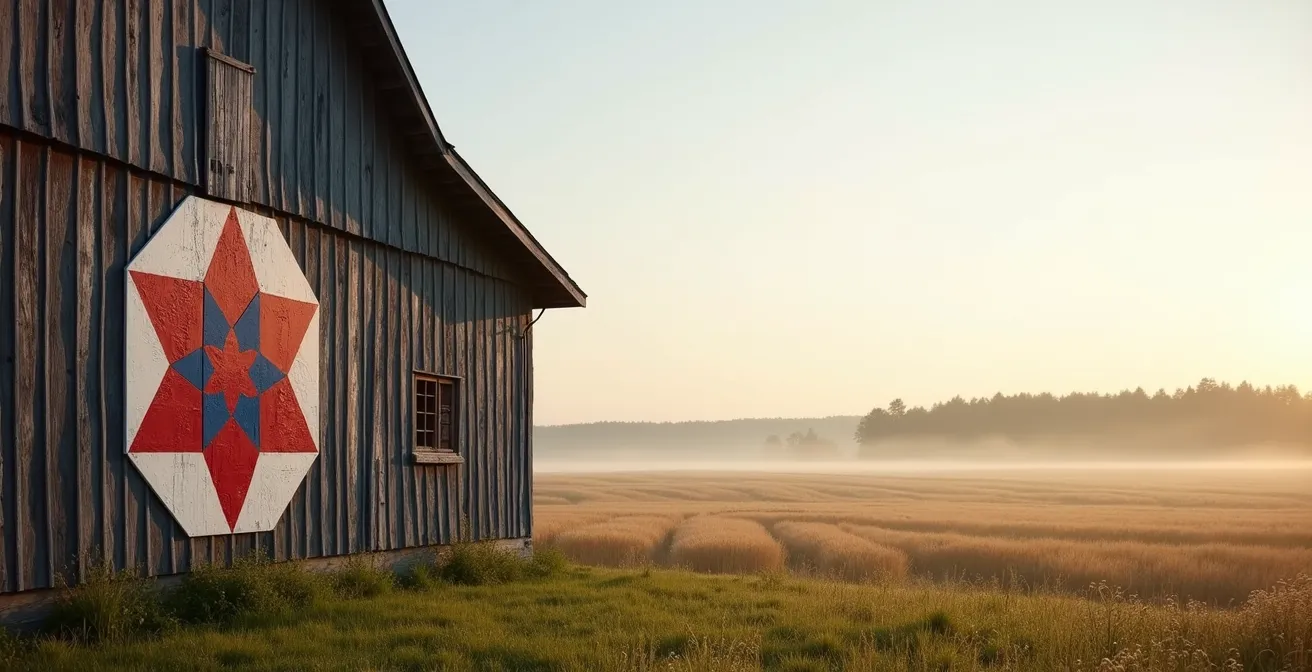
Those colourful squares on rural Canadian barns are more than just decoration; they are your map to a curated journey through local history and community pride.
- Barn quilt trails transform a scenic drive into a storytelling adventure, with each quilt acting as a narrative anchor for a farm or family.
- While some trails are dense, like in Ontario, the mindset of seeking these local stories can enrich any road trip across Canada.
Recommendation: Start by exploring an established trail in a region like Prince Edward County or Simcoe County to experience this unique blend of art, history, and landscape firsthand.
You’re driving along a winding country road in rural Canada, fields of corn on one side, a rolling pasture on the other. Then you see it: a massive, colourful, geometric pattern mounted high on a weathered barn. It looks like a single square from a giant’s quilt. A few kilometres later, you spot another, then a third. You’ve just stumbled upon a barn quilt trail, one of Canada’s most charming and immersive public art experiences.
Many people know these as beautiful pieces of folk art that brighten up the countryside. They are, of course, large painted wooden blocks designed to look like quilt patterns. But to see them merely as decoration is to miss the point entirely. These trails are not just a collection of objects; they are a form of landscape storytelling. What if the true purpose of these trails wasn’t just to be seen, but to be followed? What if they were a deliberate, curated roadmap inviting you to discover the stories, heritage, and communities that are the true fabric of rural Canada?
This guide is designed for the curious road-tripper. We won’t just tell you what barn quilts are; we’ll show you how to read them as a map. We’ll explore the history behind the patterns, the communities that create them, where to find the most vibrant trails, and how this unique art form connects to a deeper Canadian textile heritage. It’s time to turn your scenic drive into a genuine adventure.
This article provides a complete guide for your journey. You’ll find practical tips for locating the trails, understanding the art, and even connecting with the artists and communities along the way. The following summary outlines the key stops on our exploration.
Summary: Barn Quilts: How to Follow the Textile Trail Through Rural Canadian Landscapes?
- The Underground Railroad: Did Quilt Patterns Really Guide Escaping Slaves?
- Community Stitching: Can a Visitor Drop In on a Local Quilting Group?
- Hand-Stitched vs. Machine: How to Justify the Price of a Handmade Quilt?
- The Barn Quilt Trail: Where Are the Densest Clusters in Ontario?
- Sun Fade and Moths: How to Display a Quilt Without Ruining It?
- Inglis Grain Elevators: Is the Detour to See the Last “Row” Worth It?
- Rags to Riches: How Historic Rugs Were Made from Old Clothing?
- Where to Stop Between Winnipeg and Calgary to Break the Monotony?
The Underground Railroad: Did Quilt Patterns Really Guide Escaping Slaves?
One of the most romantic and persistent myths surrounding quilts is that their patterns served as a secret code for enslaved people escaping to freedom in Canada via the Underground Railroad. The story suggests specific patterns like the “Log Cabin” or “Flying Geese” signalled safe houses or escape routes. However, historians widely agree that there is no credible evidence to support this theory. The narrative emerged primarily from a 1999 book and has been popularized as folklore, but it lacks primary historical documentation from the period.
The true story of Canada’s barn quilt movement is more recent but equally rooted in community spirit. It began as a way to honour a loved one and has since blossomed into a powerful tool for rural tourism and storytelling. As Mary Simpson and Denise Corneil of the initial organizing committee noted, the barn quilt movement has been growing steadily in Ontario since 2009, starting with a project for the Earlton International Plowing Match that saw 200 barn quilts installed. These modern installations aren’t about secret codes; they are about public celebration. They tell the story of a family’s heritage, honour a specific industry, or simply bring art and pride to the agricultural landscape.
So, while the Underground Railroad connection is a compelling tale, the real power of barn quilts lies in the documented, modern movement that uses them as narrative anchors. They are a visible testament to community collaboration and a celebration of rural Canadian identity, painted right onto the canvas of the countryside.
Community Stitching: Can a Visitor Drop In on a Local Quilting Group?
Following a barn quilt trail often sparks a deeper curiosity about the craft itself. You begin to wonder about the hands that stitch the fabric quilts that inspire the giant wooden ones. The good news is that the welcoming spirit of the barn quilt trails extends to the local quilting guilds. These groups are the heart of Canada’s textile heritage, and many are open to visitors who show a respectful interest.
Dropping in isn’t usually a spur-of-the-moment affair, but with a little planning, it’s a wonderfully enriching experience. Guilds are hubs of creativity and friendship, where skills are passed down and community projects come to life. Attending a meeting is a chance to see incredible handcrafted work up close, chat with passionate artisans, and feel the vibrant social fabric of the community you’re driving through.

The image above captures the warmth and collaborative energy you’ll find at a typical guild meeting. To make your visit a success, it’s best to follow a few simple points of etiquette. This ensures you’re a welcome guest rather than an interruption and allows you to get the most out of the experience.
Your Action Plan: How to Respectfully Join a Canadian Quilting Guild Meeting
- Contact in Advance: Check the guild’s website or social media. Most Ontario guilds, for instance, welcome visitors for a small fee (often $5-$8) per meeting. An email or phone call is always appreciated.
- Arrive a Little Early: Meetings often start around 7:00 PM, but members gather as early as 6:00 PM. Arriving early is the perfect time for informal chats and introductions.
- Explore the ‘Marketplace’: Many guilds have a table where you can sign up for future workshops, buy patterns from members, or even pick up pre-made kits for charity quilts.
- Participate in ‘Show and Tell’: This is a highlight of many meetings where members share their latest creations. It’s a fantastic display of talent and a great conversation starter. If you’re a quilter yourself, you might even be invited to share your own work.
- Consider Membership: If you plan on being in the area for a while or making multiple visits, an annual membership (typically $30-$55) is often a great value and a wonderful way to support the local arts community.
Hand-Stitched vs. Machine: How to Justify the Price of a Handmade Quilt?
After visiting a quilting guild or seeing the artistry on a barn, you might be tempted to purchase a real, handmade quilt from a local artisan or shop. The first thing you’ll notice is the price, which is significantly higher than a mass-produced blanket from a department store. How can a throw-size quilt cost hundreds of dollars? The answer lies in the immense difference in materials, skill, and time.
A handmade quilt is not just a blanket; it is a piece of functional art, an heirloom in the making. The cost reflects three key factors: quality materials (high-grade cotton fabric, proper batting, and durable thread), the artist’s design and skill, and, most significantly, the labour. A single quilt can take anywhere from 40 to over 100 hours to complete, from initial design and fabric cutting to the final, intricate stitching. According to some Canadian quilting guidelines, a simple handmade throw-size quilt can easily range from $400 to $950 when factoring in both materials and skilled labour.
When you buy a handmade quilt, you are investing in an item designed to last for generations, not just a few seasons. You are also supporting a local artisan and preserving a valuable craft tradition. The following table breaks down the differences in stark terms.
| Aspect | Handmade Canadian Quilt | Mass-produced Quilt |
|---|---|---|
| Materials Cost | $110-150 (quality cotton) | $10-20 (synthetic) |
| Labor Hours | 40-50 hours skilled work | Machine-made in minutes |
| Final Price | $400-950 | $35-100 |
| Lifespan | Generations (heirloom) | 2-5 years |
| Customization | Fully personalized | Limited options |
The Barn Quilt Trail: Where Are the Densest Clusters in Ontario?
While barn quilts are popping up across Canada, Ontario remains the heartland of the movement, boasting the highest concentration of organized trails. If you’re looking for a curated journey where you can see dozens of quilts in a day or two of leisurely driving, this is the place to start. These trails are well-documented, with maps and stories that make for an easy and rewarding road trip.
Several regions have embraced the concept, creating what amount to sprawling outdoor art galleries. One of the most prominent is Prince Edward County, which offers a perfect blend of scenery, wineries, and of course, barn quilts. It’s an ideal destination for a weekend getaway focused on rural exploration.
Case Study: Prince Edward County’s Barn Quilt Success
With over 100 barn quilts, Prince Edward County has established itself as home to Ontario’s largest outdoor art gallery. The trail weaves through picturesque landscapes, taking visitors past notable installations like the “Crown and Stars” at Hagerman Farms near Picton and the “Carpenter’s Wheel” in Wellington. The trail is designed to be paired with the region’s other attractions; visitors can easily combine their quilt-spotting drive with stays at charming local B&Bs, such as the Saylor House Café in Bloomfield, which features its own “Bee Creative” quilt.
Another major hub is Simcoe County, north of Toronto. It has also invested heavily in its trail, making it another top destination. The self-guided Simcoe County Barn Quilt Trail features an impressive 164 quilt locations scattered across its townships. Finding your way is simple. Official websites like BarnQuiltTrails.ca offer interactive maps, while many regional trail sites provide downloadable PDFs for offline use. Social media is also a great tool; searching hashtags like #OntarioBarnQuilts can reveal new additions and hidden gems shared by fellow travelers.
Sun Fade and Moths: How to Display a Quilt Without Ruining It?
Whether you’ve invested in a pricey handmade heirloom or inherited a cherished family piece, displaying a fabric quilt at home requires thoughtful care. Unlike the painted wooden blocks on barns, fabric quilts are highly susceptible to environmental damage. The two biggest enemies are UV light and pests. Direct sunlight will cause vibrant colours to fade irreversibly, while improper storage or display can invite moths and other insects.
The key to safe display is to treat the quilt as a delicate piece of art. It should never be nailed directly to a wall. The best practice is to use a “hanging sleeve”—a tube of fabric sewn onto the back of the quilt. A dowel or rod can then be slipped through this sleeve for even support, distributing the weight and preventing stress on the seams. This method also creates a small air gap between the quilt and the wall, which helps prevent moisture buildup and mildew.
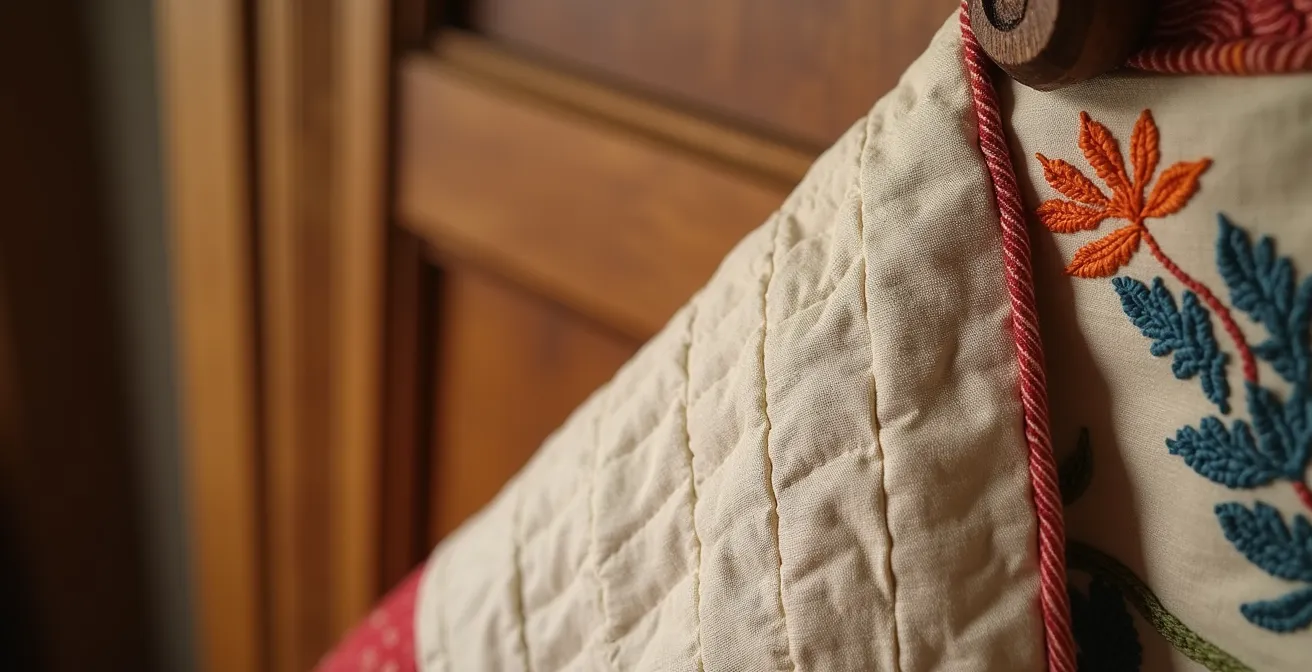
As the image demonstrates, a proper display system is both functional and beautiful. The quilt hangs flat and unstressed, away from direct light. To preserve your textile treasures, choose a wall that doesn’t receive direct, intense sunlight. If you must display it in a bright room, consider using UV-filtering glass in a frame or rotating the quilt out of the display for several months each year to give it a “rest” in a dark, climate-controlled space like a closet (stored in a breathable cotton or muslin bag, never plastic).
Inglis Grain Elevators: Is the Detour to See the Last “Row” Worth It?
When you’re driving across the vast Canadian Prairies, any break in the horizon is a welcome sight. The Inglis Grain Elevators in Manitoba offer more than just a break; they offer a powerful glimpse into the past. This National Historic Site preserves the last remaining row of standard-plan grain elevators, towering wooden sentinels that once defined every prairie town. For a road-tripper, the question is whether the detour off the main highway is justified.
The answer is a resounding yes, especially if you have the “quilt trail mindset.” Just as barn quilts anchor stories in the Ontario landscape, these elevators anchor the entire history of the grain trade and the settlement of the West. They are architectural artifacts that tell a story of community, agriculture, and a way of life that has all but vanished. To see them lined up against the endless sky is to understand the scale and ambition of the farmers who built the region.
This detour is about connecting with a disappearing rural landscape, a theme central to the barn quilt movement as well. Both are grassroots efforts to preserve and celebrate agricultural heritage in the face of change.
Barn quilts draw attention to Canada’s disappearing rural landscapes, timber frame barns, and the family farm.
– Canadian Barn Quilt Network, Barn Quilt Trails Canada
Visiting the Inglis Grain Elevators is a pilgrimage for anyone interested in Canadian history. It’s a quiet, powerful experience that provides context for the vast agricultural lands you are driving through. It is absolutely worth the detour.
Rags to Riches: How Historic Rugs Were Made from Old Clothing?
The vibrant patterns of barn quilts are part of a long and resourceful tradition of textile arts in Canada. Long before fabric was cheaply available, rural families, particularly women, were masters of recycling. Nothing was wasted. Worn-out clothing, old blankets, and scrap fabrics were painstakingly deconstructed and given new life as warm quilts or durable rugs. This “rags to riches” transformation was born of necessity but evolved into a distinct art form.
Techniques like rag-rugging and quilting were essential domestic skills. For rugs, strips of old cloth were braided, hooked, or woven to create floor coverings that added colour and warmth to rustic homes. This practice was especially prevalent during lean times like the Great Depression, but its roots go back to the earliest pioneer days. It represents a spirit of ingenuity and sustainability that has found new appreciation today.
This tradition is not just a thing of the past; it is actively preserved by community groups across the country. In Quebec, one organization has been a steward of these skills for over a century, connecting historical resourcefulness with modern-day appreciation for handcrafted goods.
In Quebec, the Cercle de Fermières has preserved textile traditions for over a century, with members maintaining the historical practice of creating quilts and rugs from recycled materials, connecting modern sustainability to Depression-era resourcefulness.
Understanding this history adds another layer of meaning to the barn quilt trails. The geometric patterns on the barns are a modern tribute to a much older tradition of domestic artistry, one that valued creativity, community, and the resourceful transformation of the old into something new and beautiful.
Key Takeaways
- A Roadmap of Stories: Barn quilt trails are more than roadside attractions; they are a curated map guiding you through the history, heritage, and community spirit of rural Canada.
- Artistry and Economics: A handmade quilt’s price reflects dozens of hours of skilled labour and quality materials, making it a functional heirloom, not a disposable blanket.
- Plan Your Adventure: Ontario hosts the densest trails in regions like Prince Edward County and Simcoe, with readily available online maps to make planning your scenic drive simple.
Where to Stop Between Winnipeg and Calgary to Break the Monotony?
The drive between Winnipeg and Calgary is a quintessential Canadian road trip: long, flat, and defined by a massive sky. While some see it as monotonous, applying the “quilt trail mindset” can transform it into a journey of discovery. The goal is to look beyond the Trans-Canada Highway and seek out the local character hidden in plain sight. Instead of just finding the next gas station, challenge yourself to find the next story.
The key is to embrace the small detours. Turn off the main highway into a town like Moosomin, Saskatchewan, or Medicine Hat, Alberta. Look for the local museum, often housed in a historic building and staffed by passionate volunteers who can tell you the town’s entire history. Seek out the local cafe or diner—not a chain—and chat with the people there. Ask about local landmarks or points of interest. These small interactions are the fabric of a memorable trip.
And yes, you can even look for barn quilts. While not as dense as in Ontario, the movement has spread west. A quick search online might reveal a small trail or a lone quilt on a century-old barn, each a narrative anchor in the prairie landscape. A stop could also include a visit to a Hutterite colony market for fresh produce and crafts, or a detour to see a quirky roadside attraction like the Mac the Moose in Moose Jaw. The monotony is only broken when you choose to look for the unique texture of the local rural tapestry.
Your next Canadian road trip is waiting. Use these insights to look beyond the highway and start discovering the rich tapestry of stories painted across our rural landscapes. The adventure begins the moment you decide to follow the trail.