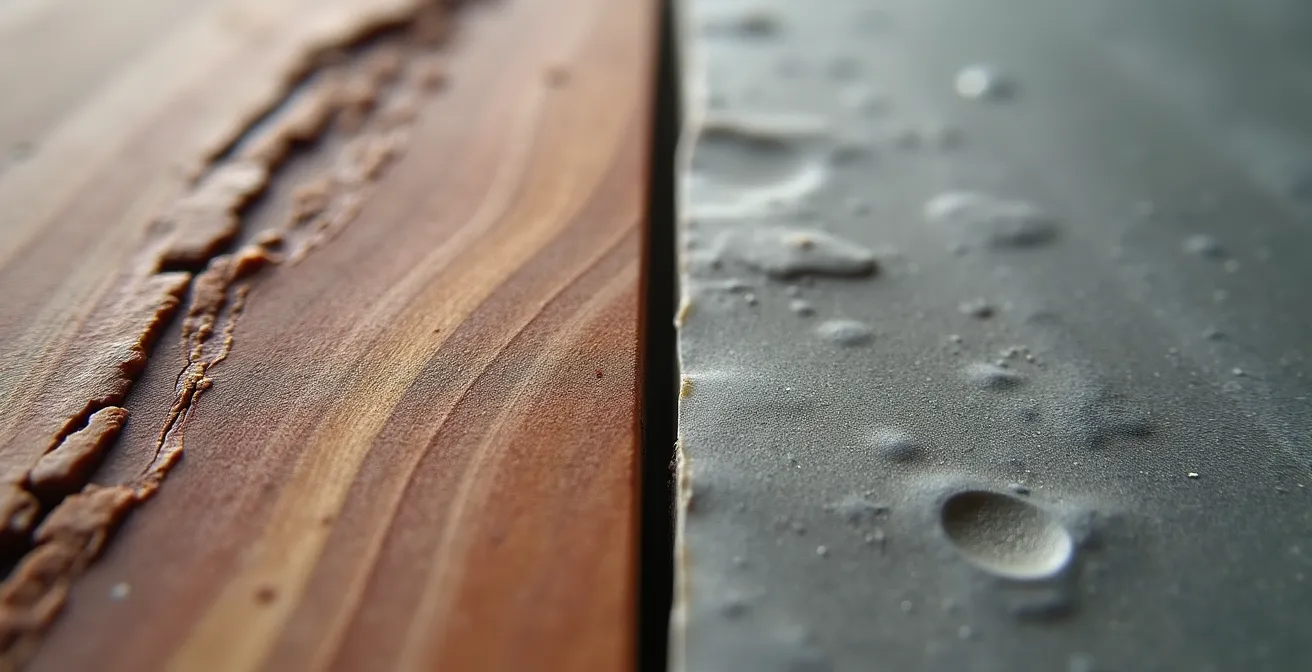
The fear of buying a counterfeit souvenir is valid; the market is flooded with fakes that exploit both artists and consumers.
- Authenticity is verified through material science (stone feels cold, resin doesn’t) and structural forensics (hand-knit sweaters are seamless).
- Official symbols like the Inuit Art Foundation’s Igloo Tag and buying from artist-run co-operatives are the most reliable ways to ensure your money supports the creator.
Recommendation: Shift your mindset from a shopper to an investigator. Question the origin, feel the material, and understand the price before you buy.
You’re standing in a bustling souvenir shop in a Canadian tourist hub, a beautiful carved bear in your hand. It looks authentic. The price seems reasonable. But a nagging question surfaces: is this a genuine piece of Canadian artistry, or a mass-produced knockoff from overseas? This dilemma is the modern traveller’s burden. Many shoppers simply look for a “Made in Canada” sticker, but this is a dangerously superficial approach. The world of Canadian and Indigenous art is rich and diverse, encompassing distinct traditions from Inuit, First Nations (like the Coast Salish and Haida), and Métis peoples, as well as settler artisan communities like those in Quebec. A simple sticker cannot capture this complexity.
The common advice to “buy from reputable stores” or “check the quality” is frustratingly vague. How can you, a visitor, possibly know what “quality” means in a hand-woven sash or a serpentine carving? What makes a gallery more “reputable” than the shop next door? The truth is, the market for counterfeit Indigenous and Canadian art is a significant problem, undermining the livelihoods of artists and deceiving well-intentioned buyers. But what if the solution wasn’t to guess, but to investigate? What if you could learn to decode the hidden markers of authenticity that fakes can’t replicate?
This guide abandons platitudes and equips you with an investigator’s toolkit. We will move beyond surface-level checks and delve into the core principles of verification. We will explore the material science of stone and wool, unpack the economic DNA behind a fair price, and navigate the crucial difference between cultural appreciation and appropriation. By learning to read the structural and cultural provenance of an object, you will transform from a worried tourist into a confident advocate for true Canadian craftsmanship, ensuring your purchase is a genuine act of support for the artists who enrich this country’s cultural landscape.
This article provides a detailed roadmap for your investigation. Each section focuses on a key type of Canadian craft, revealing the specific forensic techniques you can use to verify its authenticity and understand its true value.
Summary: How to Distinguish Real Canadian Craftsmanship from Mass Production?
- The Igloo Tag: What Does It Guarantee Regarding Inuit Art?
- Soapstone vs. Resin: How to Tell if a Sculpture Is Real Stone by Touch?
- Why Does a Hand-Knit Cowichan Sweater Cost Over $400 CAD?
- Gallery vs. Gift Shop: Why Buying from Co-ops Benefits Artists More?
- Appropriation vs. Appreciation: How to Avoid “Native-Style” Items Made by Non-Natives?
- Made in Quebec vs. Made in China: How to Spot Real Souvenirs in the Old Port?
- Supporting Artists: How to Ensure Your Souvenir Money Goes to the Creator?
- Reading the Poles: What Do the Figures on a Haida Totem Pole Actually Signify?
The Igloo Tag: What Does It Guarantee Regarding Inuit Art?
For anyone purchasing Inuit art, the single most important symbol to look for is the Igloo Tag. This isn’t just a sticker; it’s a federally registered trademark that serves as a legal guarantee of authenticity. Its presence certifies that the artwork was handmade by an Inuit artist in Canada. The history of the tag itself is a powerful story of cultural sovereignty. Established by the Canadian government in 1958, the trademark was a crucial step in promoting and protecting the burgeoning Inuit art market from fakes. However, a landmark shift occurred in 2017.
In a move to empower the creators themselves, full ownership and control of this iconic mark were transferred from the federal government to the Inuit Art Foundation (IAF). As a result of the transfer of the Igloo Tag to Inuit control, the program is now led by Inuit, for Inuit, for the first time in its history. This ensures that the standards of authenticity and the protection of the market are guided by the community it represents. When you see this tag, you are seeing a direct link in a chain of cultural and economic benefit that is now self-determined. But not all tags are created equal; you must know what to look for.
Your Verification Checklist: Authentic Igloo Tag Markings
- Physical Tag: Look for the physical tag affixed to the artwork, bearing the distinctive igloo symbol and the text “Inuit art”.
- Artist Details: Check that the tag includes the artist’s name, their home community, the title of the work, and the year it was created.
- License Number: Note the license holder number, typically found in the bottom-right corner of the physical tag, which traces it to a specific distributor or co-operative.
- Updated Wording: Verify the tag shows the updated and correct wording “Inuit art”, not the older, now-outdated term “Eskimo Art”.
- Certification Meaning: Understand that the tag certifies the piece is a unique, handmade work by a Canadian Inuit artist and is explicitly not mass-produced.
Therefore, treating the Igloo Tag as your first and most crucial checkpoint is the most effective strategy when acquiring Inuit art. It is your primary piece of evidence in confirming the work’s provenance and your support for the Inuit art community.
Soapstone vs. Resin: How to Tell if a Sculpture Is Real Stone by Touch?
One of the most common forms of counterfeit Indigenous art involves sculptures. A tourist favourite, the small, dark carving of a bear or an inukshuk, is often where fakes hide in plain sight. The primary deception is material: casting a piece in cheap, uniform resin is far easier and cheaper than carving it from stone. The first investigative step is to challenge a common misconception. While often sold as “soapstone,” a vast majority of Inuit carvings are made from harder stones like serpentine or argillite, not the soft talc known as soapstone. This knowledge is your first advantage. The key to unmasking a fake lies not just in looking, but in using your other senses to detect material honesty.
This paragraph introduces a concept complex. To understand it well, it is useful to visualize its main components. The illustration below breaks down this process.
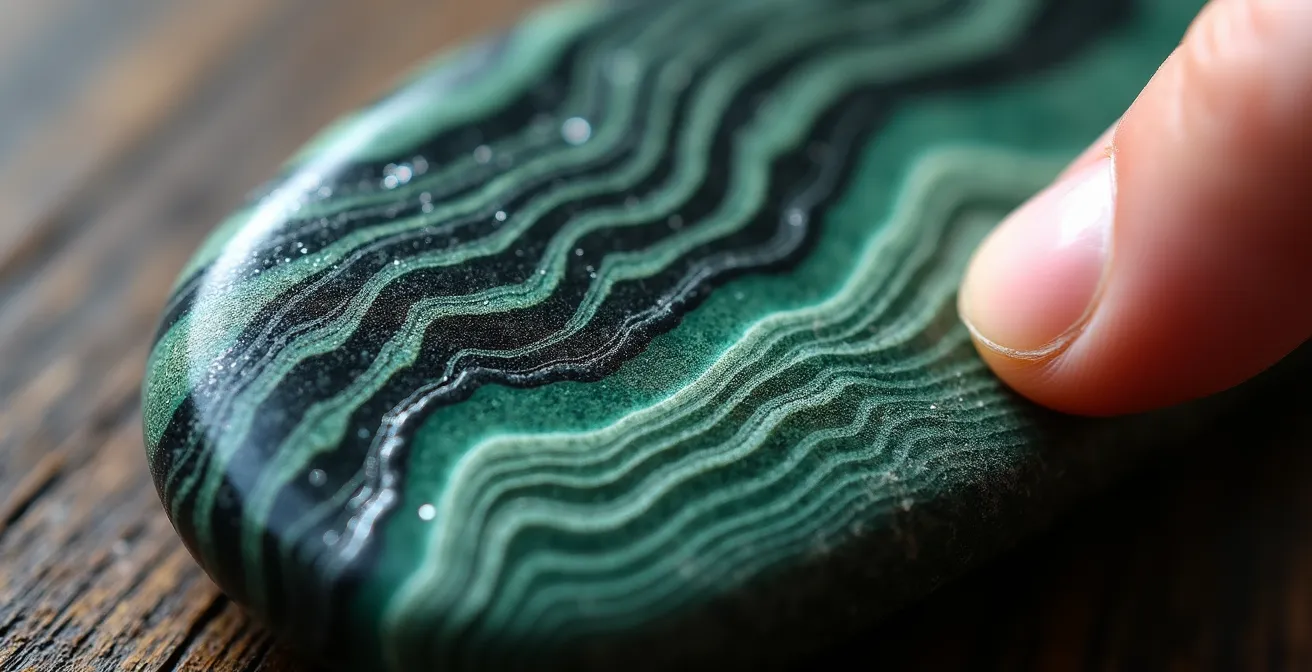
As this image of an authentic stone surface shows, real carvings possess a life that resin cannot mimic. Look for the subtle, organic variations in colour and the mineral veining that runs through the piece. An investigator uses touch as a primary tool. Your fingertips can detect the difference between a natural material and a synthetic imposter with a few simple tests. These sensory checks are your best defense against the most prevalent type of souvenir fraud. Engage with the object, and it will tell you its story.
- The Temperature Test: This is the most reliable tell. At room temperature, real stone (serpentine, argillite) feels distinctly cool, almost cold, to the touch. It draws heat away from your hand. Resin, a type of plastic, will feel neutral or lukewarm—the same temperature as the air around it.
- The Weight Test: Stone is dense. A genuine carving should feel surprisingly heavy for its size. A resin fake will feel lightweight and less substantial. Trust your hands; the difference is often immediately obvious.
- The Visual Test: Look closely at the surface. Real stone has natural imperfections, colour variations, and unique grain patterns. A resin piece is often a single, flat, uniform colour. Check the base for tiny, burst air bubbles—a tell-tale sign of a mould-casting process.
Ultimately, a genuine carving has a character forged by geology and the artist’s hand. A resin fake has only the character of a mould. By training your senses, you can easily tell the difference and invest in a piece with true material integrity.
Why Does a Hand-Knit Cowichan Sweater Cost Over $400 CAD?
The price tag on an authentic Cowichan sweater can be startling: $400, $500, even more. This often leads to the question, “Why is it so expensive?” The answer lies in its economic DNA—the sum of its materials, time, and the cultural heritage of its creators, the Coast Salish peoples of Vancouver Island. A genuine Cowichan sweater is not a garment; it’s a handcrafted piece of functional art that can take over 40 hours to produce. To understand the cost, you must perform a structural forensic analysis, comparing it to a mass-produced lookalike. The difference is not just in quality, but in two completely different manufacturing universes.
The high price reflects a living wage for a highly skilled artisan, the use of premium local materials, and the preservation of traditional, family-owned designs. A cheap knockoff, often made overseas with synthetic materials, bypasses every single one of these cost factors. The following table breaks down the economic reality of what you are paying for, revealing why the cost is not an expense, but an investment in an enduring piece of Canadian heritage.
| Cost Factor | Authentic Cowichan | Mass-Produced |
|---|---|---|
| Raw Materials | Local Vancouver Island wool, hand-selected | Imported synthetic blend |
| Processing | Hand-carding and spinning (10+ hours) | Machine processed (minutes) |
| Knitting Time | 25-40 hours hand-knitting | Machine knit (1-2 hours) |
| Pattern Rights | Traditional family-owned designs | Generic patterns |
| Construction | Seamless one-piece | Multiple pieces sewn together |
| Artist Compensation | Living wage for Coast Salish artisan | Factory wages |
Visually, the most telling feature is the construction. A true Cowichan is knitted in one continuous, seamless piece. If you see seams at the shoulders or sides, it is not authentic. The wool itself tells a story: genuine hand-spun wool is bulky and still contains natural lanolin, making it water-resistant and distinctively heavy. The colours should be the natural, undyed shades of sheep’s wool—whites, greys, and blacks—not bright, artificial dyes. Finally, the patterns are not random decorations; they are specific Coast Salish motifs like eagles, whales, and thunderbirds, each carrying cultural significance.
When you buy an authentic Cowichan sweater, you are not just buying an article of clothing. You are acquiring a piece of cultural history, supporting a specific artist and their community, and investing in a durable garment that will last a lifetime. The price reflects its true, tangible value.
Gallery vs. Gift Shop: Why Buying from Co-ops Benefits Artists More?
Where you buy is just as important as what you buy. The choice between a generic tourist gift shop and a dedicated gallery or artist co-operative has a profound impact on the chain of benefit. While a gift shop might offer convenience, it often obscures the path of the money, with the artist receiving only a small fraction of the final price. The most effective way to ensure your purchase directly supports the creator and their community is to buy from an artist-run co-operative.
These organizations are foundational to the Indigenous art economy, especially in the North. They are owned and operated by the members—the artists themselves. This model fundamentally changes the financial equation. Unlike a private retailer whose primary goal is profit maximization, a co-op’s mandate is to maximize the return to its members. The numbers are stark: while a private gallery might give an artist 40-50% of the sale price, some Northern artists’ co-operatives can return 60-70% of the sale price back to the artists and their communities. This difference is not trivial; it’s the difference between a sustainable career and exploitation.
The West Baffin Eskimo Co-operative Model
A prime example of this success is the West Baffin Eskimo Co-operative in Kinngait (Cape Dorset), Nunavut. This co-op is world-renowned for its focus on the arts. In 1978, it established Dorset Fine Arts in Toronto as its dedicated marketing arm, creating a direct channel from the artists in the Arctic to the global fine art market. This vertically-integrated structure ensures that the economic benefits flow back to Kinngait, funding local services and enabling artists to thrive, demonstrating the immense power of the co-operative model.
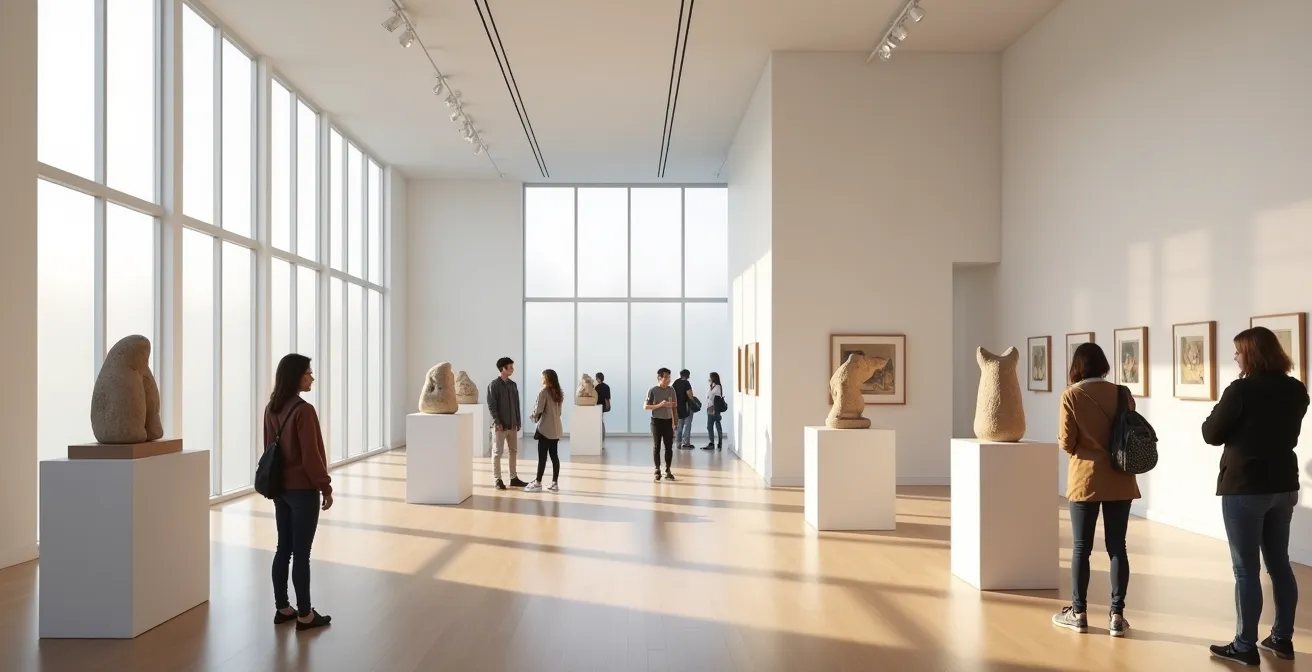
When you step into a space like the one pictured—a bright, professional gallery run by a co-op—you are entering an ecosystem built for and by artists. You can ask questions and receive knowledgeable answers about the artist, their story, and the meaning behind the work. You are participating in a system designed for cultural preservation and economic empowerment, not just a simple retail transaction.
Before your next purchase, seek out these co-operatives or the galleries that represent them. By consciously choosing your point of purchase, you direct your money where it matters most: into the hands of the creators.
Appropriation vs. Appreciation: How to Avoid “Native-Style” Items Made by Non-Natives?
This is the most sensitive and crucial part of your investigation. The market is filled with items labelled “Native-style,” “Haida-inspired,” or “Inuit-design.” These are red flags for cultural appropriation—the act of a non-Indigenous person or company creating and selling items that mimic Indigenous art styles, often without permission, credit, or compensation to the source culture. Buying these items, even if they are made in Canada, directly harms Indigenous artists by flooding the market with cheap imitations and misrepresenting their culture. The ethical consumer’s goal is cultural appreciation: respectfully purchasing authentic work that supports Indigenous creators.
To navigate this, you must shift from a passive buyer to an active, inquisitive one. Your most powerful tool is the respectful question. A legitimate vendor of authentic Indigenous art will welcome your questions and be proud to tell you about the artist. A seller of fakes will often be vague, evasive, or have no information at all. You have the right—and the responsibility—to inquire about the cultural provenance of the piece.
As the Indigenous Arts Collective, an artist advocacy group, points out, fair dealing is central to ethical purchasing. In their mandate, they emphasize their role in supporting artists to secure fair compensation:
The IAF actively supports Indigenous artists in securing contracts that offer fair wages… ensuring that costs such as materials, time, travel and per diem are included
– Indigenous Arts Collective, Indigenous Arts Collective mandate statement
This highlights that a fair price is part of an ethical exchange. To ensure your purchase is part of this fair exchange, start a conversation. Here are the key questions to ask a vendor:
- “Could you please tell me about the artist and which Nation or community they belong to?” (This is the most important question. Authenticity is tied to a specific person and community.)
- “Is this piece sold on consignment from the artist, or through a recognized community co-op?” (This helps trace the chain of benefit.)
- “Does the artwork come with a biography card or a certificate of authenticity from the artist?” (Reputable artists and galleries often provide this.)
- “Which specific Indigenous design tradition does this style come from?” (This shows you respect the diversity of Indigenous art and pushes back against generic “Native-style” labels.)
If you don’t get clear, confident answers to these questions, walk away. A purchase made in ignorance risks contributing to cultural appropriation. An informed purchase, however, becomes a meaningful connection and a genuine act of support.
Made in Quebec vs. Made in China: How to Spot Real Souvenirs in the Old Port?
The charming streets of Old Montreal or Quebec City’s Petit Champlain are lined with shops, but like any tourist hotspot, they present a mix of authentic craftsmanship and imported trinkets. The challenge for an investigator is to distinguish a genuine piece of Quebecois “métiers d’art” from a mass-produced item designed to look local. Here, your knowledge of specific regional crafts and official certifications is your best defense. Don’t rely on a simple “Made in Canada” tag, which can be misleading. Instead, look for the evidence of true local artisanship.
Your first clue is to seek out the official seal of approval. In Quebec, the Conseil des métiers d’art du Québec (CMAQ) is the key organization. As the official certification body for professional artisans, its logo is a strong guarantee of authenticity. Look for a sticker or tag with the “Signé métiers d’art” logo. This certification confirms the product was made by a recognized professional artisan in the province. Shopping in CMAQ-affiliated galleries or artisan-owned boutiques, often found on quieter side streets away from the main tourist thoroughfares, drastically increases your chances of finding genuine work.
Beyond official seals, you must use structural forensics on specific items. Take the “ceinture fléchée” (arrowhead sash), a symbol of Quebecois and Métis culture. An authentic sash is intricately finger-woven, resulting in a dense, pliable fabric with sharp, clear patterns. A machine-made imitation will be flat, stiff, and the pattern will appear printed or have a simple, repetitive weave. Similarly, for the traditional wood carvings of the Saint-Jean-Port-Joli region, look for the artist’s signature carved or written on the base. Each artist has a distinctive style, whereas mass-produced carvings will look identical and lack a signature. The details are the evidence.
Ultimately, supporting Quebec artisans means looking past the storefronts on the main drag and seeking out the certified galleries and signed works that represent the province’s living artistic traditions. Your effort rewards you with a souvenir that has a real story and supports a local creator.
Supporting Artists: How to Ensure Your Souvenir Money Goes to the Creator?
The ultimate goal for any ethical buyer is to shorten the chain of benefit as much as possible. While co-operatives and reputable galleries are excellent channels, the gold standard is buying directly from the artist. This method guarantees that 100% of your money (minus any transaction fees) goes into their pocket, providing the most impactful form of support. Finding these opportunities requires a bit more planning than walking into a shop, but the rewards—for both you and the artist—are immense. It transforms a simple purchase into a personal connection.
The art world is evolving, with more initiatives focused on direct artist empowerment. For instance, some artist residency programs are now structured to provide not just studio space but significant financial stipends and exhibition opportunities that enable artists to build their own independent careers. The model described by the Woodland Cultural Centre, where a residency provides a $50,000 stipend and ends in a solo exhibition, shows a systemic shift toward equipping artists with the resources they need to sell their work independently. While you may not be buying from a resident directly, supporting institutions with these models helps build a healthier ecosystem for artists.
For the traveller, the most practical way to buy direct is to seek out events where artists are present and selling their own work. Major festivals and markets are your best bet. Planning your trip around these events, or checking local listings when you arrive, can lead to the most authentic shopping experience possible. Here are some of the premier events and venues across Canada for buying directly from Indigenous artists:
- Manito Ahbee Festival: An annual celebration in Winnipeg, MB, featuring one of Canada’s largest Indigenous markets.
- Great Northern Arts Festival: Held in Inuvik, NWT, this festival offers unparalleled opportunities to meet and buy from Northern artists.
- Local Powwows and Cultural Festivals: Check provincial and community event calendars. Artists are almost always present, selling their work.
- Studio Tours: In some communities, particularly in Nunavut, the Northwest Territories, and on Haida Gwaii, it’s possible to arrange visits to artist studios. This is the most intimate way to buy art.
This approach requires more effort, but it offers an unparalleled opportunity to hear the story behind the art from the person who made it, ensuring your souvenir is not just an object, but a memory of a genuine human connection.
Key Takeaways
- Authenticity is not just a label; it’s a combination of material science, construction technique, and cultural protocol that you can learn to decode.
- Official certifications like the Inuit Art Foundation’s Igloo Tag and Quebec’s “Signé métiers d’art” are your most reliable legal guarantees against fakes.
- Buying from artist-run co-operatives or directly from artists at festivals ensures the majority of your money supports the creator and their community, not just a retailer.
Reading the Poles: What Do the Figures on a Haida Totem Pole Actually Signify?
Of all the symbols of Northwest Coast Indigenous art, the totem pole is perhaps the most majestic and misunderstood. To the uninformed eye, it is a decorative stack of animal carvings. To an investigator of cultural provenance, it is a complex narrative document. The figures on a Haida or other Northwest Coast pole are not random; they are specific crests that tell the story of a particular family or clan’s history, lineage, rights, and encounters with the supernatural. They are the visual equivalent of a European family’s coat of arms, but with a far deeper narrative content. Understanding even the basics of this visual language transforms your appreciation from aesthetic to intellectual.
Each figure on a pole has a specific role and meaning derived from ancient stories and cosmology. The Raven, for example, is often at the top, not just because it can fly, but because in many stories, it is the Raven who brings light to the world—a creator and trickster figure. The Orca is a guardian of the sea, representing family and strength. These are not mere decorations but characters in a story. When you see a pole, you are not just looking at art; you are reading a history book written in a sophisticated visual language.
| Figure | Primary Role | Cultural Significance |
|---|---|---|
| Raven | Trickster-Creator | Brings light to the world, transforms reality |
| Eagle | Leadership & Vision | Connection to creator, authority, foresight |
| Orca | Guardian of the Sea | Strength, family, travel, protection |
| Bear | Strength & Healing | Medicine, courage, family protection |
| Wolf | Loyalty & Family | Intelligence, leadership, strong family ties |
This knowledge is crucial even when buying a miniature, souvenir-sized totem pole. A genuine piece, even a small one, will respect this “crest logic.” The figures will represent a coherent clan relationship, not a random jumble of popular animals. When inspecting a miniature pole, apply your forensic skills: Is it carved from cedar or Haida argillite, or is it moulded resin? Look for an artist’s signature. Most importantly, do the formlines—the distinct flowing lines that define the shapes—match the specific artistic traditions of the Nation it claims to represent? A cheap knockoff will feature generic, poorly executed forms and ignore the narrative logic of the crests.
Apply these investigative techniques on your next trip and ensure your travel dollars honour true Canadian artistry. By learning to read these stories, you are no longer just a consumer; you are a respectful witness to a living cultural tradition.